

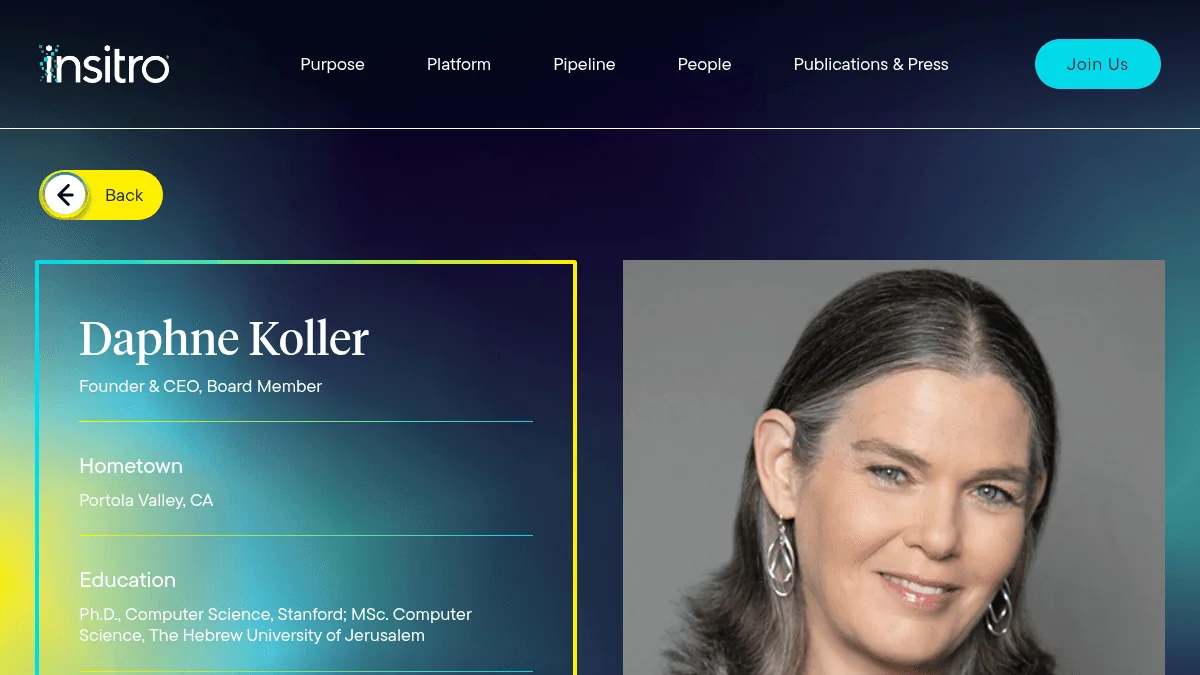
Insitro, a leading machine learning-driven drug discovery company, demonstrates AI's profound impact on accelerating biomedical research. CEO Daphne Koller highlights how advanced AI, particularly machine learning, is revolutionizing the earliest and most critical stage of drug development: target identification. This shift promises to deliver much-needed treatments faster to patients.
Koller, a pioneer in applying machine learning to life sciences, explains Insitro's unique approach. Instead of traditional reductionist methods, Insitro leverages AI to analyze vast, multi-modal datasets. These include human physiological readouts, imaging, and omics data. This holistic analysis uncovers subtle biological patterns and disease vectors that human observation often misses. For example, Insitro recently identified a novel drug target for ALS, securing a $25 million milestone payment from Bristol Myers Squibb. This breakthrough offers significant hope for a disease with limited treatment options.
Advancing AI Drug Discovery Through Data Integration
The core challenge in drug development lies in selecting the right biological targets. Most drug failures in clinical trials stem from ineffective targets, not poor molecules. Insitro's machine learning models integrate diverse data, from human genetics to cellular readouts, to build high-conviction target hypotheses. This comprehensive approach allows AI to process hundreds of variables simultaneously, far exceeding human cognitive limits. Consequently, researchers can prioritize targets with the highest probability of success.
Furthermore, AI's influence extends beyond target identification. Generative AI models are increasingly streamlining molecular design and optimizing clinical trial operations. Foundation models for proteins and other molecules will accelerate the iterative process of drug creation. This integration of AI across the entire research and development pipeline aims to enhance efficiency and reduce the immense costs associated with bringing new therapies to market. Ultimately, this paves the way for a future of true precision medicine, where the right treatment reaches the right patient, not just in oncology but across a spectrum of complex diseases.