


The insurance industry is a multi-trillion-dollar behemoth still largely running on PDFs, email attachments, and manual data entry. While autonomous vehicles and drug discovery have been revolutionized by deep learning, the core process of assessing risk—underwriting—remains stubbornly analog.
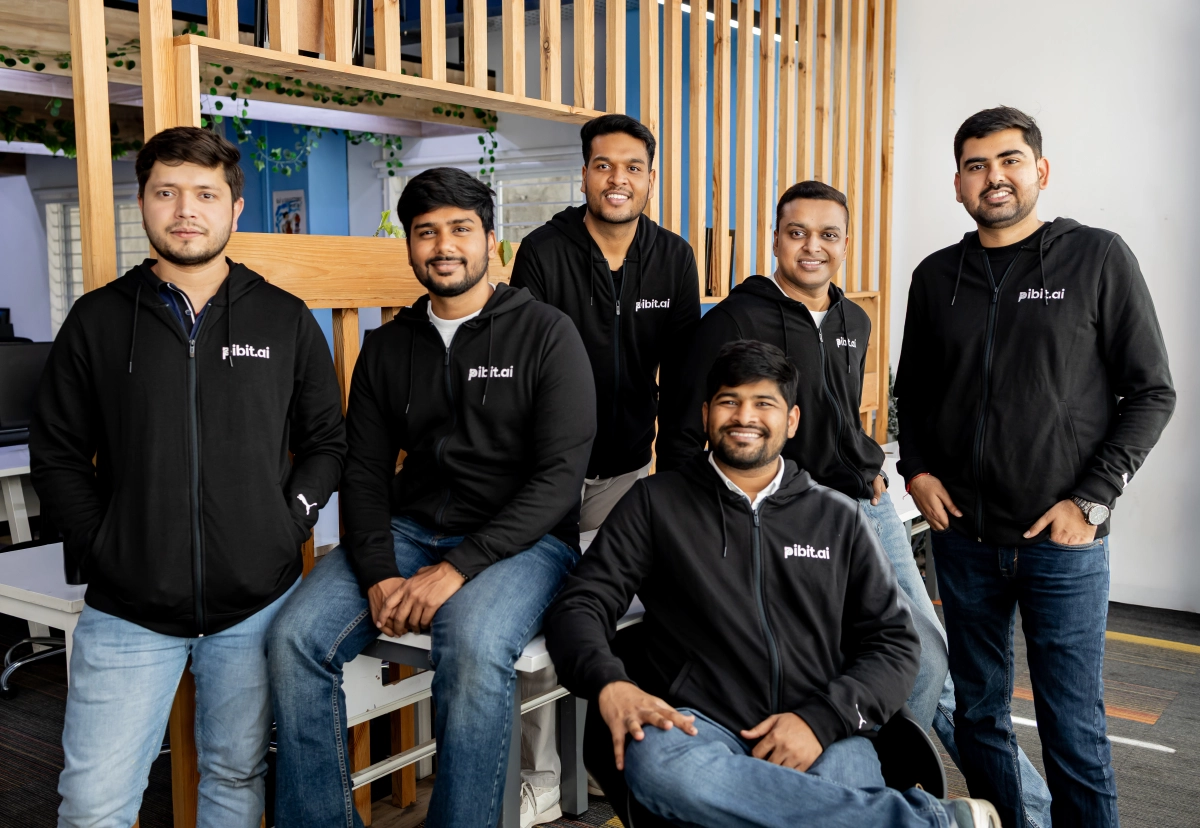
That inertia is precisely what San Francisco-based Pibit.AI is trying to shatter. The company announced today it has secured a $7 million Series A funding round, led by Stellaris Venture Partners, to scale its Centralized Underwriting Risk Environment (CURE™) platform, a system designed to inject explainable AI into the heart of risk assessment.
The funding arrives as carriers and MGAs face a perfect storm: submission volumes are skyrocketing, but the talent pool of experienced underwriters is shrinking. This imbalance means underwriting teams are often spending up to a third of their valuable time on tedious, manual tasks like triaging submissions and enriching data, rather than analyzing complex risks.
Pibit.AI was founded by engineer Akash Agarwal, whose motivation was deeply personal. He watched his father, an insurance agent, struggle late into the night buried under physical forms. Agarwal recognized the profound disconnect: if AI could safely navigate a car through city traffic, why couldn’t it handle the structured chaos of an insurance submission?
The resulting CURE platform is designed to be a unified operating system for the underwriter. It doesn't just automate tasks; it orchestrates the entire workflow, from the moment a messy submission hits the inbox to the final decision-ready output.
CURE’s modular approach tackles the biggest pain points: DocumentCURE™ handles the ingestion and parsing of unstructured data (the PDFs and emails), while ResearchCURE™ pulls in real-time external data to enrich the account. Crucially, RiskCURE™ then evaluates the account using portfolio-specific signals.
This focus on unification and intelligence is key. Most legacy systems offer point solutions—a tool for document parsing here, a workflow manager there. Pibit.AI aims to consolidate these functions into a single pane of glass, ensuring consistency and visibility across an entire portfolio, which is essential for auditability in a highly regulated sector.
Why Underwriters Need Trustworthy AI
The biggest hurdle for deploying advanced Insurance underwriting AI isn’t technical capability; it’s trust. Underwriters need to understand why a system made a specific recommendation, especially when millions of dollars in potential loss are on the line.
“Too many systems prioritize speed over trust,” said Akash Agarwal, Founder and CEO. “We’re building something that’s transparent, explainable, and decision-ready—a system that gives underwriters confidence in every output while helping them move faster than ever before.”
This emphasis on explainability is what separates Pibit.AI from simple automation tools. The platform is designed to empower human judgment, providing the data and analysis necessary for a quick, confident decision, rather than attempting to replace the underwriter entirely.
The results reported by early customers are compelling. Carriers and MGAs using CURE, including HDVI and Method Insurance Company, have seen underwriting cycles accelerate by up to 85%. More critically, they report a 32% increase in gross written premium handled per underwriter and improvements of up to 700 basis points in loss ratios.
For a carrier, those metrics translate directly into higher capacity and sharper risk selection. Adam Price, CEO at Kinetic, noted that the platform allows them to handle "more than a billion dollars in submissions on an annual basis without scaling our overhead costs."
The investment will allow Pibit.AI, which already employs over 125 people, to expand its AI infrastructure, deepen its data partnerships, and build out advanced risk models adaptable to new lines of business.
As the insurance sector struggles to manage data overload and talent scarcity, Pibit.AI is positioning itself as the necessary bridge between decades of manual expertise and the scalable science of modern machine learning. The goal isn't just to make the process faster, but to fundamentally transform underwriting from a manual art into an intelligent, auditable, and highly efficient operation.


