

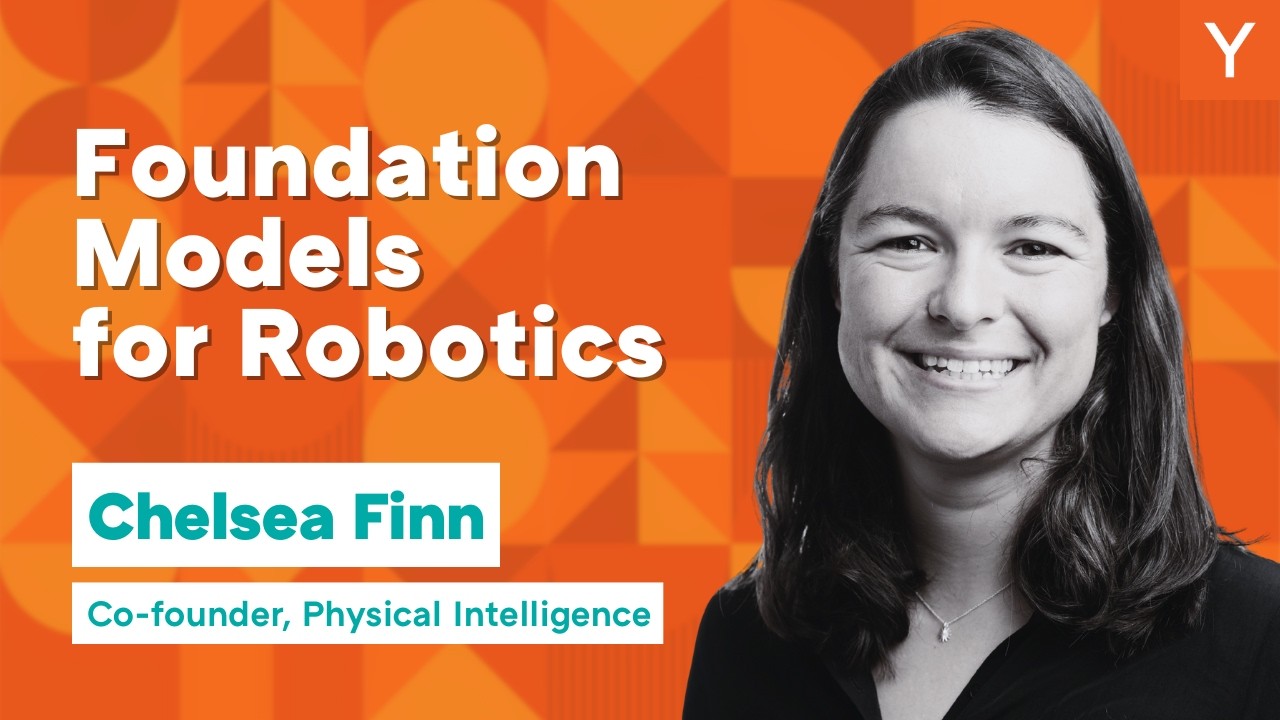
The prevailing challenge in robotics dictates that to truly solve a specific application, an entire company must be built around it, developing custom hardware, software, and unique movement patterns from scratch. This bespoke approach has historically hindered the widespread integration of robots into daily life. Chelsea Finn, an Assistant Professor at Stanford and co-founder of Physical Intelligence, addressed this fundamental problem at Y Combinator's AI Startup School in San Francisco, outlining her team's ambitious vision for general-purpose robotics.
Physical Intelligence aims to forge a universal model capable of enabling any robot to perform any task in any environment. Finn highlighted the transformative power of foundation models in language, where scale has proven paramount. Yet, applying this lesson directly to robotics reveals critical nuances.
While industrial automation offers massive datasets, it inherently lacks the diverse behaviors required for varied real-world tasks like making a sandwich or navigating a disaster zone. Similarly, the vast trove of human activity videos on YouTube presents an "embodiment gap"; watching Wimbledon doesn't make a robot a tennis expert. Even high-fidelity simulations, despite their scale, often fall short on realism. "Scale is necessary, but subordinate to solving the problem," Finn asserted, emphasizing that sheer volume of data alone isn't sufficient for true physical intelligence.
Physical Intelligence's breakthrough stems from meticulously collecting and leveraging large-scale real robot data via teleoperation. Early experiments with a robot folding laundry, a deceptively complex task, initially showed a 0% success rate when starting from crumpled clothes. The turning point arrived with a refined pre-training and fine-tuning recipe, incorporating pre-trained Visual Language Models (VLMs) like PaliGemma. This allowed their robots to fold five laundry items in just 12 minutes with greater consistency, a significant leap from the initial 20 minutes and frequent failures.
The model's robustness extends beyond laundry. It has successfully generalized to entirely unseen environments, such as Airbnbs the robots had never encountered, performing tasks like tidying kitchens and bedrooms. This capability is largely attributed to the diverse nature of their pre-training data, where mobile manipulation data, despite comprising only 2.4% of the total mixture, enabled the models to adapt to new tasks and robot platforms without extensive re-collection. The prior static robot data proved to play a substantial role, demonstrating that diverse data is key for generalization.