

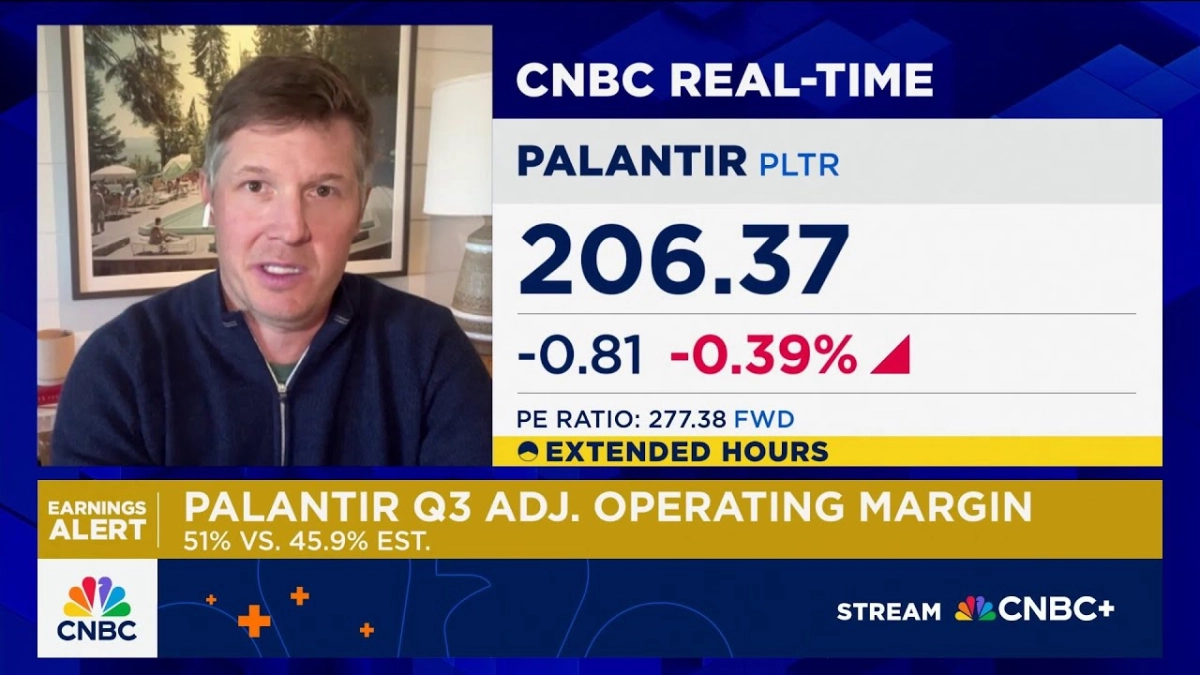
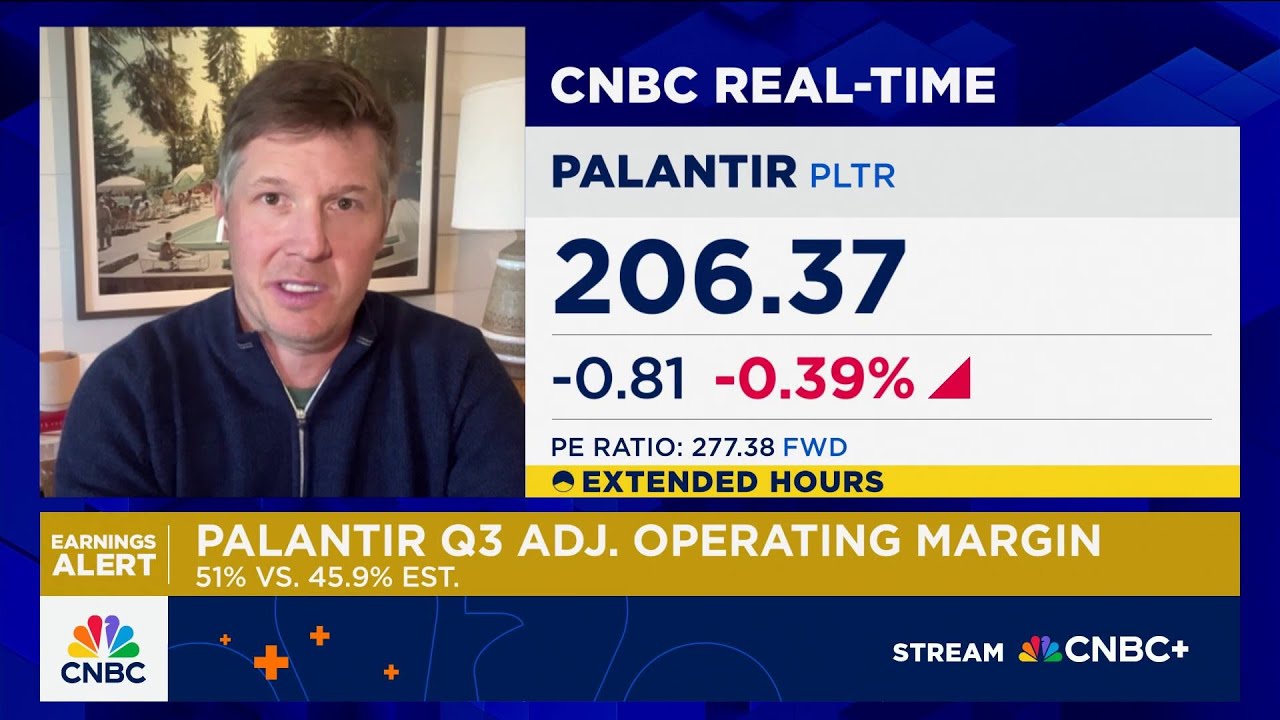
Jefferies Equity Analyst Brent Thill, in a recent CNBC “Closing Bell Overtime” segment with Sara Eisen and Jon Fortt, dissected Palantir Technologies’ Q3 results, presenting a stark dichotomy between the company’s "rock solid" fundamentals and its "like anything we’ve ever seen" valuation. Despite Palantir’s impressive operational performance, Thill maintained a "Sell" rating and a $60 price target, underscoring a critical debate within the investment community about the sustainable pricing of AI innovators.
Thill’s analysis centered on the exceptional nature of Palantir's operational execution, particularly within its commercial segment. He noted that the company is "crushing it," delivering numbers that are unprecedented in his three decades of covering the software sector. This operational excellence is undeniable, with Palantir consistently exceeding expectations, showcasing robust revenue growth and strong free cash flow generation. Indeed, the company’s ability to drive significant growth in its U.S. commercial revenue, projected to reach 121% by Q3 2025 according to an on-screen graphic, highlights its potent market penetration and product efficacy, especially with its Artificial Intelligence Platform (AIP).
However, Thill swiftly pivoted to the core of his bearish stance: an astronomical valuation that, in his view, defies all conventional metrics. He pointed out that Palantir is "trading at 90 times revenue," a multiple he finds utterly detached from historical norms and industry comparables. "There’s no way you can put any valuation metric on the actual valuation," he asserted, highlighting the speculative premium embedded in the stock. This extreme valuation, rather than any fundamental weakness, is the primary driver of his cautious outlook, signaling a belief that the market has gotten ahead of itself, pricing in years of flawless, hyper-accelerated growth.
This leads to a crucial insight for founders and VCs: even stellar execution in a burgeoning field like AI cannot indefinitely override valuation discipline for institutional investors. Thill passionately argued that there are "way better other stories in AI to invest in" where capital could be deployed more effectively. He cited examples like Amazon, trading at 15 times EBITDA, and other high-growth software leaders such as Cloudflare and CrowdStrike, which, despite being "phenomenal companies" producing "huge returns," trade at significantly lower multiples than Palantir. These comparisons illustrate his conviction that while Palantir’s products are cutting-edge, its stock price does not offer a compelling risk-reward profile relative to other high-quality tech investments.
Jon Fortt directly challenged Thill on his unwavering $60 price target, questioning if he was "stuck" given the stock’s substantial year-to-date gains, which saw it emerge as one of the S&P 500's best performers. Thill, unfazed, explained that his target is derived from a 25x revenue multiple, which he still considers "one of the highest multiples in software right now." This steadfast adherence to a valuation framework, even in the face of strong market momentum, underscores the disciplined approach institutional analysts are expected to maintain.
