

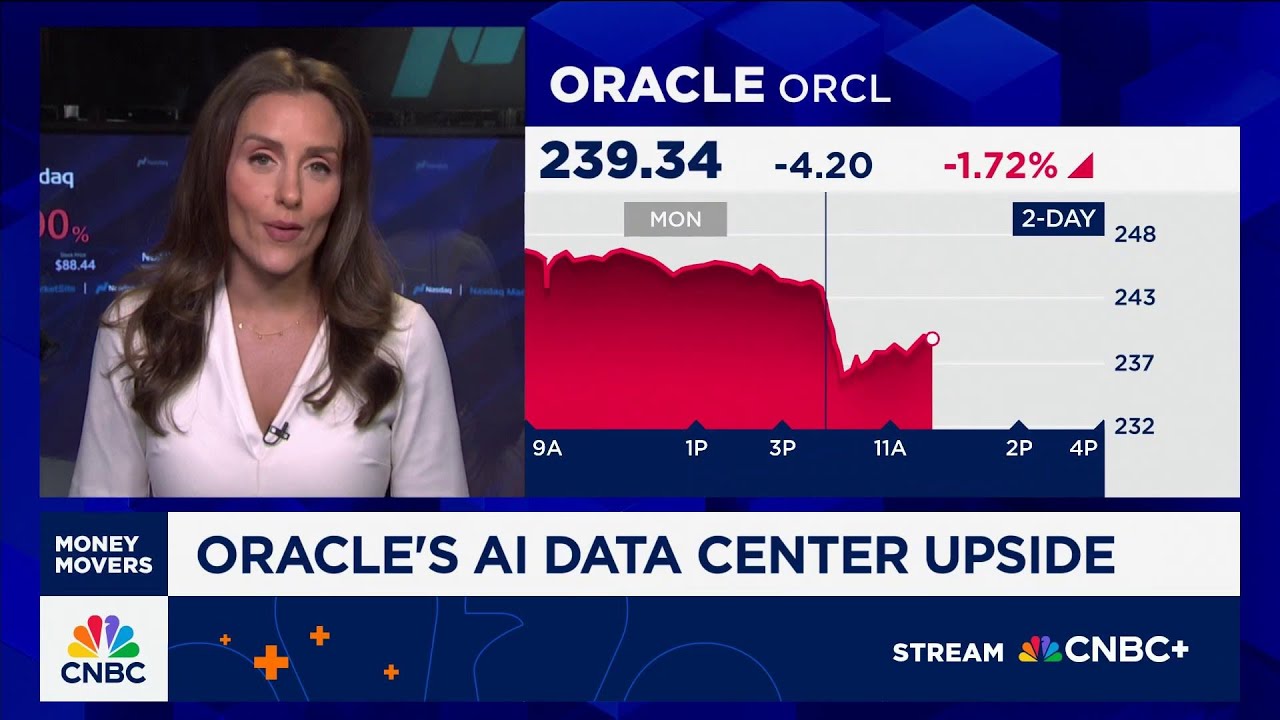
A significant recalibration in the race for AI infrastructure capacity has emerged, with OpenAI and Oracle cementing a substantial data center expansion while a prior multi-billion dollar venture with SoftBank reportedly scales back. CNBC's Kristina Partsinevelos, speaking with Karl on 'Money Movers,' delved into the implications of this strategic pivot, particularly for Oracle's burgeoning role in powering the AI revolution. The core insight here is a shift from aspirational, large-scale consortiums to more concrete, bilateral partnerships that can deliver immediate capacity.
The initial buzz around the "Stargate" venture, a proposed $500 billion data center project involving OpenAI, Oracle, and SoftBank, has been tempered. Reports indicate this ambitious multi-gigawatt build is being scaled back. However, this doesn't signal a pause in OpenAI's relentless pursuit of computational power. The Financial Times reported that OpenAI had "quietly struck a separate $30 billion per year data center deal with Oracle to host its AI workloads," effectively positioning Oracle as a critical fallback if the grander Stargate vision faltered.
Despite reports of Stargate's re-evaluation, OpenAI CEO Sam Altman insisted on X (formerly Twitter) that they "are planning to significantly expand the ambitions of stargate past the $500 billion commitment we announced in January." This seemingly contradictory stance underscores the dynamic, often opaque, nature of mega-deals in the nascent AI infrastructure landscape. The demand for AI compute is so immense that companies are constantly re-evaluating and adjusting their strategies to secure the necessary resources.
Oracle and OpenAI have now announced their own significant expansion, set to develop 4.5 gigawatts of additional data center capacity. This 4.5 gigawatt expansion alone could power at least three million homes, underscoring the sheer energy demands of advanced AI. It signifies a tangible commitment to the White House's pledge for 10 gigawatts of AI infrastructure in the US over four years.
Analysts at Morgan Stanley characterized the situation not as a retreat, but "more of a reshuffling," noting that OpenAI had already begun rerouting demand to active builds with Oracle, Google Cloud, and CoreWeave. This suggests a pragmatic shift where OpenAI is diversifying its infrastructure partners to ensure capacity, rather than relying on a single, massive, and potentially slower-to-materialize project. The immediate need for compute is trumping the long-term, speculative mega-deal. Ultimately, Partsinevelos concluded, "The AI build is still happening for now, and Oracle, not Stargate, is doing the heavy lifting." This highlights Oracle's readiness and existing infrastructure as a key differentiator in a market starved for high-performance AI compute.