

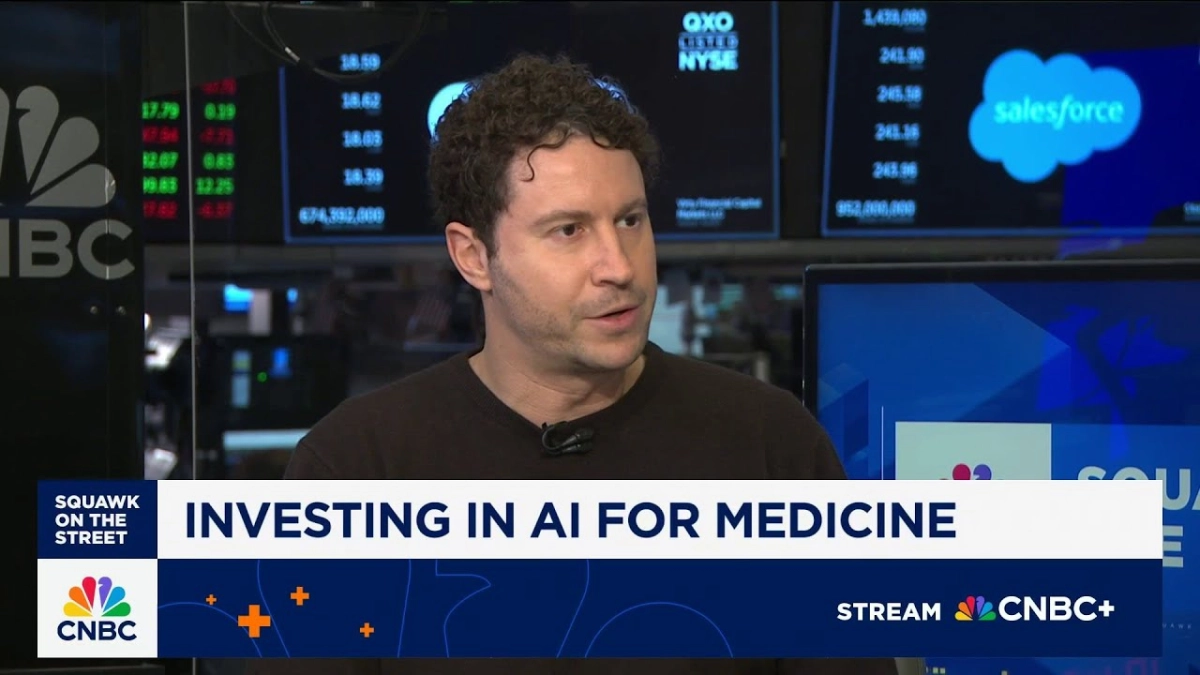
"This year, more than 100 million Americans are going to be treated by a doctor using OpenEvidence. So, AI is here and now, especially medical AI," declared Daniel Nadler, founder of OpenEvidence, during a recent interview on CNBC's 'Squawk on the Street'. Nadler, a seasoned entrepreneur whose previous venture, Kensho Technologies, was acquired by S&P Global, joined anchors Sara Eisen, Carl Quintanilla, and Jim Cramer to discuss the rapid deployment and transformative impact of artificial intelligence in the medical field. His insights underscore a critical shift: AI in medicine is no longer a distant promise but a current reality, already paying tangible dividends.
OpenEvidence is an AI copilot designed specifically for medical professionals, aiding them in making high-stakes clinical decisions at the point of care. The platform offers AI-driven search capabilities meticulously sourced, cited, and grounded in peer-reviewed medical literature. This rigorous foundation is paramount in a field where accuracy can literally mean the difference between life and death. The company’s impressive traction is evident in its October figures alone, where it supported 17 million copilot-style AI clinical consultations from logged-in, verified U.S. clinicians.
A central tenet of OpenEvidence's philosophy, as articulated by Nadler, is that "the physician always needs to be the last mile." This perspective positions AI not as a replacement for human expertise but as a powerful augmentation. Drawing parallels to the financial software industry, where traders remain in the driver's seat despite advanced algorithmic tools, Nadler emphasized that AI in medicine serves as a "force multiplier" and "brain extender." It empowers doctors, rather than superseding them, by providing immediate access to vast, verified medical knowledge, thereby enhancing their diagnostic and treatment capabilities.
This assistive role is particularly crucial given the looming challenges in healthcare. The U.S. government projects a shortage of 100,000 doctors by the end of the decade, a deficit exacerbated by increasing physician burnout and the overwhelming volume of medical information. OpenEvidence directly addresses this by making the existing workforce more efficient and effective. The platform alleviates the burden on doctors, enabling them to navigate complex cases with greater confidence and speed, ultimately improving patient outcomes.
The strategic decision to offer OpenEvidence free of charge for healthcare providers further highlights its mission to democratize access to cutting-edge medical AI. This accessibility strategy fosters broad adoption, allowing the platform to integrate deeply into clinical workflows across the country. Such widespread usage not only amplifies its immediate impact but also generates invaluable feedback loops, accelerating the AI's refinement and efficacy.