

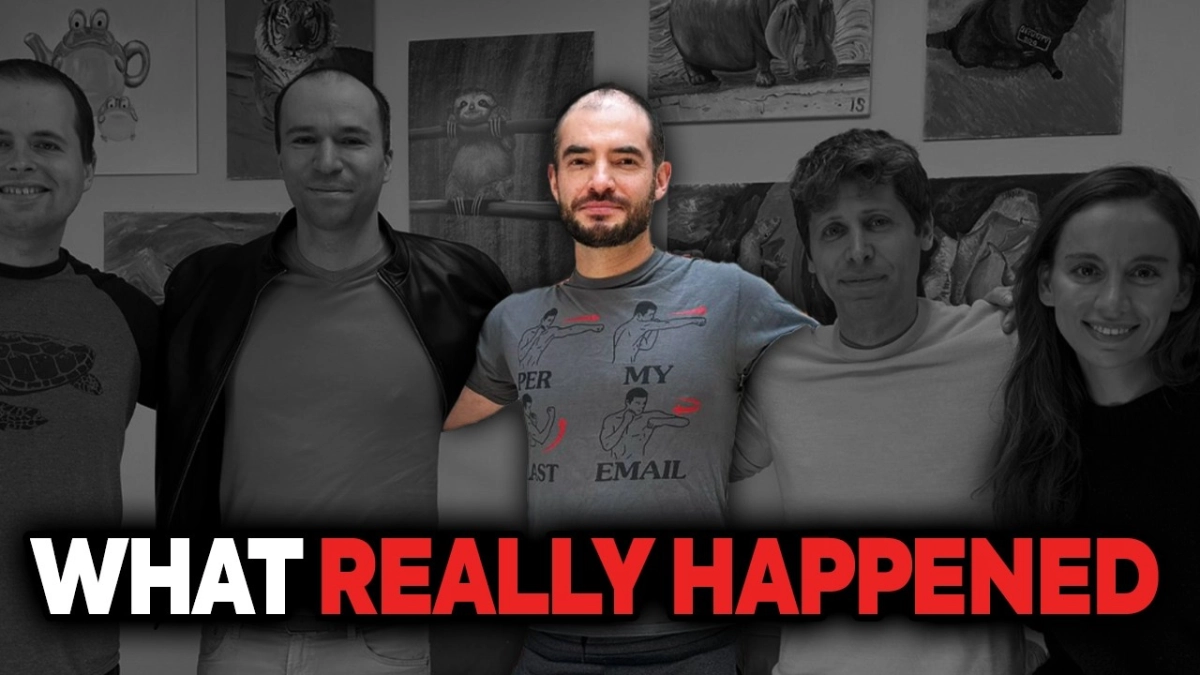
Ilya Sutskever's recently unsealed 62-page deposition in the high-profile Musk v. Altman lawsuit has peeled back layers of secrecy, exposing the raw, often acrimonious internal dynamics that led to Sam Altman's temporary ousting from OpenAI. The document, recorded on October 1, 2025, serves not just as legal testimony but as a stark commentary on the profound governance challenges and clashing philosophies at the core of the world's leading AI research organization. It reveals a deep-seated mistrust among the very individuals tasked with guiding humanity's most transformative technology.
The backdrop to Sutskever’s testimony is Elon Musk’s lawsuit, which fundamentally questions whether OpenAI, initially founded as a non-profit dedicated to open-source AI for public benefit, was illicitly steered towards a for-profit model by Sam Altman. This legal challenge illuminates the existential tension between altruistic mission and commercial ambition that has plagued OpenAI since its inception. Sutskever, a co-founder and former chief scientist, emerged as a pivotal figure in the board's attempt to remove Altman, driven by a profound disillusionment with his leadership.
Sutskever’s long-standing grievances culminated in a meticulously prepared 52-page memo outlining his concerns about Altman's conduct. Within this scathing document, he asserted that "Sam exhibits a consistent pattern of lying, undermining his execs, and pitting his execs against one another." This portrait of Altman as a manipulative leader, actively fostering internal conflict, formed the bedrock of Sutskever's conviction that a change in leadership was imperative for OpenAI's integrity and mission.
The clandestine nature of Sutskever's efforts to compile and present this memo to a select group of independent board members speaks volumes about the perceived environment at OpenAI. He explicitly stated his reasoning for not confronting Altman directly: "Because I felt that, had he become aware of these discussions, he would just find a way to make them disappear." This reveals a deep-seated fear of reprisal or strategic maneuvering from Altman, indicating a highly politicized internal landscape where transparency was not guaranteed.
The ultimate aim of Sutskever's detailed allegations and the confidential board discussions was unambiguous. His desired course of action for Altman, as unequivocally stated in the deposition, was simply: "Termination."

This dramatic internal strife was exacerbated by what Sutskever described as the board's inexperience. He attributed the rushed and ultimately bungled process of Altman’s removal to the board being "inexperienced." This lack of seasoned corporate governance, particularly in navigating such high-stakes leadership crises, led to a week of unprecedented chaos in November 2023. The fallout saw Altman temporarily fired, nearly defecting to Microsoft with much of OpenAI's talent, only to be reinstated days later with a significantly restructured board. This chaotic episode underscored the fragility of governance structures when confronted with immense pressure and conflicting loyalties.
Beyond the immediate crisis, Sutskever's testimony hinted at a deeper philosophical schism concerning the future leadership of Artificial General Intelligence (AGI). He offered a stark, pragmatic view on the qualities necessary for someone steering such a powerful technology: "Right now, my view is that, with very few exceptions, most likely a person who is going to be in charge is going to be very good with the way of power. And it will be a lot like choosing between different politicians." This perspective suggests a belief that the development of AGI demands leaders skilled in the harsh realities of power dynamics, potentially at odds with a purely ethical or open-source ethos.
The deposition also brought to light the roles of other key figures. Mira Murati, then OpenAI’s CTO, reportedly supplied Sutskever with screenshots and evidence for his memo, suggesting a broader internal dissent against Altman. Furthermore, amidst the leadership vacuum, rival AI firm Anthropic, founded by former OpenAI employees Dario and Daniela Amodei, allegedly proposed a merger with OpenAI, aiming to take over its leadership. This opportunistic move, which Sutskever vehemently opposed, highlights the cutthroat competition and shifting alliances within the burgeoning AI industry.
Related Reading
- OpenAI's Multi-Cloud Gambit and Nvidia's Unwavering AI Supremacy
- OpenAI's $38 Billion AWS Compute Deal Reshapes AI Infrastructure Landscape
- OpenAI's Vertical Stack Ambition Signals AI's Industrial Evolution
The revelations also revisited Sam Altman's past. The deposition touched upon his departure from Y Combinator, with claims of similar "chaos-creating" behaviors, although YC's Paul Graham has since clarified that Altman chose to focus on OpenAI rather than being fired. A consistent thread in Altman's public persona, and reiterated in the deposition, is his stated lack of direct equity in OpenAI, a fact that both simplifies and complicates the motivations behind the company's non-profit to for-profit transition. Sutskever himself later left OpenAI to establish his own safe superintelligence research company, further fragmenting the original leadership.
The Sutskever deposition paints a vivid and unsettling picture of the intense personal and ideological conflicts raging at the pinnacle of AI development. These revelations underscore the profound governance challenges inherent in organizations striving for AGI, where divergent leadership philosophies and strategic directions can ignite internal wars with far-reaching consequences for the entire tech ecosystem and the future of artificial intelligence.


