


• StartupHub.ai
    StartupHub.aiAI Intelligence
Discover
  • Home
  • Search
  • Trending
  • News
Intelligence
  • Market Analysis
  • Comparison
  • Market Map
Workspace
  • Email Validator
  • Pricing
Company
  • About
  • Editorial
  • Terms
  • Privacy
  • v1.0.0
  1. Home
  2. News
  3. Openais Billion Dollar Backend The Pivot To Enterprise Ai Revenue And The Licensing Gambit
Back to News
Ai video

OpenAI’s Billion-Dollar Backend: The Pivot to Enterprise AI Revenue and the Licensing Gambit

S
StartupHub Team
Jan 23 at 7:53 PM4 min read
OpenAI’s Billion-Dollar Backend: The Pivot to Enterprise AI Revenue and the Licensing Gambit

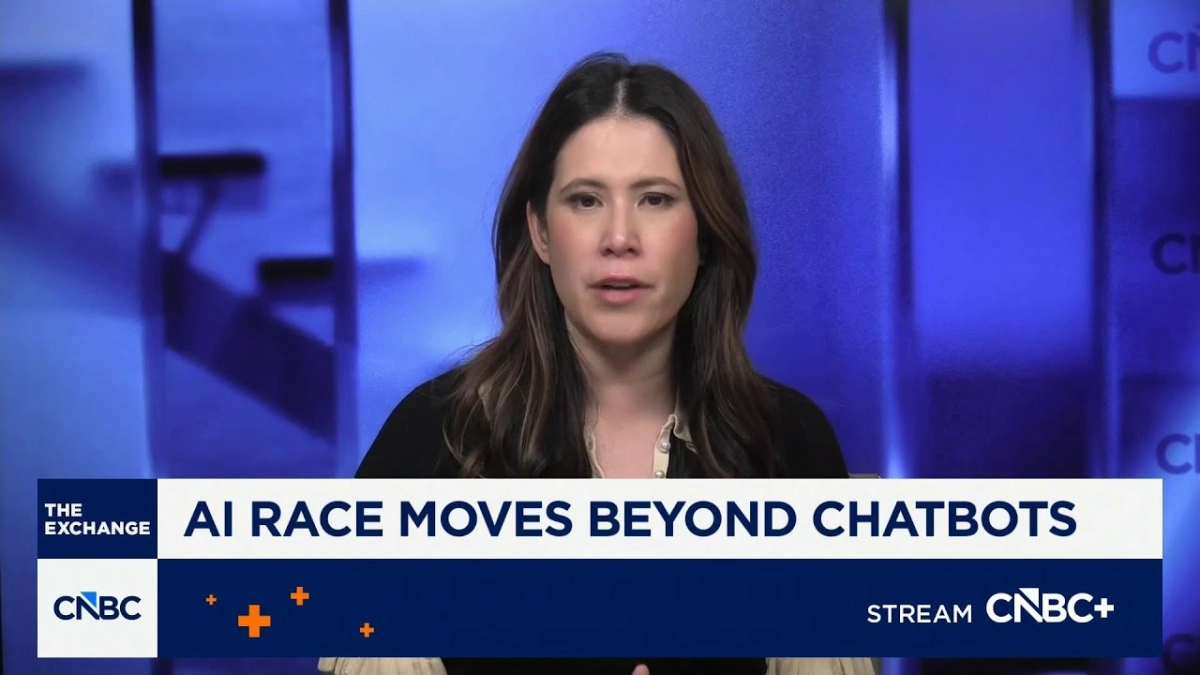
OpenAI is rapidly moving past the era where its primary identity was defined solely by the consumer-facing novelty of ChatGPT. The company is now aggressively pursuing the industrial and enterprise backend, evidenced by its burgeoning API business, which recently hit a stunning $1 billion annualized recurring revenue (ARR). This pivot, highlighted in a CNBC report featuring Deirdre Bosa, signals a crucial maturation point in the AI race: the focus has irrevocably shifted from public engagement to embedding foundational models deep within commercial infrastructure.

Bosa, reporting on the news regarding OpenAI, detailed how this metric—API usage—is far more indicative of true enterprise adoption than consumer chat volume. An Application Programming Interface (API) is the mechanism through which enterprise software accesses and utilizes complex AI models like GPT, Gemini, or Claude, allowing these models to run inside proprietary products, drug discovery tools, or scientific simulations. This is where the real economic leverage lies, as it moves the models from being simple public utilities to essential components of core business operations. OpenAI CEO Sam Altman underscored this shift, noting in a recent post that while "People think of us mostly as ChatGPT, but the API team is doing amazing work!" in driving that billion-dollar ARR milestone. This revenue stream represents the fundamental transaction of the new AI economy: systems talking directly to systems, automating complex workflows at scale, and providing the necessary throughput to justify the astronomical investment costs associated with training frontier models.

The pursuit of massive, sustained revenue is not just about growth; it is an existential imperative driven by the immense capital required to maintain and advance global-scale AI infrastructure. This pressure is likely what led OpenAI's CFO, Sarah Fryer, to float a highly provocative and potentially transformative revenue model: the "value exchange." This model suggests a move beyond traditional SaaS pricing (pay-per-token) toward a partnership structure where OpenAI takes a direct equity or licensing cut of the breakthrough discoveries or commercial successes enabled by its AI.

Fryer suggested: “I think there’s an interesting value exchange model in our future, where we align ourselves on the same side of the table as, say, a drug developer... We say we’re going to work with you to create this next breakthrough. Can we take a license off of the outcome?” This concept is particularly relevant in capital-intensive sectors like pharmaceuticals, where AI-aided drug discovery could yield multi-billion dollar compounds. If OpenAI’s models are instrumental in shortening the discovery timeline or identifying novel targets, the company sees itself as deserving a share of the resulting intellectual property and profit, fundamentally changing the relationship between AI provider and enterprise customer from vendor to equity partner.

The proposition, however, immediately highlights a profound philosophical and economic friction point in the current AI ecosystem. As Bosa and the CNBC anchors discussed, there is a visible irony in a company built on scraping vast amounts of copyrighted, publicly available data—often without compensation to the original creators—now seeking to monetize the outcome of discoveries aided by that model via licensing fees. If OpenAI utilizes the entirety of human knowledge to train its models and then seeks a share of the profits derived from new discoveries, it raises fundamental questions about who truly owns the inputs, and who deserves to be paid for the outputs. This tension is central to the ongoing legal battles and regulatory debates surrounding generative AI.

This aggressive exploration of novel revenue streams, from the back-end API business to the proposed value exchange model, reveals the underlying financial stress driving the AI race. The enormous commitments OpenAI has made—including the rumored trillion-dollar infrastructure funding required to build out its vision—mandate revenue models capable of generating returns at an unprecedented scale. The $1 billion ARR from APIs is a strong start, but it remains a fraction of the capital expenditure required to maintain leadership in frontier AI. Therefore, the strategic push into deep enterprise integration and creative licensing arrangements is less a sign of optional diversification and more a necessary mechanism to fund the next generation of computational power and intellectual advancement. The industry is watching closely to see if these models prove sustainable, and whether the market will accept this new definition of partnership and value extraction.

#AI
#AI race moves
#Artificial Intelligence
#Technology

AI Daily Digest

Get the most important AI news daily.

GoogleSequoiaOpenAIa16z
+40k readers