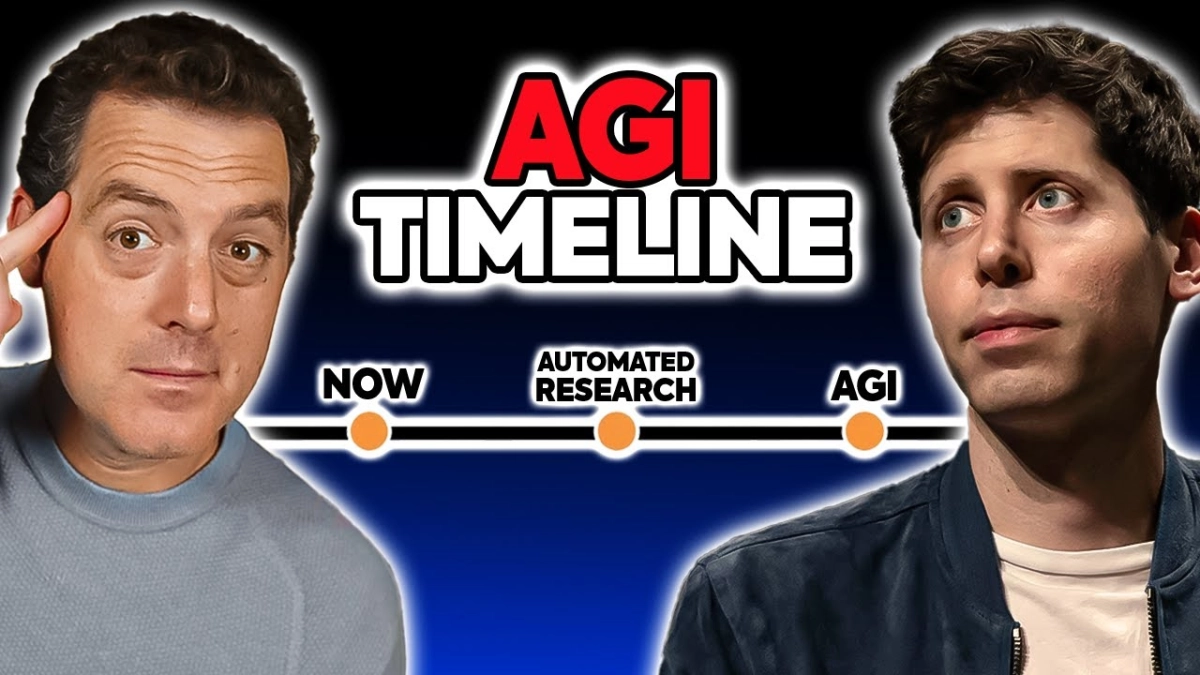
The artificial intelligence community received a jolt of precision when Sam Altman and Jakub Pachocki of OpenAI, during a recent livestream, laid out an ambitious, almost startlingly specific timeline for the emergence of advanced AI capabilities. Far from vague predictions, they articulated a vision where an "Automated AI research intern" could be a reality by September 2026, quickly followed by full "Automated AI research" by March 2028. This isn't just about faster chatbots; it’s a blueprint for a self-improving intelligence that could fundamentally reshape the global technological landscape.
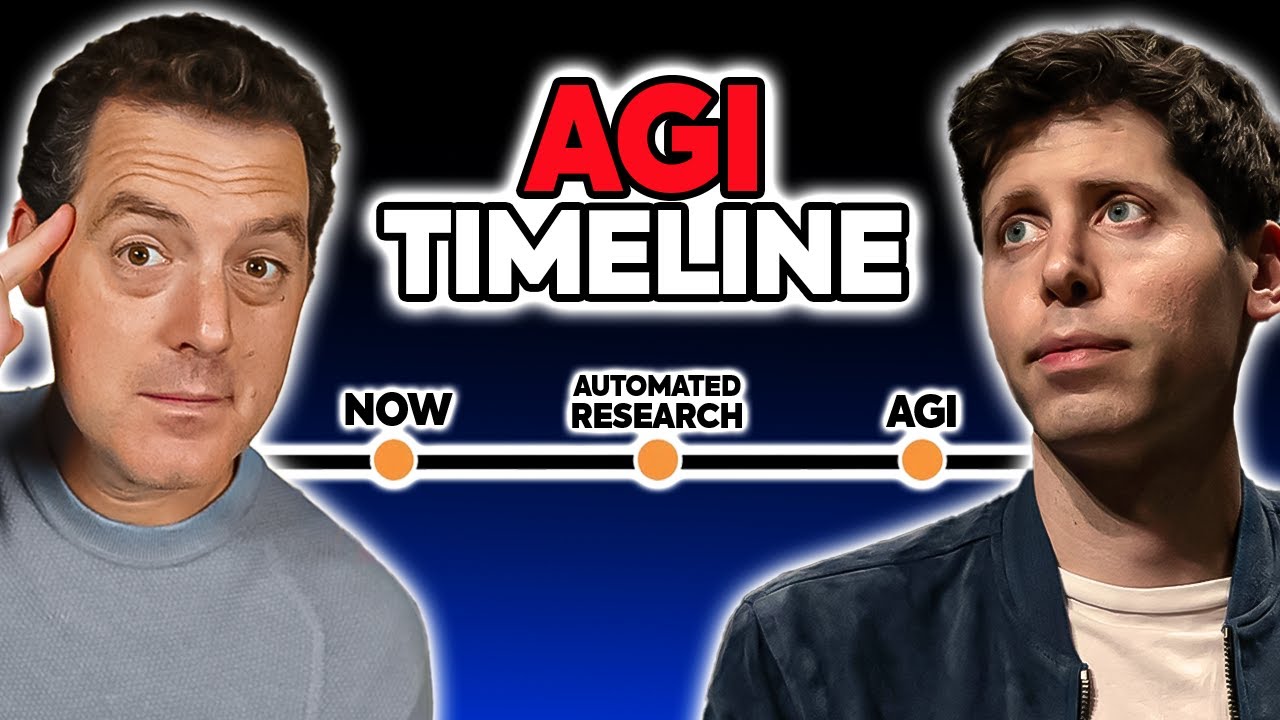
In a candid discussion, OpenAI CEO Sam Altman and researcher Jakub Pachocki spoke about the company's strategic direction and technical milestones. Their commentary, distilled and analyzed by Matthew Berman, underscored not only the rapid pace of AI development but also the profound implications for innovation, safety, and the competitive race among frontier labs. The stakes, they implied, are nothing short of a winner-take-all scenario in the pursuit of artificial general intelligence.
The proposed timeline is audacious, suggesting that within a few short years, AI could transition from an assistant to an independent researcher. An "Automated AI research intern" by September 2026 implies a system capable of executing research tasks with human-level competence, albeit under some supervision. The subsequent leap to "Automated AI research" by March 2028, a mere 18 months later, signifies an AI that can autonomously conceptualize, conduct, and interpret research, potentially outstripping human capabilities. This acceleration, often termed an "intelligence explosion," is predicated on the recursive nature of AI development: smarter AI can build even smarter AI. This insight highlights the urgency and competitive pressure driving massive investments into this field, as the first to achieve such a breakthrough could gain an insurmountable lead.
The ability of AI models to complete increasingly complex tasks autonomously is a core driver of this progression. From handling "5-second tasks" to "5-minute tasks" and "5-hour tasks," the frontier models are rapidly expanding their operational horizons. The next targets, as outlined, are "5-day tasks," "5-month tasks," and eventually "5-year tasks." This exponential growth in task duration and complexity means that AI will soon be capable of executing long-term projects with minimal human intervention. As Matthew Berman noted, once models can run autonomously for extended periods, "the only limiter, the only thing preventing us from ramping up the quality, from ramping up the performance of artificial intelligence, is how much compute we can actually throw at it." This underscores the strategic importance of computational resources in the AI race.
A critical aspect of OpenAI's research, and a core insight, is their focus on "chain-of-thought faithfulness." This concept addresses the crucial need for AI models to not only provide correct answers but also to reveal their internal reasoning process. Jakub Pachocki explained, "The idea is to keep parts of the model’s internal reasoning free from supervision. So don’t look at it during training. And that’s let it remain representative of the model’s internal process." This approach aims to foster trust and ensure alignment with human values by allowing developers to understand *how* the AI arrives at its conclusions, rather than just accepting its outputs. It’s a proactive step towards building safer, more interpretable AI systems, mitigating risks associated with opaque "black box" models.