

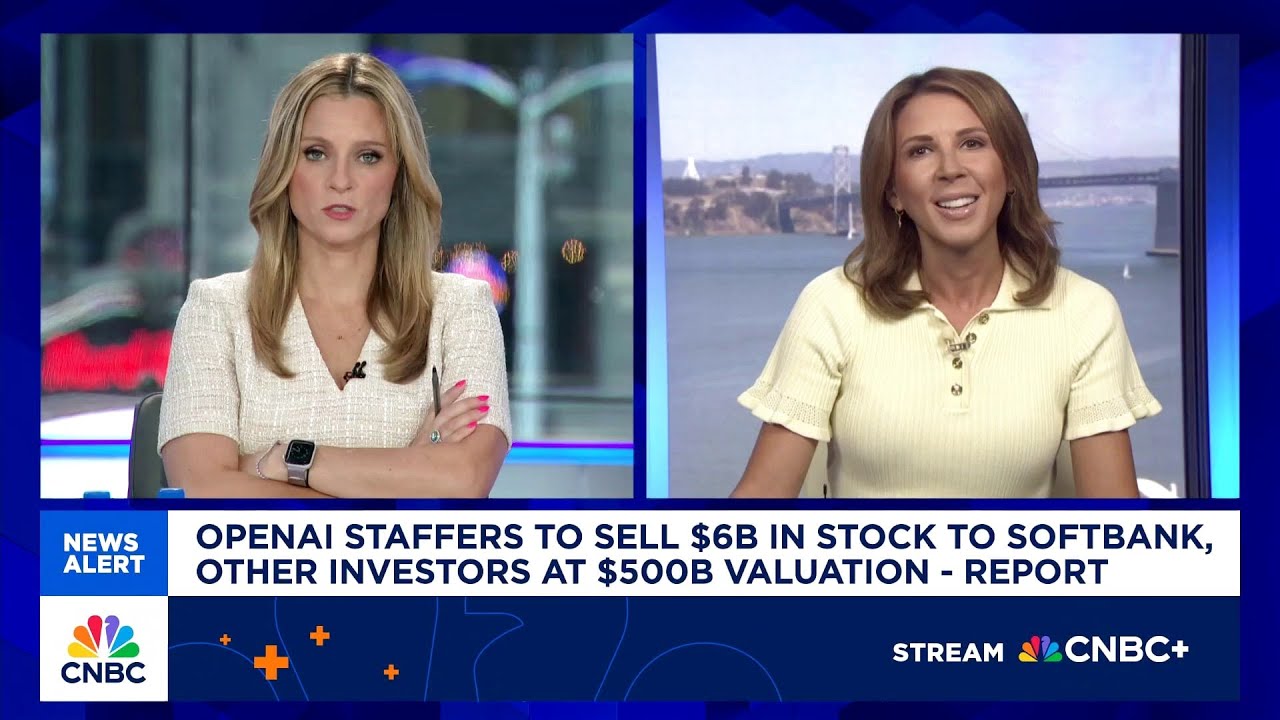
OpenAI, the vanguard of generative artificial intelligence, is reportedly poised for a secondary stock sale valuing the company at an astonishing $500 billion, a figure that underscores the unprecedented capital flow into the AI sector. This valuation, a significant leap from the $300 billion ascribed just months prior, highlights the fervent investor appetite and the perceived transformative power of its foundational models.
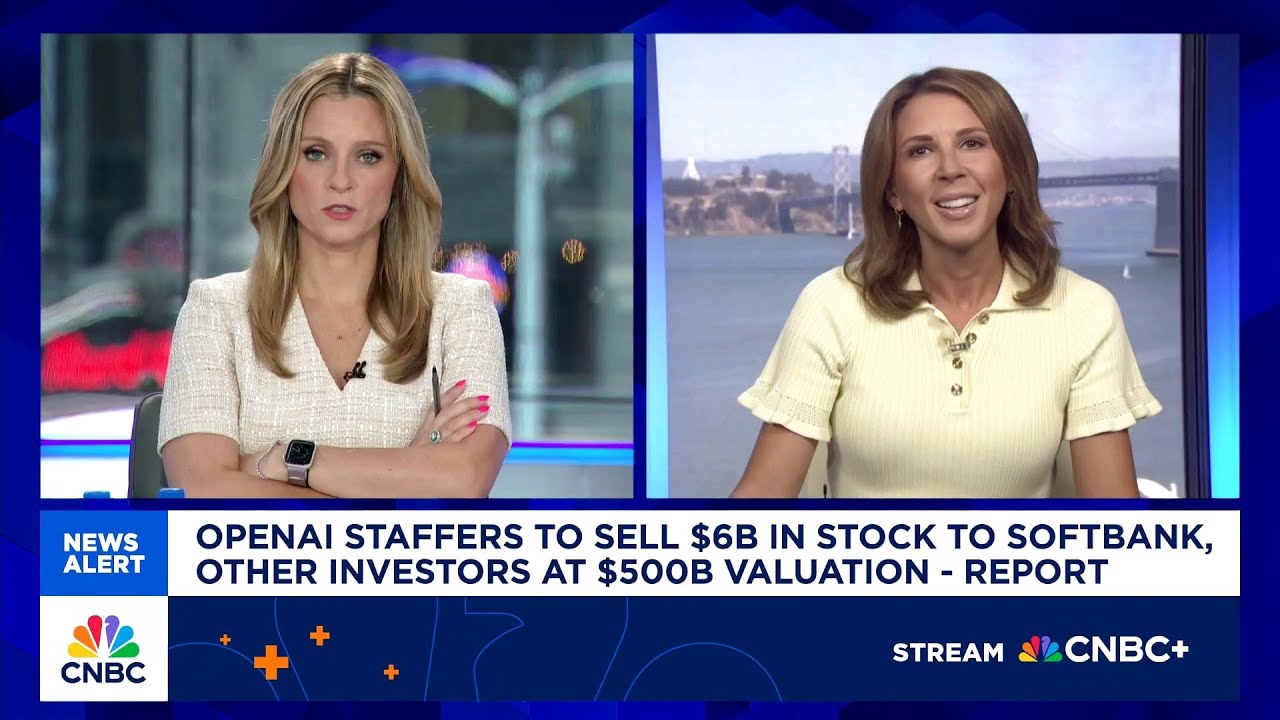
On CNBC's 'Fast Money,' reporter MacKenzie Sigalos joined anchor Courtney Reagan to deliver a news alert detailing the proposed transaction. Sigalos reported, "Bloomberg is reporting that OpenAI staffers are preparing to sell about $6 billion worth of stock in a secondary share sale that would value the company at roughly $500 billion." This substantial liquidity event, while not raising new capital for the company itself, allows current and former employees to monetize their equity holdings.
The sale, which is expected to be led by Thrive Capital, with Dragoneer and SoftBank also participating, marks a pivotal moment for employee wealth creation within the private AI ecosystem. A source close to the process confirmed the $500 billion figure is "directionally accurate, but the final total will depend on how much current and former employees ultimately decide to sell." Such secondary offerings are increasingly vital mechanisms for talent retention in a fiercely competitive industry, enabling early contributors to realize substantial gains without necessitating an immediate public listing.
This latest development is distinct from the $40 billion funding round announced in March, which had set the company's valuation at $300 billion. The rapid appreciation to $500 billion in a relatively short span illustrates the escalating confidence among venture capitalists and institutional investors in OpenAI's trajectory and its pivotal role in the AI revolution. It also reflects the broader market’s belief in the long-term revenue potential of AI-powered applications, even as many are still in their nascent stages.
The sheer scale of this valuation, placing a privately held AI firm on par with some of the world's largest public companies, invites scrutiny regarding the sustainability of such rapid growth. Yet, it simultaneously cements OpenAI's position as a dominant force, attracting top-tier investment and talent. The secondary market's ability to facilitate such a colossal transaction also signals a maturation of private capital structures, offering sophisticated avenues for early investors and employees to realize returns in the absence of traditional IPOs.