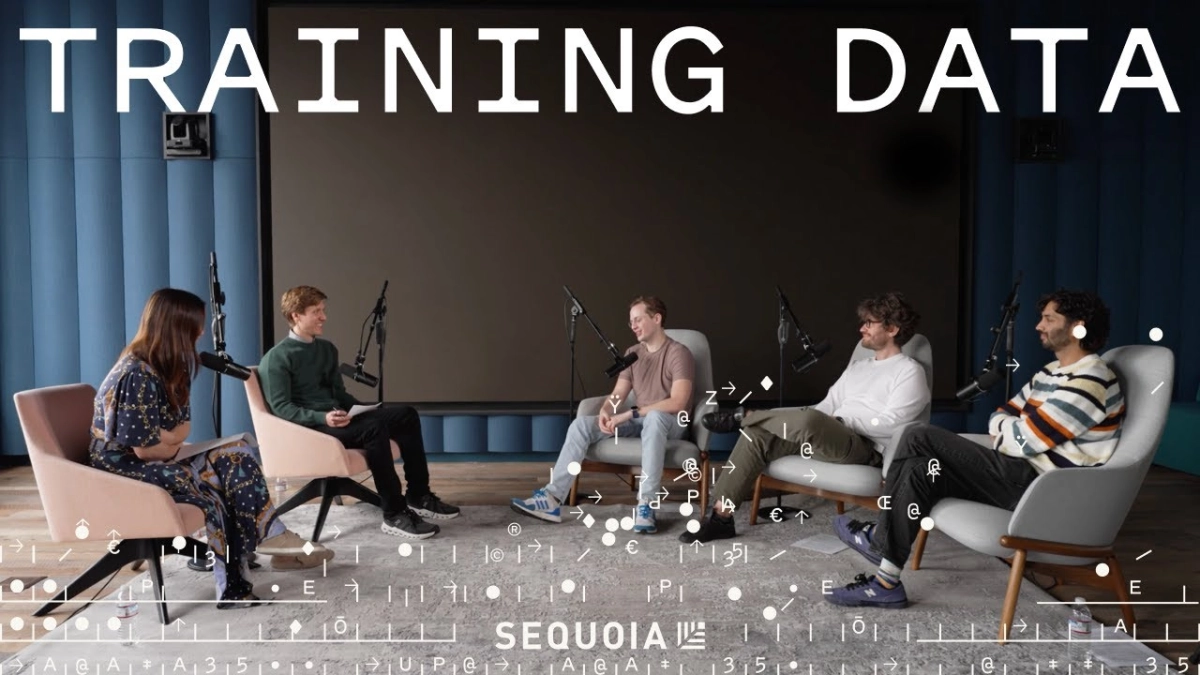
"We've hit this kind of like GPT-3.5 moment for video. Let's make sure the world is kind of aware of what's possible now." This bold declaration by Bill Peebles, head of the OpenAI Sora team, encapsulates the groundbreaking nature of their latest generative video model. Peebles, alongside engineering lead Thomas Dimson and product lead Rohan Sahai, recently sat down with Konstantine Buhler and Sonya Huang of Sequoia Capital on the "Training Data" podcast. The conversation delved deep into Sora 2’s technical innovations, its philosophical underpinnings, and the profound implications for creativity and our understanding of artificial intelligence.
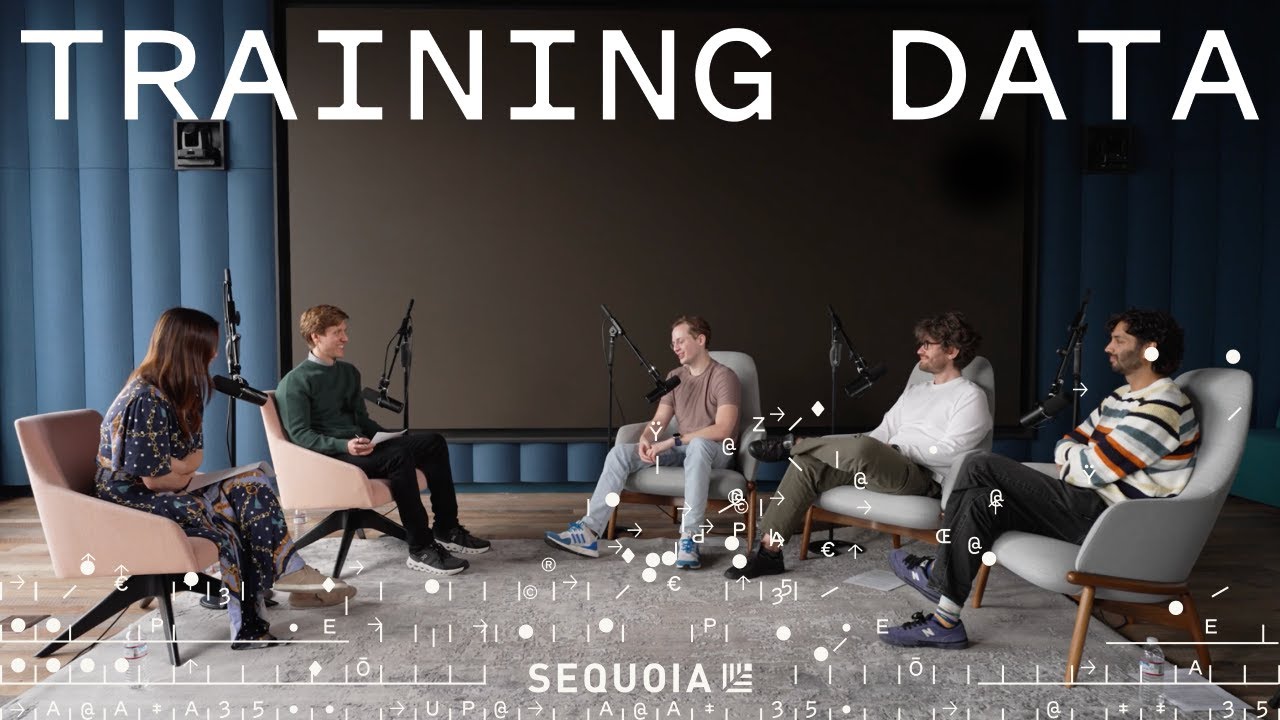
The team behind Sora 2 is not merely building a tool; they are crafting a new paradigm for content creation, aiming to compress filmmaking processes from months to mere days. Bill Peebles, the visionary behind the diffusion transformer that powers Sora and many other video generation models, highlighted his traditional research path from undergrad to Berkeley, culminating in his pivotal work on Sora at OpenAI. Thomas Dimson, with a background steeped in building early machine learning and recommender systems at Instagram, and later a "Minecraft in the browser" startup, brings a wealth of product and social platform experience. Rohan Sahai, who transitioned from working on ChatGPT to lead Sora's product team, rounds out a group whose diverse expertise is clearly shaping Sora's ambitious trajectory.
At the heart of Sora 2’s technical prowess lies the diffusion transformer (DIT), an architectural innovation pioneered by Peebles. Unlike autoregressive transformers, which generate tokens sequentially, DITs employ a diffusion process, gradually removing noise from an entire video simultaneously. "Because you're generating the whole video simultaneously, you really solve issues where quality can like degrade or change over time, which was kind of like a big problem for prior video generation systems, which DITs ended up fixing," Peebles explained. This simultaneous generation ensures consistency and coherence across the video’s timeline, a critical advancement for realistic and compelling output.
The core technical breakthrough enabling this coherence is the concept of "space-time tokens." Peebles elaborated, "For vision, it's really this notion of a space-time patch... And that really is kind of like the minimal building block that you can like build visual generative models out of." These tokens allow the model to understand and maintain object permanence and realistic physics throughout the generated video, a qualitative leap beyond simple pixel manipulation. It’s an insane phrase, yet it perfectly describes the model's ability to grasp the intricate, four-dimensional nature of reality within a video.
This deeper understanding allows Sora 2 to exhibit a novel form of "agent failure" rather than mere "model failure." Peebles offered a compelling example: "When the model makes a mistake, it actually fails in a very unique way that we haven't seen before... if he misses in the model, Sora will not just like magically guide the basketball to go into the hoop... It will actually defer to the laws of physics most of the time, and the basketball will actually like rebound off the backboard." This signifies that Sora 2 is not just generating pixels; it's implicitly simulating a world with agents that adhere to physical laws, even when their actions don't achieve the user's desired outcome. This emergent property suggests the model is developing an internal "world model," capable of understanding and predicting complex interactions.