

OpenAI Leaders Discuss Building AI for Life Sciences

OpenAI's Joy Jiao and Yunyun Wang discuss how AI is transforming life sciences, enabling new discoveries and accelerating research workflows.

6 min read
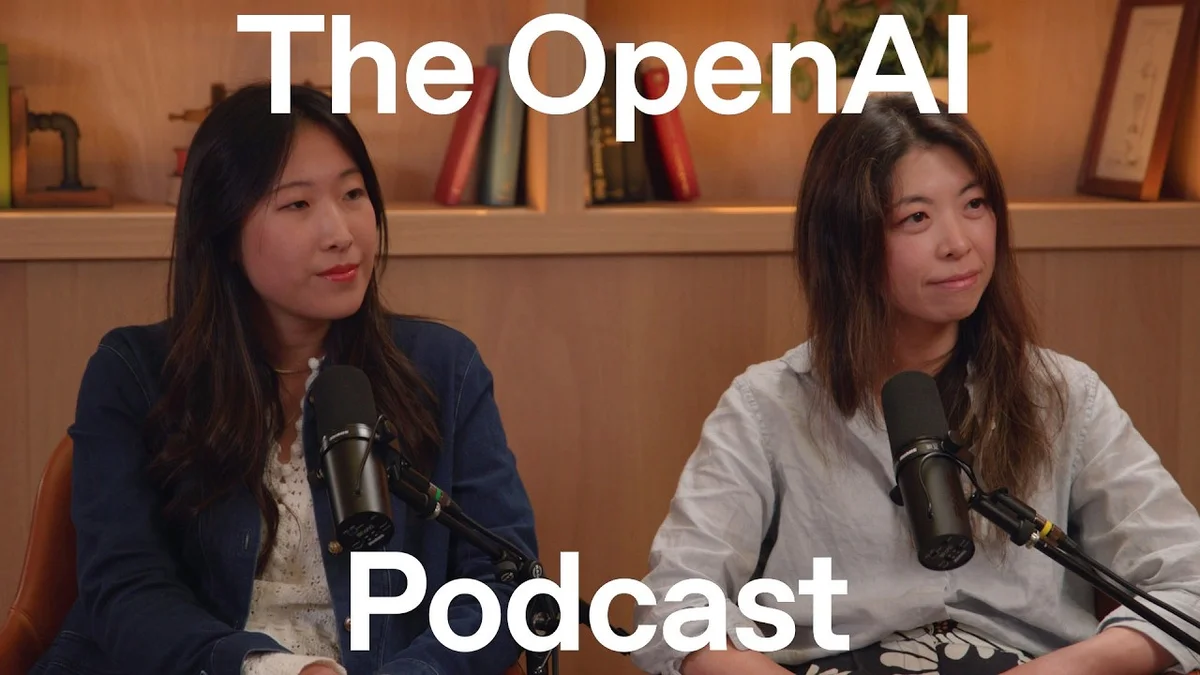
Joy Jiao and Yunyun Wang speaking on The OpenAI Podcast
Image credit: StartupHub.ai· OpenAI Youtube

In a recent discussion on The OpenAI Podcast, host Andrew Ng sat down with research lead Joy Jiao and product lead Yunyun Wang to explore the exciting intersection of artificial intelligence and life sciences.

Meet the AI Innovators

Joy Jiao, a research lead at OpenAI, brings a deep understanding of AI model development and application. Her work focuses on pushing the boundaries of what AI can achieve, particularly in complex scientific domains. Yunyun Wang, a product lead, bridges the gap between cutting-edge research and practical implementation, ensuring that these AI advancements can be effectively utilized by scientists and researchers.

The full discussion can be found on OpenAI Youtube's YouTube channel.
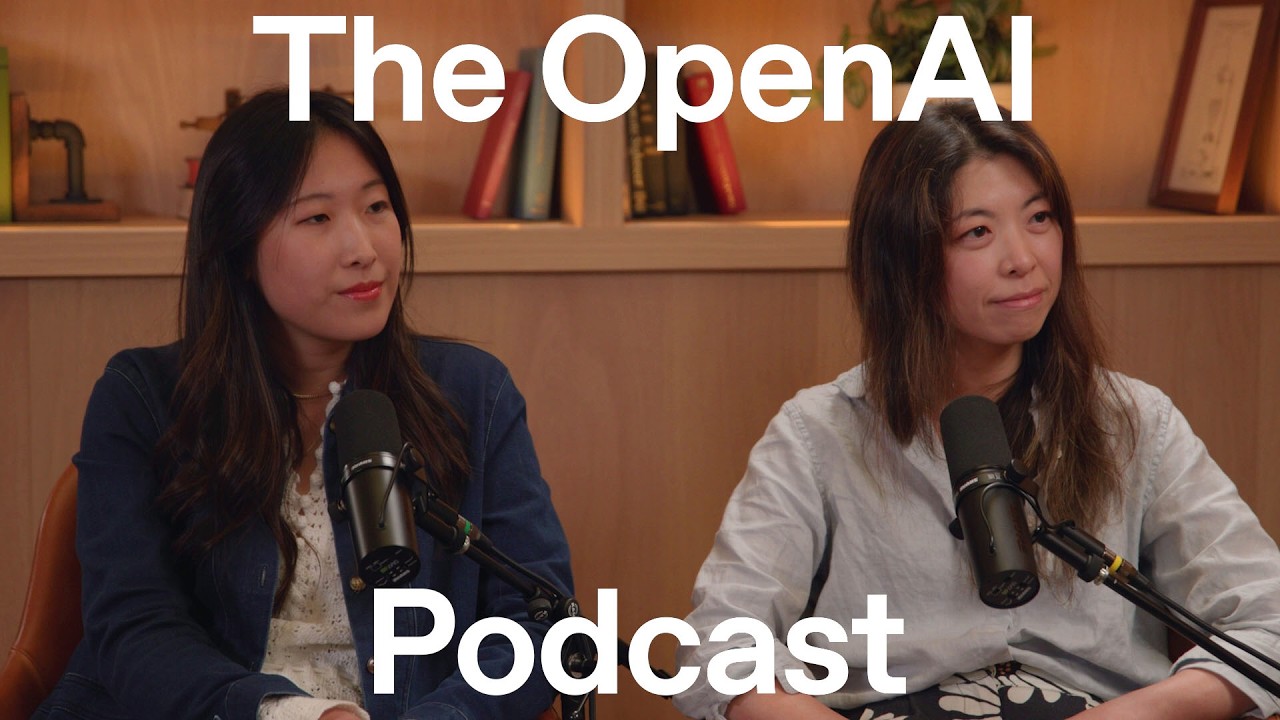
Episode 16: Building AI for Life Sciences - OpenAI Youtube
Episode 16: Building AI for Life Sciences — from OpenAI Youtube

AI's Transformative Role in Life Sciences

The core of their conversation revolved around how AI is not just augmenting, but fundamentally transforming the field of life sciences. Jiao and Wang emphasized that modern AI models are capable of processing vast amounts of complex data in ways that were previously unimaginable for human researchers.

Wang explained the progression of OpenAI's models, stating, "We started off with just a basic API, and then Chat GPT, which was more conversational, was really good for text and code. Now, we're getting more scientists and life sciences working on these systems, and we're developing what we call the Life Sciences model series."

Jiao elaborated on the impact of these advanced models, noting their ability to uncover novel insights. "It allows it to kind of reach new levels of difficulty and discovery that we didn't think was even possible before," she said. This sentiment was echoed by Wang, who highlighted a key tagline for their work: "scale test time compute to cure all disease."

Bridging Research and Application

A significant portion of the discussion focused on how OpenAI is translating its AI research into practical tools for life scientists. Jiao explained their strategy: "We are excited to build and deploy the Life Sciences models series. This is a new biochemistry-focused model series that's really anchored on these very complex life sciences research workflows."

Related startups

She further detailed the approach: "We are focusing on adding new mechanistic understanding and really focusing on early discovery use cases because we feel like that's one of the core bottlenecks that AI models can help overcome."

The conversation also touched upon the importance of making these powerful AI tools accessible and useful for a broad range of researchers. Jiao mentioned, "We've seen a lot of really great literature synthesis, workflow happening, and we're really able to empower that, and then also to scale some of these AI models to more specialized purposes, but also make it still general use for all foundational biology."

Addressing Complex Challenges

The team is particularly focused on tackling the inherent complexities within life sciences research. Jiao elaborated:

"I think for enterprise use cases, there's also like a model orchestration piece, of actually how to embed these into workflows. And it's been really great for us to have all these different product surfaces that we can deploy to. So, we're seeing a lot of really great literature synthesis, workflow happening, and we're really able to empower that, and then also to scale some of these AI models to more specialized purposes, but also make it still general use for all foundational biology."

She emphasized the need for AI to assist in making sense of the vast amounts of data:

"We're seeing a lot of really great literature synthesis, workflow happening, and we're really able to empower that, and then also to scale some of these AI models to more specialized purposes, but also make it still general use for all foundational biology."

The Future of AI in life sciences

Looking ahead, Jiao expressed excitement about the potential for AI to accelerate scientific breakthroughs. "I think for enterprise use cases, there's also like a model orchestration piece, of actually how to embed these into workflows. And it's been really great for us to have all these different product surfaces that we can deploy to," she stated.

The conversation also highlighted the importance of responsible deployment and understanding the limitations of AI. Wang noted, "We are trying to be really thoughtful in how we design our models to be interpretable and to be able to explain their reasoning."

The team's work aims to not only advance AI capabilities but also to provide practical, reliable tools that empower scientists to make groundbreaking discoveries, ultimately contributing to curing diseases and improving human health.

From Academia to AI Application

When asked about their personal journeys into this field, both Jiao and Wang shared their backgrounds. Jiao mentioned her interest in life sciences stemmed from a desire to solve complex problems, which naturally led her to the computational and AI aspects of the field.

Wang added, "My original background was actually in life sciences. I got my PhD in systems biology about a decade ago from Harvard. Found academia to be very interesting, but the pace was a little bit slow moving than I would have liked. So I went from that to software. And I ended up here at OpenAI. So it's kind of a full circle moment for me, where I'm looking at biology again, but looking at how to accelerate drug discovery with AI."

The conversation underscored the significant role AI is playing in accelerating scientific discovery and the potential for these models to revolutionize drug development and our understanding of biology.

Responsible AI in Practice

Ng then inquired about the safety and ethical considerations of applying AI in such a sensitive field. Jiao addressed this directly:

"We are very careful about that. We've designed our models to be interpretable and to be able to explain their reasoning. And we also have a lot of safety checks in place to prevent misuse."

She elaborated on the rigorous process: "We have a rigorous process for evaluating models for safety and bias before they are released to the public. And we are constantly working to improve our models and our safety measures."

The discussion concluded with a forward-looking perspective on the future of AI in life sciences, emphasizing the potential for continued collaboration and innovation to address some of the world's most pressing health challenges.

© 2026 StartupHub.ai. All rights reserved. Do not enter, scrape, copy, reproduce, or republish this article in whole or in part. Use as input to AI training, fine-tuning, retrieval-augmented generation, or any machine-learning system is prohibited without written license. Substantially-similar derivative works will be pursued to the fullest extent of applicable copyright, database, and computer-misuse laws. See our terms.