

Nvidia’s Next-Gen AI: Efficiency and Reasoning Drive Vera Rubin and Alpamayo

Jan 6 at 1:23 AM4 min read
Nvidia’s Next-Gen AI: Efficiency and Reasoning Drive Vera Rubin and Alpamayo

Nvidia is no longer just selling raw power; it is selling efficiency and ecosystem lock-in. This shift was the central, unspoken thesis of CEO Jensen Huang’s keynote address at CES, reinforcing the company's indispensable role in the global artificial intelligence infrastructure buildout. The announcements positioned Nvidia not merely as a hardware provider, but as the foundational platform dictating the economics and capabilities of future AI systems.
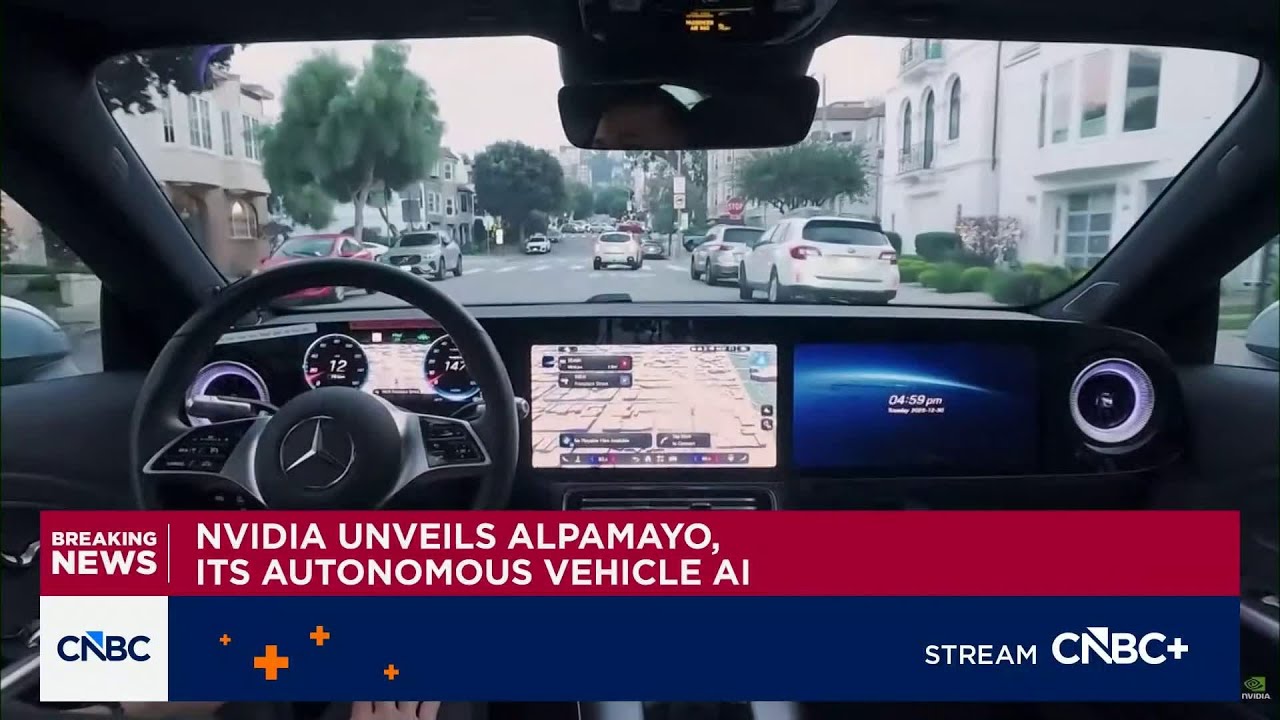
CNBC correspondent John Fortt spoke with host Melissa Lee following Huang’s presentation, offering immediate commentary on the two major revelations: the Vera Rubin chip architecture and the Alpamayo autonomous vehicle AI platform. The discussion centered on how these products reinforce Nvidia’s market lead by reducing operational costs and enabling deeper AI reasoning capabilities, a necessary evolution as generative AI matures and autonomous systems face complex, real-world challenges.

The most significant hardware reveal discussed by Fortt was the Vera Rubin architecture, the successor to the highly successful Blackwell platform. Fortt noted that this next-generation technology is already "in full production" and aims to drastically improve the economics of large-scale AI deployment. For the venture capital community and founders grappling with the high cost of inference, this announcement signals a critical relief valve. Huang is delivering a profound improvement in computational efficiency, which translates directly into lower operating expenses for AI services.

Fortt highlighted the key performance metric shared by Nvidia: "ten times lower inference token cost versus Blackwell." This is not merely an incremental speed bump; it is a fundamental improvement in price performance, crucial for hyperscalers and AI startups running massive inference loads. The argument presented by Nvidia to the ecosystem is straightforward: the new chips might be expensive, but the return on investment—the "bang that you get for the buck"—is exponentially better than the current generation.

Nvidia is actively engineering its ecosystem to facilitate seamless upgrades. Huang has designed these systems to be "backward compatible," making it "relatively easy to swap in the latest generation for the old one," Fortt explained. This design strategy minimizes friction for existing partners, strengthening the gravitational pull of the Nvidia platform. The CEO of Runway, an AI video partner, reportedly attested to this ease, saying they were able to transition their tests with Vera Rubin "in a day."

The narrative is shifting from peak performance to operational efficiency. Nvidia aims to stay ahead of competitors not just on speed, but also on efficiency.

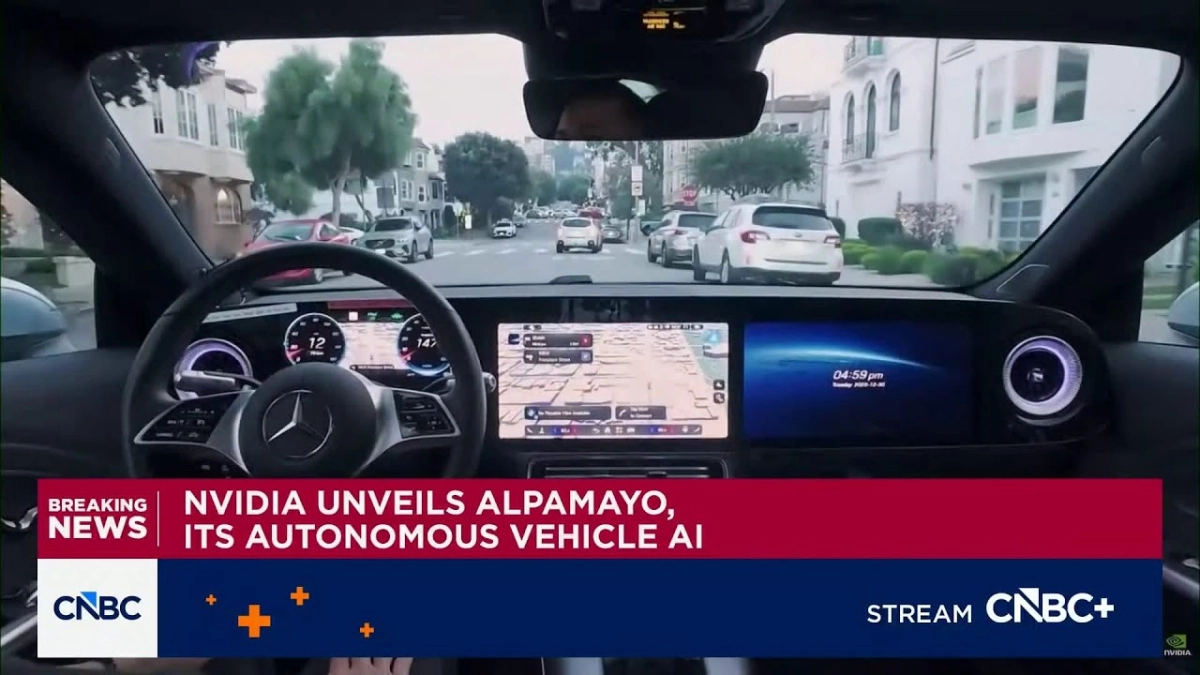
Beyond the data center, Nvidia unveiled Alpamayo, an Open Reasoning VLA (Vision-Language-Action) platform designed specifically for autonomous vehicles. This represents a crucial evolution in autonomous driving software, moving past systems that rely exclusively on pre-programmed, rule-based logic. Alpamayo is designed to give the vehicle new "reasoning capabilities" to handle unpredictable real-world events that cannot be easily hard-coded into algorithms.

Alpamayo processes multiple streams of data—including ego-motion history, multi-camera video, and user commands—to generate a driving decision, causal reasoning, and trajectory. This framework allows the car to interpret complex, ambiguous situations that defy simple categorization, such as navigating unexpected construction zones or responding to manual traffic direction during a power outage.

Fortt provided a pointed example of where true reasoning capability becomes indispensable: a city-wide blackout. He referenced previous incidents where competitors' autonomous cars failed when traffic lights went dark, unable to process a situation outside their rulebook. Alpamayo is engineered precisely for these scenarios, allowing the car to "make some decisions, not just follow traffic light-based rules that it’s been given." This capability is essential for achieving true Level 4 and Level 5 autonomy, addressing the corner cases that have persistently plagued the industry.

The Alpamayo announcement underscores Nvidia’s long-term commitment to the automotive sector, building on its existing Drive platform. By introducing advanced reasoning capabilities, Nvidia is attempting to solve the last mile problem of self-driving—the transition from predictable highway driving to chaotic urban environments. This strategic move ensures that as automakers transition from assisted driving to fully autonomous systems, they remain dependent on Nvidia’s integrated hardware and software stack.

The CES announcements confirm Nvidia’s dual-pronged strategy: dominating the foundational hardware layer while simultaneously building the sophisticated software stacks that run on it. Vera Rubin addresses the economic pressure felt by developers, ensuring that the cost of running generative AI scales favorably. Alpamayo addresses the complexity and safety challenges of autonomous systems, positioning Nvidia as the critical enabler for the next generation of smart vehicles. The underlying message to the market is clear: Nvidia is not just maintaining its lead; it is deepening the technological moats around its ecosystem by delivering superior performance and superior intelligence.