

Nvidia's AI Dominance and Gaming's Future

Nvidia's revenue is now dominated by AI data centers, overshadowing its gaming roots, while AI tech like DLSS 5 sparks debate.

4 min read
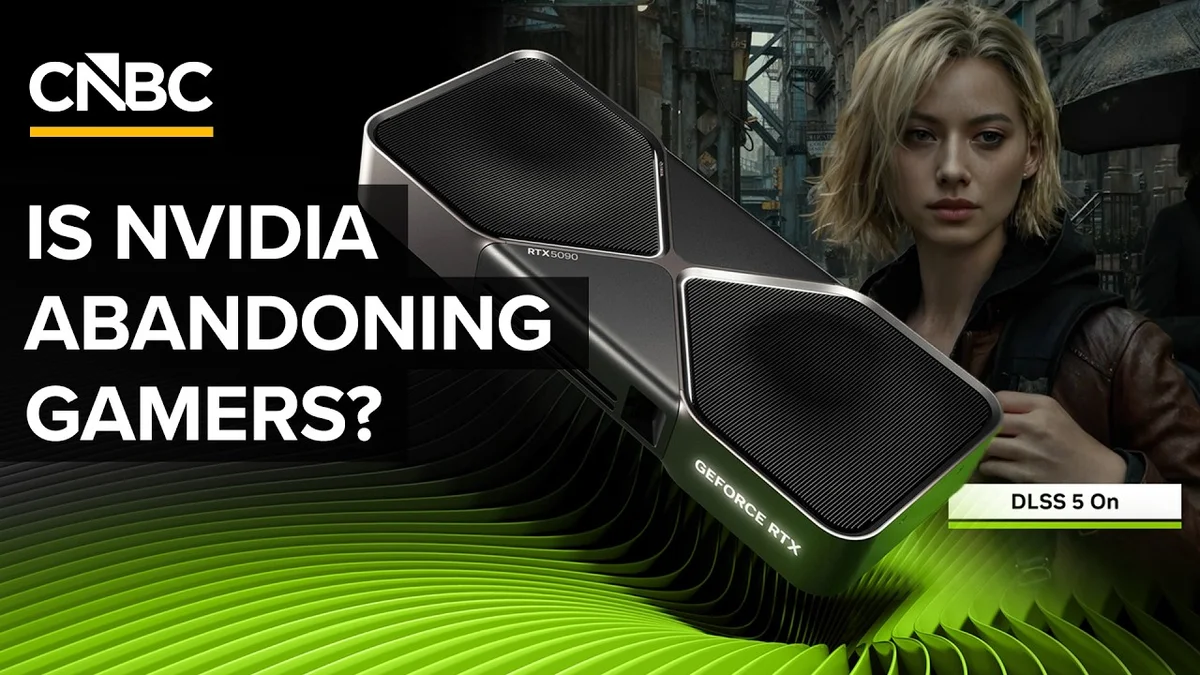
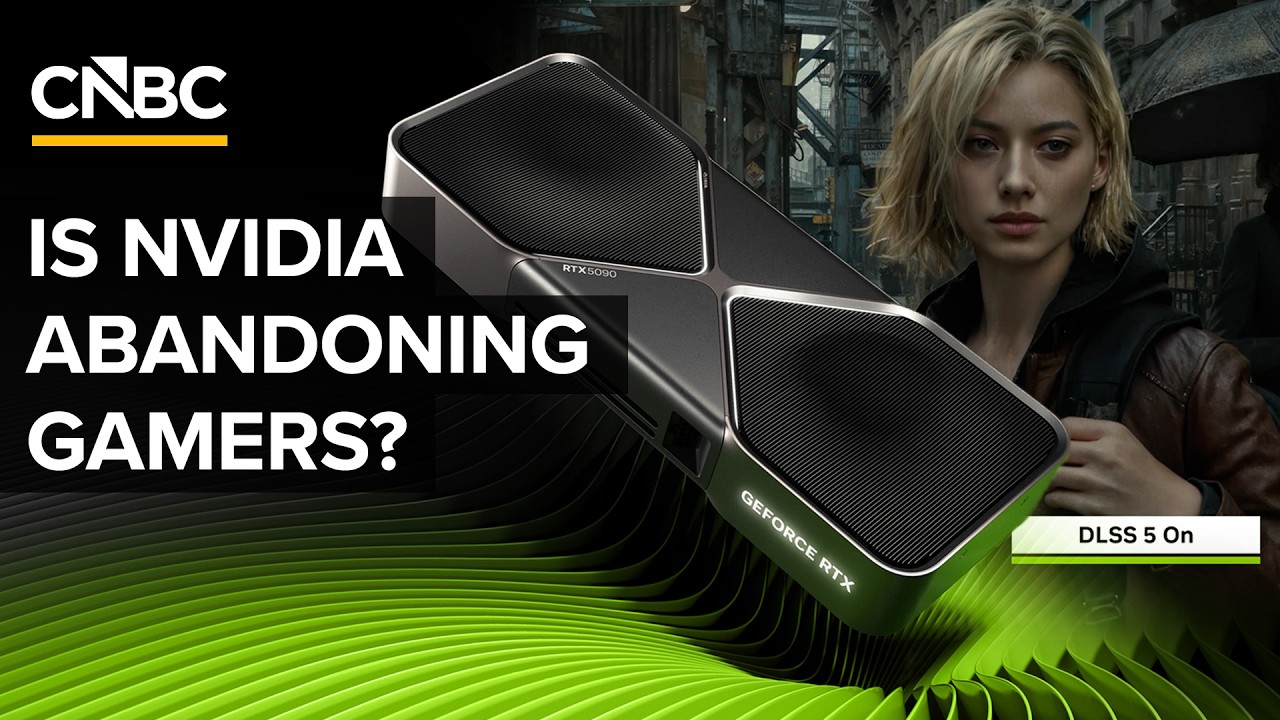
Close-up of a high-performance Nvidia GPU with its fans visible.
Image credit: CNBC· CNBC

For decades, Nvidia (NASDAQ: NVDA) was synonymous with gaming. Its graphics processing units (GPUs) powered the most immersive virtual worlds, a fact celebrated by enthusiasts and industry insiders alike. However, the seismic shift brought by the artificial intelligence revolution has fundamentally reshaped the company's trajectory and its perception in the market. Once a niche player for gamers, Nvidia is now a titan of AI, with its data center business eclipsing its gaming roots, a transformation that has left some original fans feeling left behind.
Nvidia's AI Dominance and Gaming's Future - CNBC
Nvidia's AI Dominance and Gaming's Future — from CNBC

The AI Gold Rush

Nvidia's Q4 revenue for FY 2026 is projected to be a staggering $68.1 billion, with a colossal 91.5% of that figure stemming from its data center segment. This segment is driven by the company's powerful AI accelerators, essential for training and running complex AI models. While gaming still contributes 5.4%, and professional visualization and automotive/robotics make up smaller percentages, the data center is undeniably the engine of Nvidia's current financial success.

This dominance is a stark contrast to Nvidia's early days. As Greg Miller, Co-Founder and CEO of Kinda Funny Games, noted, "For its first 30 years, Nvidia wasn't a household name, unless you were a gamer." He added that while he understands the company's strategic pivot, it "breaks my heart" to see the shift away from its gaming origins.

Related startups

Gaming's Shifting Priorities

The video game industry itself is experiencing a period of consolidation and cost-cutting, with major players like Microsoft's Xbox and Sony's PlayStation implementing layoffs and restructuring. This economic pressure, coupled with the overwhelming demand for AI chips, has led Nvidia to re-evaluate its product roadmap. Reports suggest that Nvidia might be significantly reducing the production of its upcoming RTX 50-series GPUs due to ongoing memory shortages. This could mean that 2026 might be the first year in three decades that Nvidia doesn't release a new generation of gaming GPUs.

The company, however, maintains that gamers remain crucial. An Nvidia spokesperson stated that gamers are "hugely important" and that the company is working closely with suppliers to maximize memory availability for its gaming products. This includes continuing to ship all its GeForce GPUs and working on its DLSS (Deep Learning Super Sampling) technology.

AI in Gaming: DLSS 5 and Beyond

Nvidia's embrace of AI is not solely focused on data centers. The company is also pushing the boundaries of AI in gaming itself. Jensen Huang, CEO of Nvidia, recently unveiled DLSS 5 at the Nvidia GTC conference. This new iteration of their AI-powered rendering technology promises to enhance visual fidelity and performance. Huang described DLSS 5 as "neural rendering," a fusion of 3D graphics and artificial intelligence.

However, not all gamers are impressed. The introduction of DLSS 5 has sparked controversy, with some players feeling that the AI-generated visuals are a step too far, altering the art style and potentially replacing the work of human artists. Tim Gettys, Co-Founder of Kinda Funny Games, expressed this sentiment, stating that DLSS 5 "feels like a slap in the face" to developers and artists, suggesting it's replacing the creative process rather than enhancing it.

The debate highlights a critical tension: while AI can offer significant performance gains and visual enhancements, its implementation in gaming needs to balance technological advancement with artistic integrity and player reception. The comparison between DLSS 5 off and on in games like Resident Evil and Starfield showcases the dramatic visual differences, but the subjective impact on the gaming experience remains a point of contention.

The Competitive Arena

While Nvidia dominates the AI chip market, its traditional gaming GPU market faces competition. Advanced Micro Devices (AMD) (NASDAQ: AMD) continues to be a strong competitor with its Radeon line of GPUs. However, the current market dynamics suggest that Nvidia's strategic focus is firmly on its data center AI business. This shift is evident in their revenue streams and their product development priorities. The ongoing memory crunch, exacerbated by surging costs, is impacting not just Nvidia but the entire PC market, with Gartner predicting a 17% price increase for PCs in 2026.

Nvidia's journey from a gaming-centric company to an AI powerhouse is a testament to its adaptability and foresight. While the gaming community may feel a sense of loss, the company's focus on AI is driving significant technological advancements with far-reaching implications across industries. The future of gaming, now intertwined with AI, will likely continue to be shaped by Nvidia's innovations, even as the company navigates the complexities of supply chain challenges and evolving player expectations.

© 2026 StartupHub.ai. All rights reserved. Do not enter, scrape, copy, reproduce, or republish this article in whole or in part. Use as input to AI training, fine-tuning, retrieval-augmented generation, or any machine-learning system is prohibited without written license. Substantially-similar derivative works will be pursued to the fullest extent of applicable copyright, database, and computer-misuse laws. See our terms.