


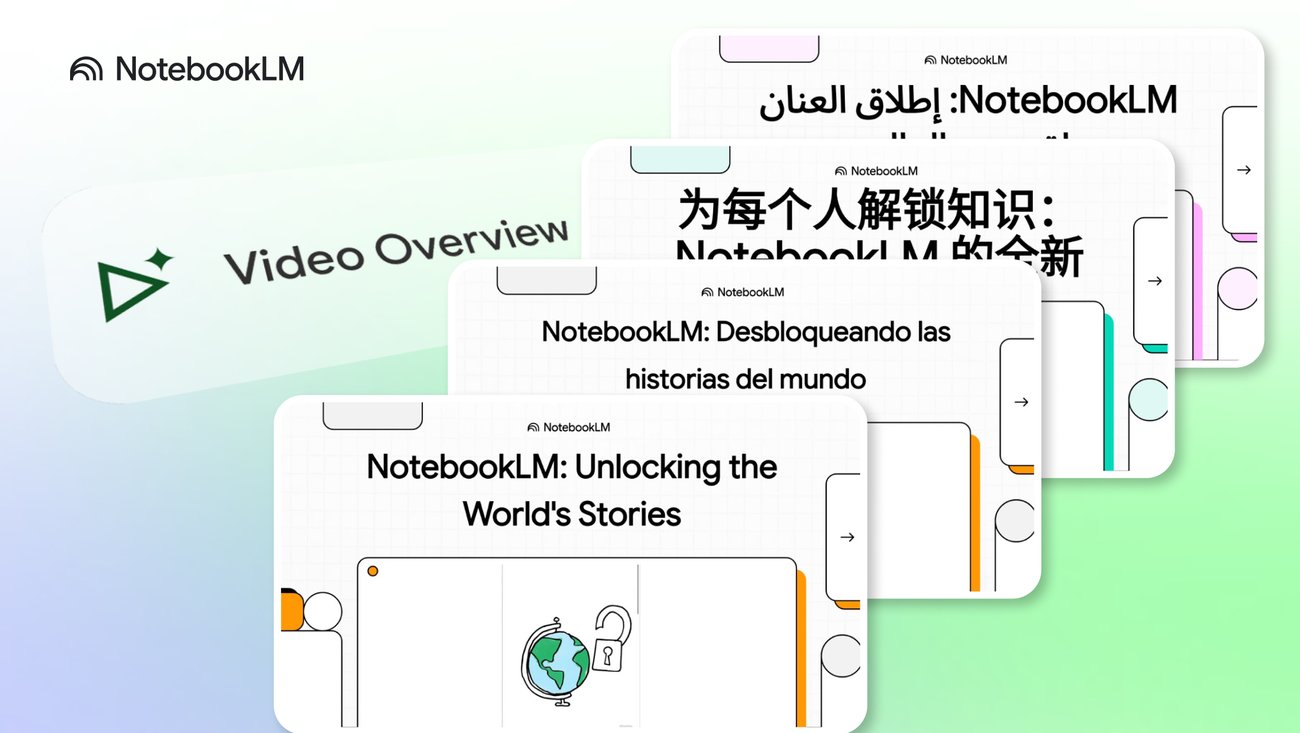
Google's AI-powered research assistant, NotebookLM, is significantly expanding its reach, now offering video overviews in 80 languages. This move dramatically broadens the tool's accessibility, pushing Google's generative AI capabilities into a much wider global user base. Source: NotebookLM's Video Overviews are now available in 80 languages
The update isn't just about translation; it's about breaking down fundamental language barriers for a tool designed to synthesize information. NotebookLM, which allows users to upload documents and generate summaries, outlines, and Q&As based on their own source material, becomes exponentially more valuable when its instructional content is available in a user's native tongue. Imagine a student in Brazil or a researcher in Japan trying to grasp the nuances of an AI tool through English-only tutorials. This update directly addresses that friction.
This isn't a minor feature tweak; it's a strategic play in the increasingly competitive AI assistant market. While tools like Microsoft's Copilot and OpenAI's ChatGPT are making strides in multilingual text generation, the ability to *understand and interact* with the tool's interface and support materials in a user's preferred language is a critical differentiator. Google is betting that ease of adoption, driven by comprehensive language support, will be a key factor in winning over users who might otherwise struggle with English-centric AI platforms.
The Global Implications of Localized AI
The expansion of NotebookLM 80 languages signals Google's intent to position its AI tools as truly global utilities, not just products for English-speaking markets. For individual users, this means a lower barrier to entry for leveraging advanced AI for personal research, learning, and content creation. A small business owner in Vietnam can now more easily learn to use NotebookLM to summarize market research, or a historian in Egypt can organize their notes with greater efficiency, all without needing to navigate complex English instructions.
For Google, this move is about market penetration and data. The more users who adopt NotebookLM, the more feedback Google receives, and the more diverse the use cases become. This feedback loop is crucial for refining AI models and identifying new features. It also subtly reinforces Google's brand as a leader in accessibility and global reach, a narrative that resonates well beyond the tech enthusiast bubble.
The broader industry impact is also significant. As Google pushes for deeper localization, it sets a new standard for AI tool developers. Simply offering multilingual text output might no longer be enough; comprehensive support for the entire user journey, from onboarding to advanced feature utilization, will become an expectation. This could accelerate the development of more inclusive AI products across the board, fostering innovation in regions previously underserved by cutting-edge technology. It's a clear signal that the next frontier for AI isn't just about raw power, but about universal usability.

