

Neo4j CEO Emil Eifrem on Graph Databases and AI

Neo4j CEO Emil Eifrem discusses the symbiotic relationship between graph databases and AI, highlighting how relational context is crucial for modern AI applications.

4 min read
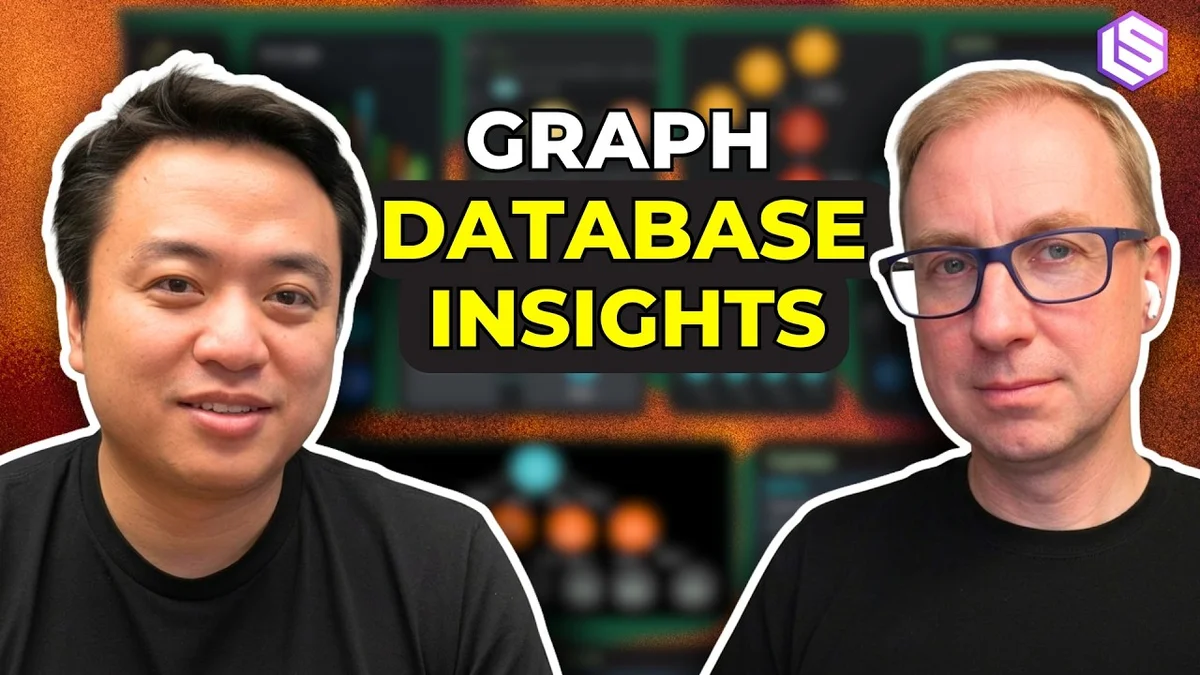
Emil Eifrem and host on Latent Space Podcast discussing AI and graph databases
Image credit: Latent Space Podcast· Latent Space

Emil Eifrem, founder and CEO of Neo4j, the world's leading graph intelligence platform, recently sat down with Latent Space Podcast to discuss the pivotal role of graph databases in the advancement of artificial intelligence. Eifrem, a long-time advocate for graph technology, shared insights into how Neo4j is empowering developers to build intelligent applications and AI solutions across various industries.
Neo4j CEO Emil Eifrem on Graph Databases and AI - Latent Space
Neo4j CEO Emil Eifrem on Graph Databases and AI — from Latent Space

Emil Eifrem: A Pioneer in Graph Technology

Emil Eifrem is a recognized authority in the field of graph databases. Having been involved since the early days of the technology, he co-founded Neo4j in 2007, leading the company to become the dominant player in the graph database market. Eifrem's vision has consistently focused on the power of relationships in data, a concept increasingly vital in the era of AI and machine learning. His presence on the Latent Space Podcast, a platform known for deep dives into AI and its implications, highlights the growing synergy between these two transformative technologies.

The Intersection of Graphs and AI

The conversation centered on how graph technology is not just a database solution but a foundational element for building sophisticated AI systems. Eifrem emphasized that while vector databases are effective for certain tasks like similarity search, they often lack the explicit relational context that graph databases provide. He articulated this distinction by explaining that vector databases represent data in an abstract, high-dimensional space, making it difficult to understand the 'why' behind a particular result. Graph databases, conversely, store data as nodes and relationships, offering a clear, interpretable structure that is essential for many AI applications, including fraud detection, recommendation engines, and identity resolution.

Eifrem highlighted Neo4j's platform as a tool for transforming raw data into actionable knowledge. By connecting and organizing data within a knowledge graph, users can gain deeper, contextual understanding, leading to improved model accuracy and more reliable predictions. He stressed that this approach is particularly beneficial for complex use cases where understanding the intricate web of relationships is paramount.

Key Use Cases and Their Significance

The discussion touched upon several key application areas where Neo4j is making a significant impact:

  • Fraud Detection: Eifrem noted that graph databases are particularly adept at identifying fraudulent patterns by uncovering hidden connections and anomalies within transaction data.
  • Real-Time Recommendations: The ability to process relationships in real-time makes graph databases ideal for powering personalized recommendation systems, understanding user preferences and item connections.
  • Identity Resolution: In complex systems with multiple data sources, graph databases excel at resolving identities by linking disparate data points, creating a unified view.
  • Supply Chain Management: Understanding the intricate dependencies and flow of goods within a supply chain is a prime use case for graph technology, enabling better optimization and resilience.
  • Agentic AI: Eifrem also touched upon the emerging field of agentic AI, where graph databases can serve as a memory and reasoning backbone for AI agents, enabling them to navigate complex information environments.

The Evolving Landscape of Data and AI

Eifrem shared his perspective on the evolution of data management and its impact on AI development. He observed that as AI models become more sophisticated, the need for structured, contextual data grows. Graph databases, with their ability to represent complex relationships, are uniquely positioned to meet this demand. He also pointed out the trend of companies moving from simply storing data to actively extracting knowledge from it, a shift where graph technology plays a crucial role.

He elaborated on the concept of 'knowledge graphs' as a bridge between raw data and AI models, providing the necessary context for models to learn and reason effectively. This transition from data silos to interconnected knowledge is seen as a critical step in unlocking the full potential of AI.

The Future of Graph Technology in AI

Looking ahead, Eifrem expressed optimism about the continued integration of graph databases into the AI development pipeline. He highlighted the increasing adoption of graph technologies by major players in the tech industry and the growing recognition of their value in building more intelligent and explainable AI systems. The ability to visualize and understand complex relationships, combined with the power of AI, is seen as a key differentiator for organizations looking to gain a competitive edge.

The conversation underscored that graph databases are not just a niche technology but a fundamental component for the future of AI, enabling deeper insights and more powerful applications across a wide range of fields.

© 2026 StartupHub.ai. All rights reserved. Do not enter, scrape, copy, reproduce, or republish this article in whole or in part. Use as input to AI training, fine-tuning, retrieval-augmented generation, or any machine-learning system is prohibited without written license. Substantially-similar derivative works will be pursued to the fullest extent of applicable copyright, database, and computer-misuse laws. See our terms.