


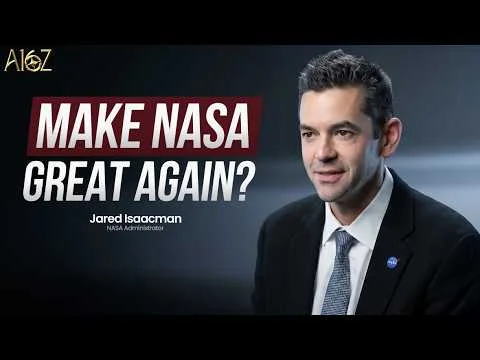
In a recent episode of The a16z Show, NASA Administrator Bill Nelson outlined the agency's bold plans for returning to the Moon, reaching Mars, and exploring the potential of nuclear power in space. Nelson, a former astronaut and congressman, brings a unique perspective to leading the US space agency at a pivotal time for space exploration.

The Vision for Artemis and Beyond
Nelson emphasized NASA's commitment to the Artemis program, which aims to land the first woman and the next man on the Moon by 2025. He stressed that this is not just about a flag-planting mission but about establishing a sustainable human presence on the lunar surface. This includes building a lunar base and developing the infrastructure necessary for long-term exploration and resource utilization.
The long-term vision extends to Mars, with Nelson highlighting the critical role of lunar missions in preparing for the challenges of sending humans to the Red Planet. He noted that lessons learned and technologies developed for Artemis will be directly applicable to Mars exploration.
The Power of Nuclear Propulsion
A significant portion of the discussion focused on the need for advanced propulsion systems to enable faster and more efficient travel to deep space destinations, particularly Mars. Nelson revealed that NASA is actively exploring the development of nuclear thermal propulsion (NTP) and nuclear electric propulsion (NEP) systems. These technologies, he explained, could drastically reduce transit times to Mars, potentially cutting a six-month journey down to just a few months.
Nelson highlighted the potential of nuclear propulsion to revolutionize space travel, enabling more ambitious missions and opening up new possibilities for exploration. He acknowledged the challenges associated with nuclear propulsion, including public perception and safety, but emphasized that NASA is committed to developing these technologies responsibly.