

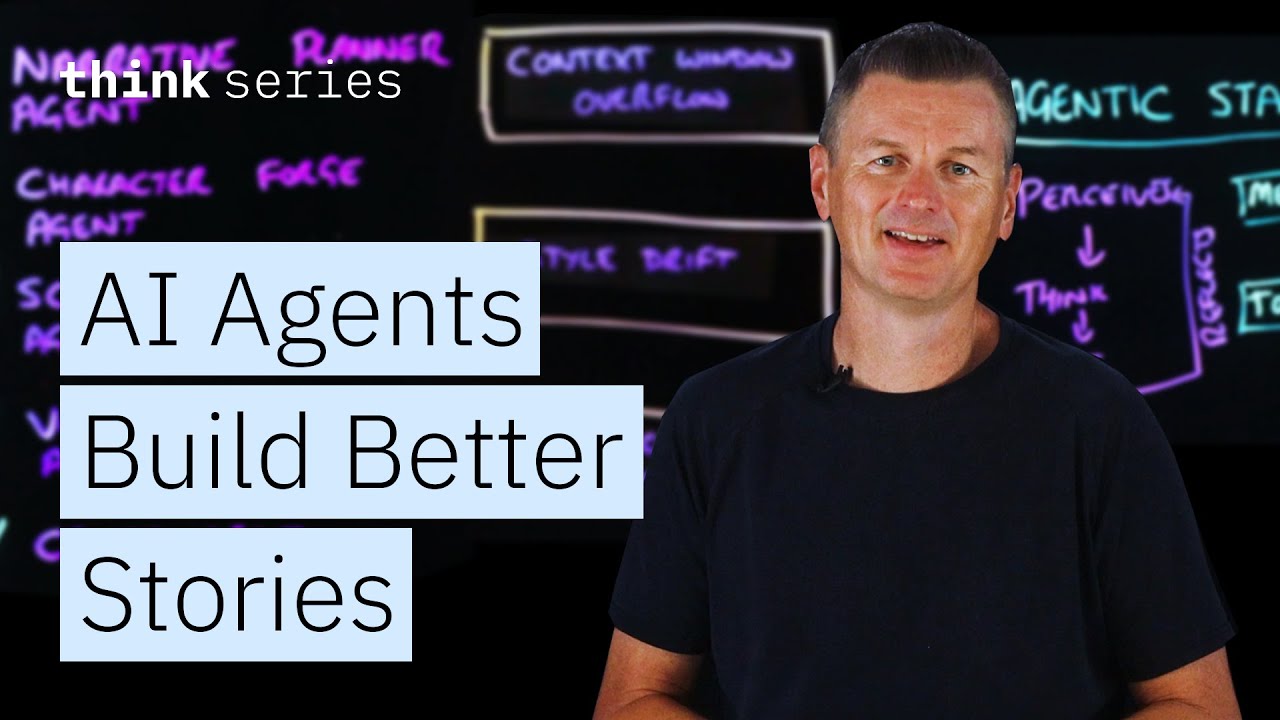
The evolution of artificial intelligence in creative domains faces a critical inflection point, moving beyond the inherent limitations of standalone Large Language Models (LLMs) towards more sophisticated, collaborative agentic systems. This shift is particularly evident in narrative design, where complex storytelling demands a depth and consistency a single LLM struggles to maintain. Martin Keen, Master Inventor at IBM, recently elaborated on this paradigm shift, demonstrating how "multi-agent pipelines" are poised to redefine AI's role in generating rich, coherent narratives.
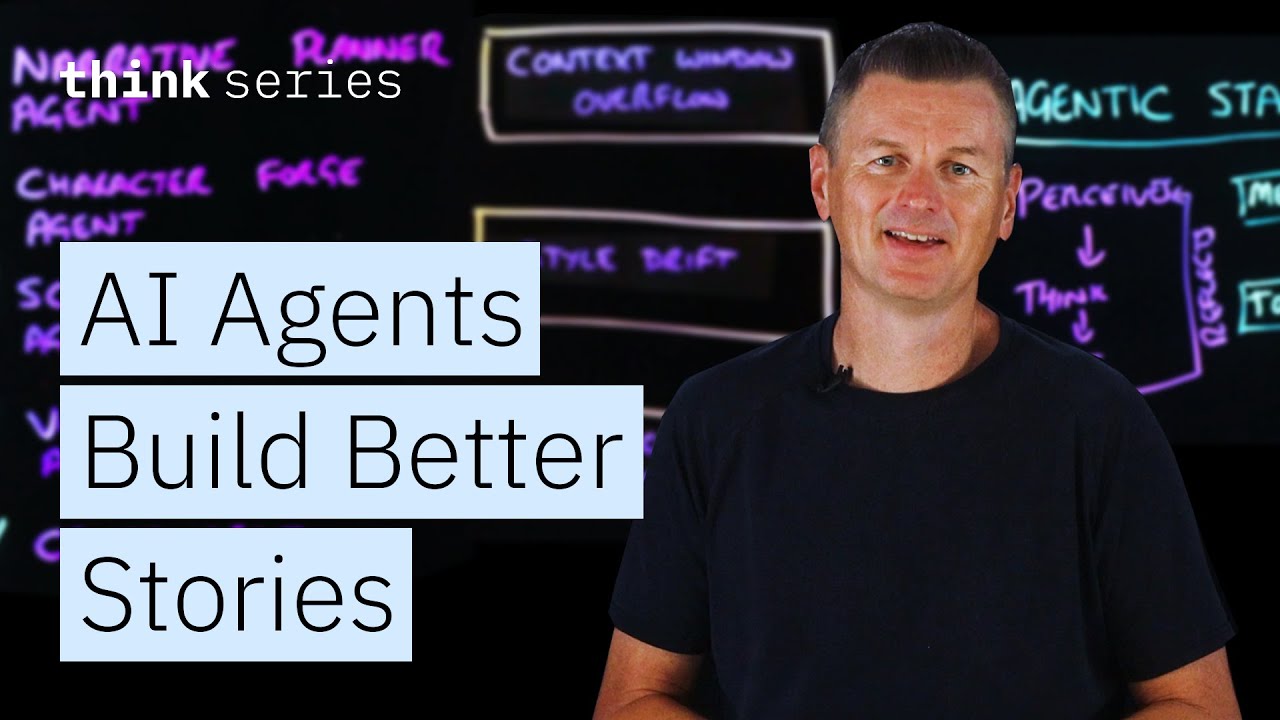
Keen highlighted three primary shortfalls of conventional LLMs when tasked with extended creative writing. Firstly, "context window overflow" plagues longer compositions. While modern LLMs boast impressive context windows, their "recall of specific facts from that context window is far from perfect," leading to forgotten plot points or character details as a story progresses. Secondly, "style drift" often occurs; a narrative might begin with a distinct tone, but as the LLM generates more content, it can regress to a more "generic tale" or its default voice. Lastly, a critical absence is the "no self-critique loop," meaning a vanilla LLM continually outputs new tokens "without reflecting on how the narrative is holding up."
The solution, Keen explained, lies in an "agentic stack" that transforms the LLM from a mere predictor of tokens into a more intelligent, iterative system. This stack operates on a "Perceive, Think, Act, Reflect" loop, enabling agents to observe their environment, strategize, execute actions, and critically evaluate their own output. Crucially, this advanced stack incorporates external "memory" tiers, ranging from short-term scratchpads to long-term vector databases, and grants agents access to "tools," such as external data sources like a law database for factual accuracy.
The power of this approach lies in distributing specialized tasks among multiple agents, each possessing a "narrow competency." For narrative design, Keen outlined a five-agent pipeline. The "Narrative Planner Agent" takes a high-level prompt, like "write me a space opera noir," and translates it into a detailed beat sheet, complete with scene structures and thematic goals. The "Character Forge Agent" then generates intricate character bios, backstories, and motivation graphs, storing them in a vector database to prevent information loss due to context window limitations.
Next, the "Scene Writer Agent" converts each narrative beat into prose, leveraging the Character Forge Agent to ensure character consistency and continuity. To combat style drift, the "Voice Style Agent" applies a consistent, targeted writing style by enforcing a reference corpus. Finally, and perhaps most innovatively, the "Critic Agent" provides the missing self-critique loop. This agent "scores the tone, the pacing, the plot coherence of all this generated content," generating "change requests" that feed back into the system, allowing for iterative refinement and improvement. This multi-agent paradigm effectively overcomes the inherent limitations of single LLMs, paving the way for AI-generated content that is not only vast but also deeply coherent and stylistically consistent.