

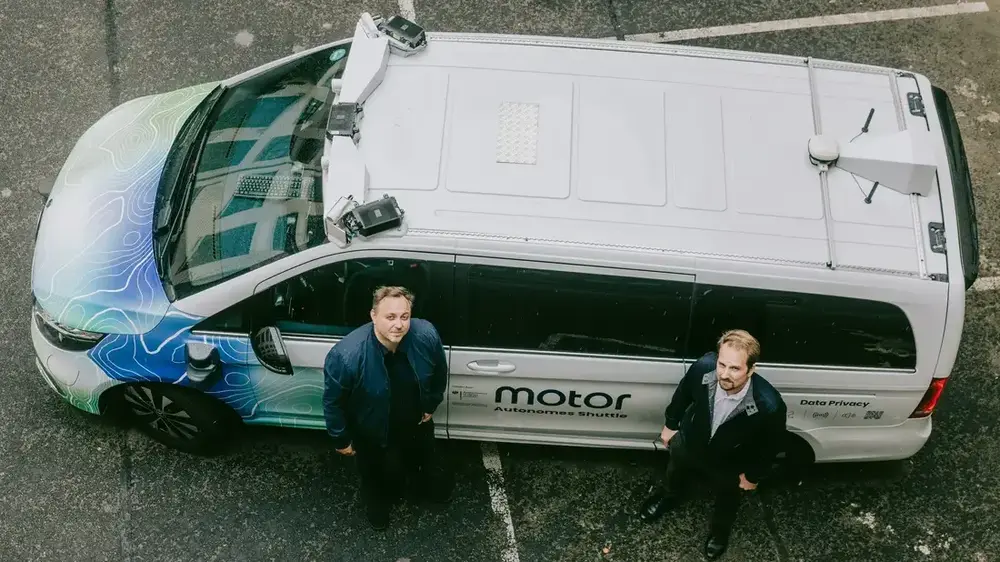
MOTOR Ai, a German autonomous driving company, announced a $20 million seed funding round led by Segenia Capital and eCAPITAL, with participation from German high-net-worth individuals. The company develops Level 4 autonomous driving software using neuroscience-based cognitive architecture.
MOTOR Ai's system employs active inference, a neuroscience model that enables structured, transparent decision-making rather than reactive responses. The technology is designed to meet European regulatory requirements for explainability and safety certification, distinguishing it from traditional machine learning approaches used by other providers.
The company's full-stack system complies with multiple European and international standards, including UNECE approval standards, ISO 26262 (ASIL-D), Regulation (EU) 2022/1426, Germany's Autonomous Vehicles Approval and Operation Ordinance (AFGBV), GDPR, the EU AI Act, and upcoming Cyber Resilience Act provisions.
Current Operations and Timeline
"Our solution meets key requirements for transparency and traceability of autonomous driving decisions, as required by authorities," said CEO Roy Uhlmann. "That clearly distinguishes us from US providers and optimally complies with European regulatory requirements."
MOTOR Ai currently operates Level 4 autonomous vehicles on German roads with safety drivers supervising the system. The company plans to remove safety drivers during 2026 and expects to receive type approval under European and German regulations the same year.