

• StartupHub.ai
    StartupHub.aiAI Intelligence
Discover
  • Home
  • Search
  • Trending
  • News
Intelligence
  • Market Analysis
  • Comparison
  • Market Map
Workspace
  • Email Validator
  • Pricing
Company
  • About
  • Editorial
  • Terms
  • Privacy
  1. Home
  2. AI News
  3. Moonlake AI Unveils A Generative Game Engine Built For Control
  1. Home
  2. AI News
  3. Artificial Intelligence
  4. Moonlake AI unveils a Generative Game Engine built for control
Artificial intelligence

Moonlake AI unveils a Generative Game Engine built for control

Startuphub.ai Staff
Startuphub.ai Staff
Dec 12, 2025 at 10:00 PM3 min read
Moonlake AI unveils a Generative Game Engine built for control

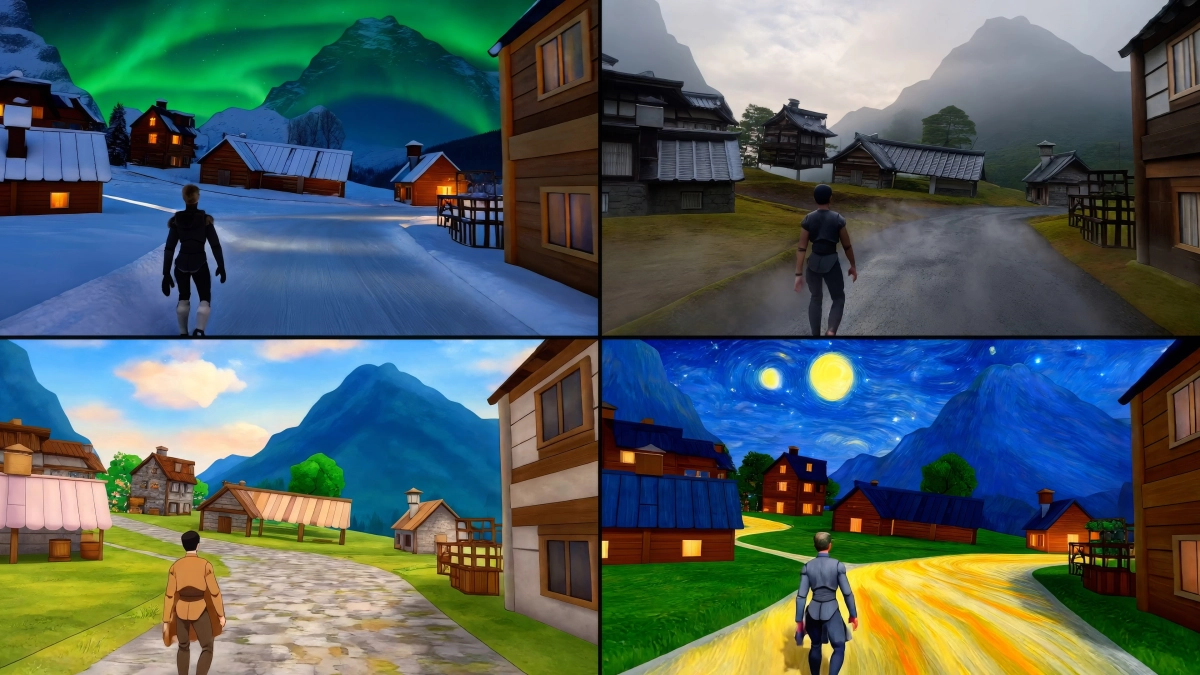
Moonlake AI, an applied research lab based in San Francisco, has announced its Generative Game Engine (GGE), a system it claims can build interactive worlds 100 times faster than current methods. The core innovation is addressing the critical issue of persistence and control in real-time generative content, moving beyond simple video generation to create worlds that reliably remember and maintain changes over time.

The current state of generative AI in game development is often a trade-off: environments can be visually stunning, but they are either rigid and pre-authored, or dynamic but prone to unpredictable behavior, often "resetting" or drifting out of coherence as gameplay continues.

Moonlake AI argues this bottleneck is what keeps world creation slow and expensive, requiring weeks of specialized 3D artistry for even minor, meaningful changes.

“Before handheld video cameras, filmmaking was only reserved for well funded Hollywood studios,” explained Fan Yun Sun, co-founder of Moonlake AI. “The gaming world is still running off that model of extremely high moats.”

Moonlake’s Generative Game Engine aims to tear down that moat by providing a programmable world model. The company states that its underlying AI is conditioned on more than just pixels—it incorporates 3D and structural signals. This is the crucial technical differentiator, allowing edits to hold together across frames without the common generative problem of objects snapping back to their original state or drifting into incoherence.

Solving the Persistence Problem

For developers, this means the GGE is designed to allow "authored" persistence. Creators can specify rules—like how long elemental damage lasts, the extent of a weather shift, or a story-driven transformation—and trust that those changes will remain coherent as the player interacts with the environment.

“The missing piece in generative worlds is control,” said Sharon Lee, co-founder of Moonlake AI. “Our new GGE will allow creators to specify what changes, why it changes, and how long it persists, so the world feels authored, not random.”

The technology is designed to work on top of existing game pipelines, meaning studios wouldn't necessarily need to rebuild their entire infrastructure to integrate generative, reactive world behavior. The potential applications stretch beyond traditional video games, promising utility in AI training, virtual reality, and robotics where persistent, controllable environments are essential.

Moonlake AI, which recently secured a $28 million seed round from investors including Threshold, AIX, and Nvidia Ventures, is positioning the Generative Game Engine as a tool for democratizing world creation, allowing those without deep technical skills to turn ideas into interactive worlds with rules and behavior.

The company, which boasts a team of award-winning researchers and engineers, plans to open beta access for its Generative Game Engine in Q1 2026.

#Fan-Yun Sun
#Sharon Lee

AI Daily Digest

Get the most important AI news daily.

GoogleSequoiaOpenAIa16z
+40k readers