

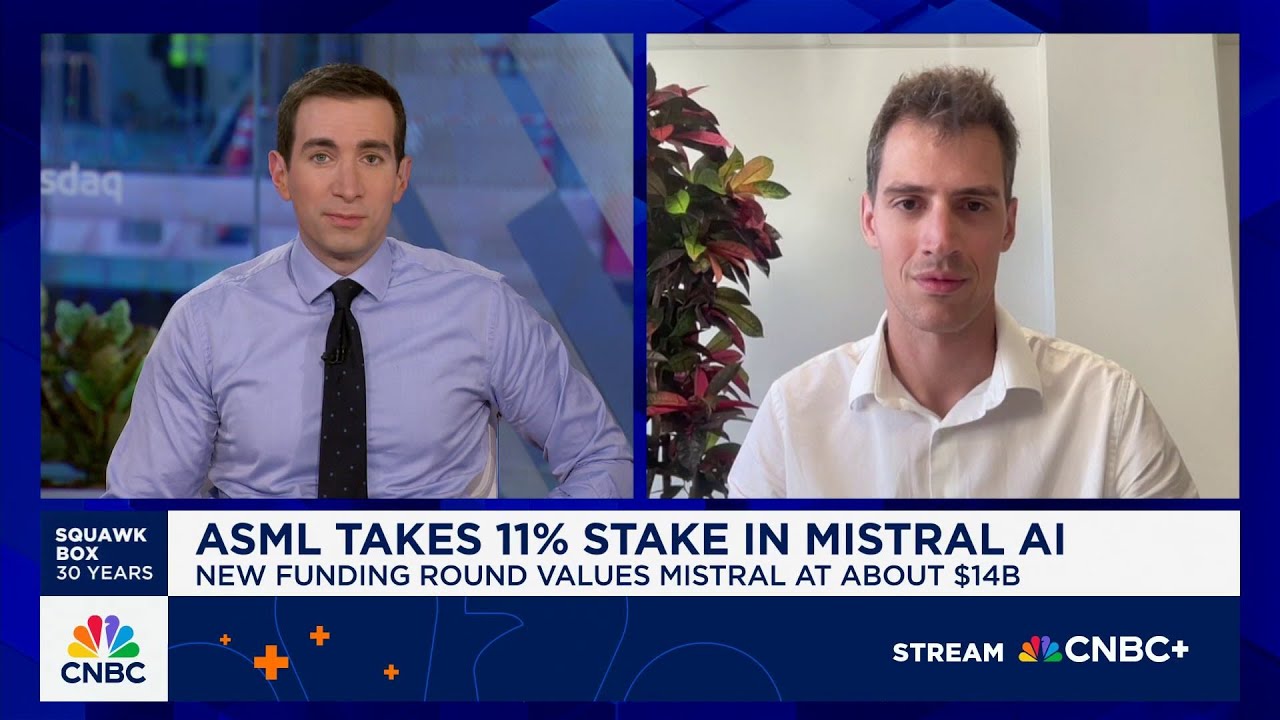
Mistral AI, the rapidly ascending French artificial intelligence startup, recently announced a significant Series C funding round, securing nearly $2 billion and pushing its valuation to approximately $14 billion. This substantial investment, notably led by chipmaker equipment giant ASML, signals a deliberate strategic pivot for Mistral AI, moving beyond foundational model development to embed itself deeply within high-value enterprise verticals. Speaking on CNBC's Squawk Box, Arthur Mensch, Mistral AI's founder and CEO, offered a candid look into the company's future plans, competitive positioning, and a pragmatic approach to the burgeoning AI market.
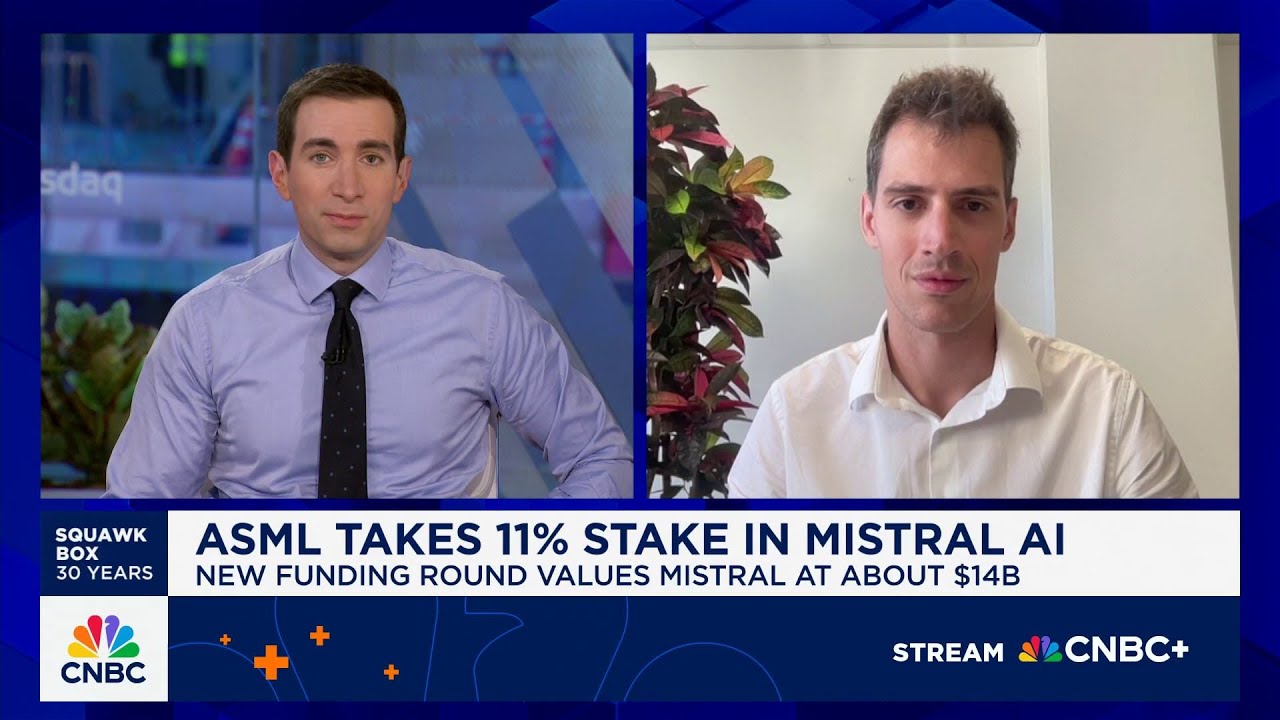
Mensch outlined how the new capital would be deployed, emphasizing continued investment in the company's "frontier AI lab" to push the boundaries of model capabilities, particularly in complex domains like physics. More crucially, he highlighted a clear intention to "bring value into a high-end industry, which is the semiconductor industry." This focus on specific, demanding verticals through strategic partnerships like that with ASML underscores a core insight: Mistral is not merely a general-purpose AI model provider but aims to be an end-to-end solution partner, integrating its advanced AI into the operational fabric of key industries. This approach seeks to solve concrete business problems, moving beyond theoretical applications to deliver measurable return on investment for enterprises.
When questioned about the intense fight for AI talent, often characterized by multi-million-dollar offers from Silicon Valley giants, Mensch expressed confidence in Europe's unique position. He noted that Europe boasts some of the "best schools in computer science and in mathematics," providing a rich talent pool. Mistral AI, he elaborated, benefits from a "very strong employer brand" that resonates with AI scientists, attracting individuals drawn to a culture of science and transparency. This suggests a differentiation in talent acquisition, where intellectual environment and mission may outweigh the sheer financial muscle of larger competitors. Indeed, Mistral has successfully recruited "around 40 or 50 people from [Meta and Google]," demonstrating their ability to compete effectively in this fiercely contested landscape.
The competitive landscape itself, according to Mensch, is ripe for a new category, one that Mistral is actively defining. He argued that simply providing raw AI models often leaves enterprises struggling to derive tangible value, resulting in "zero ROI." Mistral's response is a "fully integrated solution from infrastructure... to models to solutions." This comprehensive offering, which includes their Mistral Compute platform developed with Nvidia, aims to bridge the gap between cutting-edge AI research and practical enterprise application. This integrated strategy, coupled with the provision of expert guidance, addresses a critical pain point for businesses attempting to operationalize AI.
This integrated approach directly counters the common enterprise struggle of achieving tangible ROI from AI models alone. Mistral’s strategy provides the full stack, plus the crucial expertise to unlock real-world value.