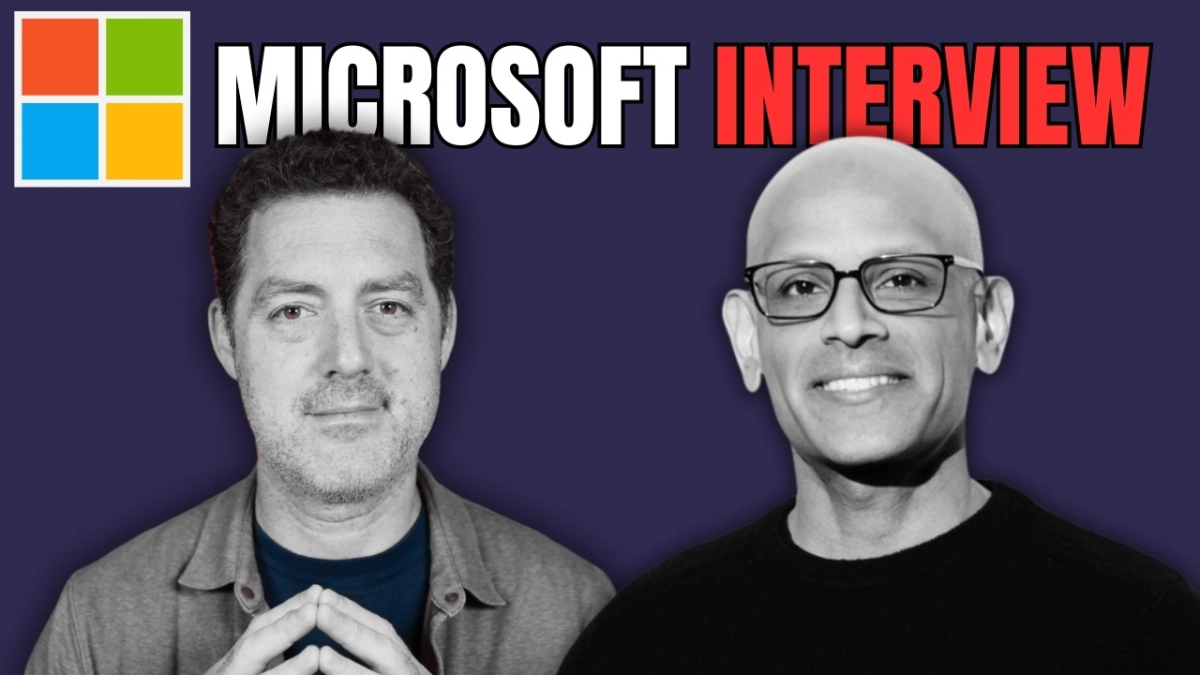
Jay Parikh, Microsoft's Executive Vice President of Core AI, recently offered a compelling glimpse into the company's strategic approach to artificial intelligence, engaging in a candid discussion with Matthew Berman. The interview covered a spectrum of critical topics, from the restructuring of Microsoft's internal AI teams and the future of engineering roles to the nuanced challenges of data center infrastructure, the ongoing debate between open and closed-source models, and the paramount importance of AI safety. Parikh's insights underscored a vision deeply rooted in empowering developers, fostering rapid innovation through collaboration, and navigating the intricate, ever-evolving landscape of AI development.

A central theme emerging from Parikh's commentary is the radical transformation of the software development lifecycle and the role of the developer. He articulates a shift from traditional coding to a "builder" mindset, where the focus is on assembling sophisticated AI-powered applications. Parikh states, "What we're focused on at the top layer is reinventing, reimagining all the tools that you need to build software a different way in this AI era." This involves creating an "agent factory" platform where AI agents and applications are not just built and deployed, but also observed and refined within the enterprise ecosystem. The implication is that future software creation will rely less on deterministic, line-by-line coding and more on orchestrating intelligent agents capable of complex tasks, reasoning, and tool utilization.
This rapid evolution of the AI stack, which Parikh describes as "changing kind of every week," necessitates a dynamic and highly collaborative work environment. In a notable departure from some prevailing industry trends, Parikh revealed that his team at Microsoft is transitioning back to a fully in-person work model. This decision, he explains, is directly linked to the accelerated pace of AI innovation: "the technology is just changing so, so, so fast, and I think being in person enables us to learn faster so that we can really stay along that exponential trajectory that this technology is on right now." This emphasis on physical proximity highlights a belief that the spontaneous interactions, shared learning, and collective problem-solving inherent in an in-person setting are crucial for keeping pace with and shaping a technology moving at an unprecedented speed. It's about fostering a culture where new discoveries and solutions can be rapidly shared and iterated upon.
Beyond the human element, Parikh also delved into the infrastructural backbone supporting this AI revolution. He clarified that while GPUs are vital, the constraints extend far beyond just the chips themselves, encompassing power, cooling, memory, and network infrastructure. He emphasized the necessity of a "system scaling problem" approach, where every component of the AI stack, from hardware to software, is optimized for efficiency. This holistic view is critical as AI models become more capable yet also more resource-intensive.
Related Reading
- How OpenAI Builds for 800 Million Weekly Users: Model Specialization and Fine-Tuning
- Google's AI Unleashed: Gemini 3 Marks an Era of Action
Parikh elaborated on the strategic importance of model efficiency and a multi-model approach for enterprise clients. He highlighted the "model router" capability, which intelligently selects the appropriate model for a given application based on factors like cost, latency, and desired quality. This allows enterprises to leverage smaller, more targeted, often open-source models for specific tasks, rather than relying solely on large, expensive frontier models. This strategy not only optimizes resource utilization but also allows enterprises to bring their proprietary data and context to fine-tune models, making them smarter and more relevant for their unique business needs. This nuanced approach to model selection and deployment is a testament to Microsoft's commitment to flexible, cost-effective, and secure AI solutions for diverse enterprise requirements.