

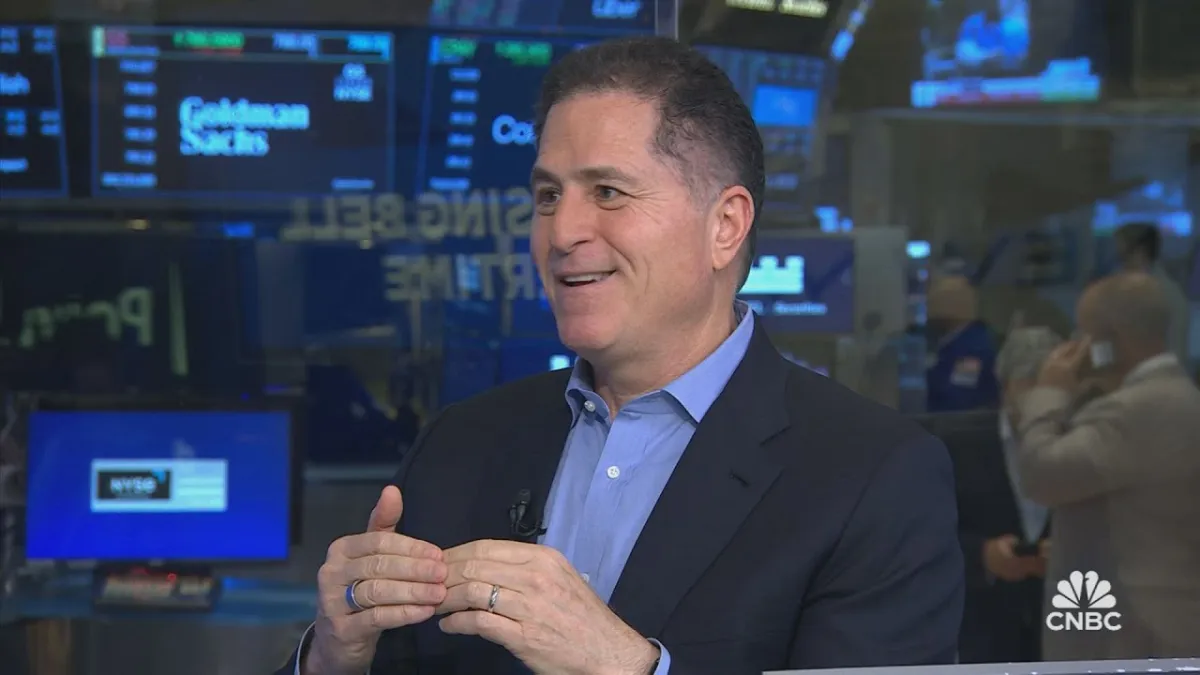
Michael Dell, founder, chairman, and CEO of Dell Technologies, recently sat down with CNBC's Jon Fortt on "Closing Bell Overtime" to provide a compelling outlook on the current state and future trajectory of artificial intelligence adoption and its profound impact on enterprise infrastructure. Far from signaling an overheated market, Dell underscored that the insatiable demand for AI infrastructure is not speculative but driven by immediate, tangible deployment needs, with energy availability emerging as the primary bottleneck.
Fortt probed Dell on whether the current surge in data center buildouts represented a market bubble, akin to past tech frenzies where companies acquired technology without immediate application. Dell firmly dismissed this notion, stating, "The things that we watch out for are signs that, for example, customers are buying things that they don't actually have an immediate need for... we don't see that at all. In fact, we see kind of the opposite." He emphasized that customers are swiftly deploying new infrastructure, highlighting the pressing operational imperative behind their investments.
This immediate deployment stems from the explosive growth in demand for "tokens," the foundational units of processing for large language models (LLMs) and other advanced AI systems. Dell explained that as AI evolves from single-shot LLMs to complex multi-modal systems and multi-agent frameworks, "the number of tokens just explodes." This exponential increase in processing requirements translates directly into a "tremendous" demand for computing power, storage, and networking capabilities, validating Dell's strategic focus on robust, scalable infrastructure.
Dell’s server and networking business, a key indicator of this infrastructure demand, saw remarkable growth, expanding 58% last year and an even more impressive 69% in the last quarter. While acknowledging that market digestion cycles are a natural part of technological evolution, Dell reiterated that "based on the demand signal we see and what we're hearing from customers... it seems like the demand is very solid."
The real challenge, according to Dell, isn't a lack of demand or even hardware, but the fundamental constraint of power. He noted that the limiting factor for many customers is simply "can they get the power into the buildings to supply the energy required?" This sentiment was echoed by anecdotes where customers explicitly requested delayed deliveries, citing insufficient power infrastructure to support immediate deployment. This points to a critical infrastructure gap that could impede the pace of AI integration, underscoring the urgent need for investment in energy generation and distribution.