

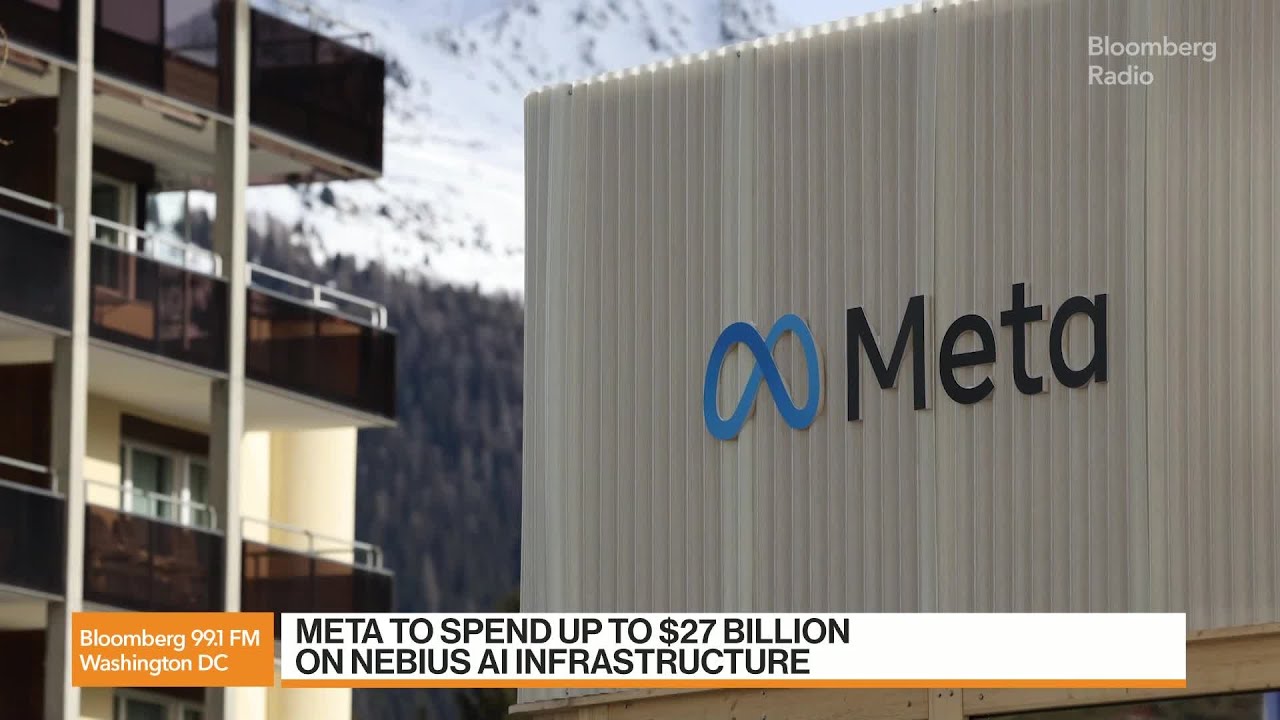
Meta's $27B AI Infrastructure Push

Ed Ludlow of Bloomberg Tech reports on Meta's significant $27 billion investment in AI infrastructure, highlighting the company's diversified strategy of purchasing chips and developing custom AI hardware.

4 min read
Ed Ludlow speaking on Bloomberg Radio about Meta's AI infrastructure investment
Meta to Spend Up to $27 Billion on Nebius AI Infrastructure — Bloomberg Podcast on YouTube

Ed Ludlow, host of Bloomberg Tech, discussed Meta's substantial investment in artificial intelligence infrastructure. The social media giant is reportedly planning to spend up to $27 billion over the next five years to bolster its AI capabilities. This move signals a significant escalation in Meta's commitment to AI research and development, driven by the immense computational needs of modern AI models.

Ed Ludlow: Host of Bloomberg Tech

Ed Ludlow is a prominent figure in technology journalism, known for his insightful reporting on the intersection of business, technology, and innovation. As the host of Bloomberg Tech, he has a proven track record of bringing complex technological trends and company strategies to a broad audience. His work often focuses on the financial implications and strategic decisions of major tech players, making him a key voice in understanding the industry's direction.

Meta's Massive AI Infrastructure Investment

The core of the discussion revolves around Meta's ambitious plan to allocate up to $27 billion towards its AI infrastructure. This investment is aimed at meeting the escalating computational demands required to train and deploy advanced AI models, which are crucial for Meta's future products and services, including its metaverse ambitions and AI-driven features across its platforms.

The full discussion can be found on Bloomberg Podcast's YouTube channel.
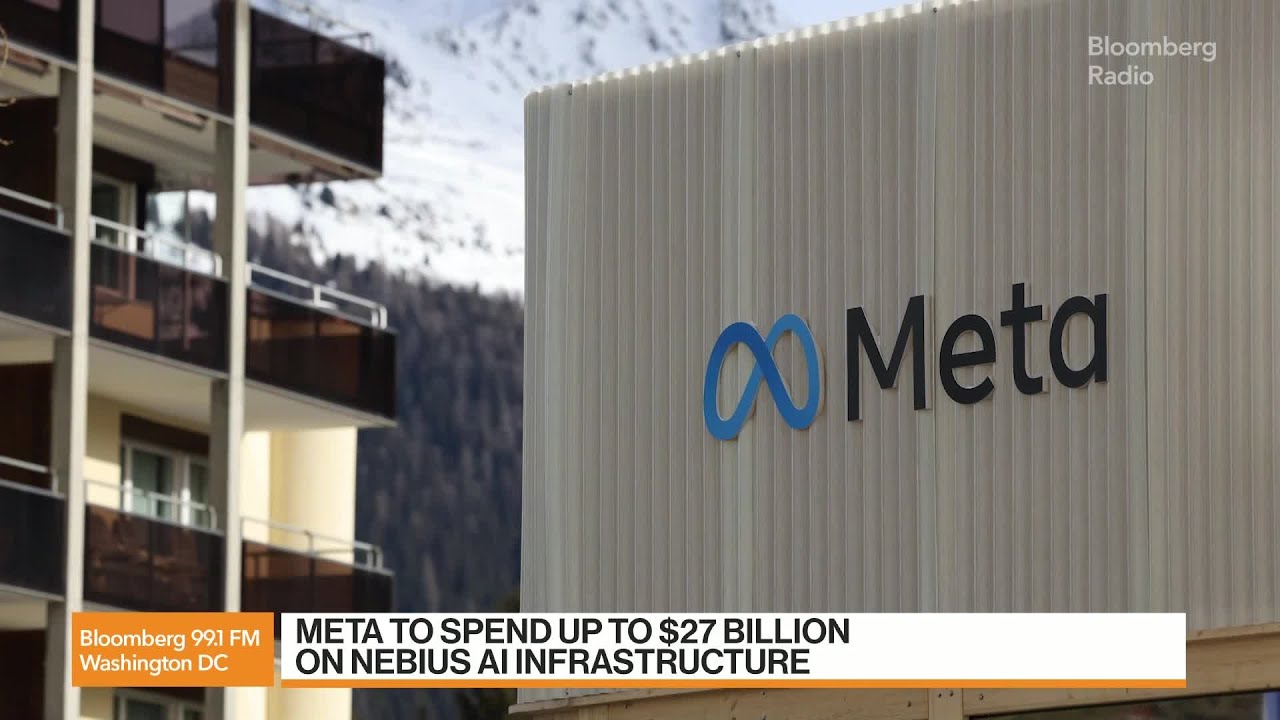
Meta to Spend Up to $27 Billion on Nebius AI Infrastructure - Bloomberg Podcast
Meta to Spend Up to $27 Billion on Nebius AI Infrastructure — from Bloomberg Podcast

Diversified Approach to AI Compute

Meta's strategy is not limited to a single vendor. The company is actively purchasing a significant number of AI chips from industry leaders like NVIDIA and AMD. Simultaneously, Meta is investing in the development of its own custom AI chips. This dual approach allows Meta to secure necessary hardware while also tailoring solutions for its specific AI workloads, aiming for greater efficiency and cost-effectiveness.

Ludlow highlighted the concept of a "neo-cloud," a data center specifically designed to run AI workloads. He explained that while Meta isn't a traditional cloud computing provider like AWS, Azure, or Google Cloud, its substantial compute needs necessitate this specialized infrastructure. The company's strategy is to secure the necessary compute power, whether through external purchases or internal development.

Strategic Chip Sourcing and In-House Development

The investment strategy extends to securing both off-the-shelf and custom-designed hardware. Meta is a major customer for NVIDIA and AMD's AI accelerators, indicating the sheer scale of its demand. However, the company is also heavily investing in its own chip design capabilities. Ludlow mentioned visiting Meta's chip labs, where they are developing custom chips optimized for their AI models, such as those used for ranking and recommendations.

The economic rationale behind designing custom chips is significant. Ludlow noted that for companies like Meta, which operate at a massive scale, developing bespoke silicon can offer considerable cost savings and performance advantages compared to relying solely on third-party solutions. This is particularly true for specialized AI tasks where custom architectures can be fine-tuned for maximum efficiency.

The Broader AI Investment Landscape

This move by Meta places it in a competitive landscape where other major tech companies, including Microsoft (through its partnership with OpenAI) and Google, are also making substantial investments in AI infrastructure. The race to build the most advanced AI capabilities is driving unprecedented demand for specialized hardware and massive data center build-outs.

The discussion also touched upon OpenAI's reported talks with private equity firms for a joint venture worth approximately $10 billion. This initiative aims to create a new entity that could potentially leverage OpenAI's software for business purposes, offering a way for these firms to gain exposure to the rapidly growing AI market. Ludlow suggested that this structure could allow private equity firms to benefit from OpenAI's advancements and potentially use its technology for their own portfolios.

Implications for the AI Ecosystem

Meta's $27 billion investment is a clear indicator of the capital-intensive nature of cutting-edge AI development. It also highlights the strategic importance of controlling one's own compute infrastructure. By diversifying its hardware strategy, Meta aims to mitigate supply chain risks and optimize performance for its diverse AI applications, from content ranking to the development of its metaverse vision.

The trend of large tech companies investing heavily in custom silicon for AI is a significant development. It signifies a shift towards greater vertical integration and a move away from complete reliance on external hardware providers. This strategy not only allows for performance optimization but also grants companies more control over their technological roadmap and cost structures.

The partnership discussions involving OpenAI and private equity firms further illustrate the growing commercialization of AI technologies. Creating specialized joint ventures could become a common model for companies seeking to monetize their AI advancements and scale their operations more effectively, while also providing investors with a direct pathway into the burgeoning AI market.