

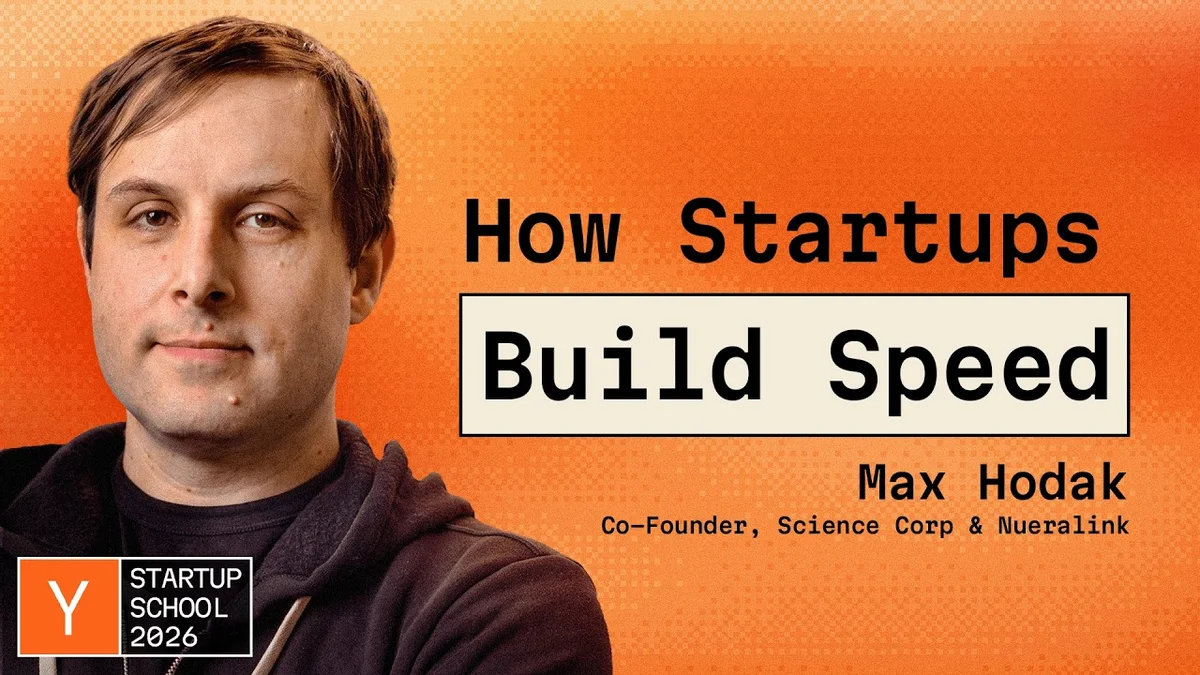
Max Hodak: Speed is Determined by Infrastructure

Max Hodak of Science discusses how robust infrastructure, not just technology, is the key to startup speed and success.

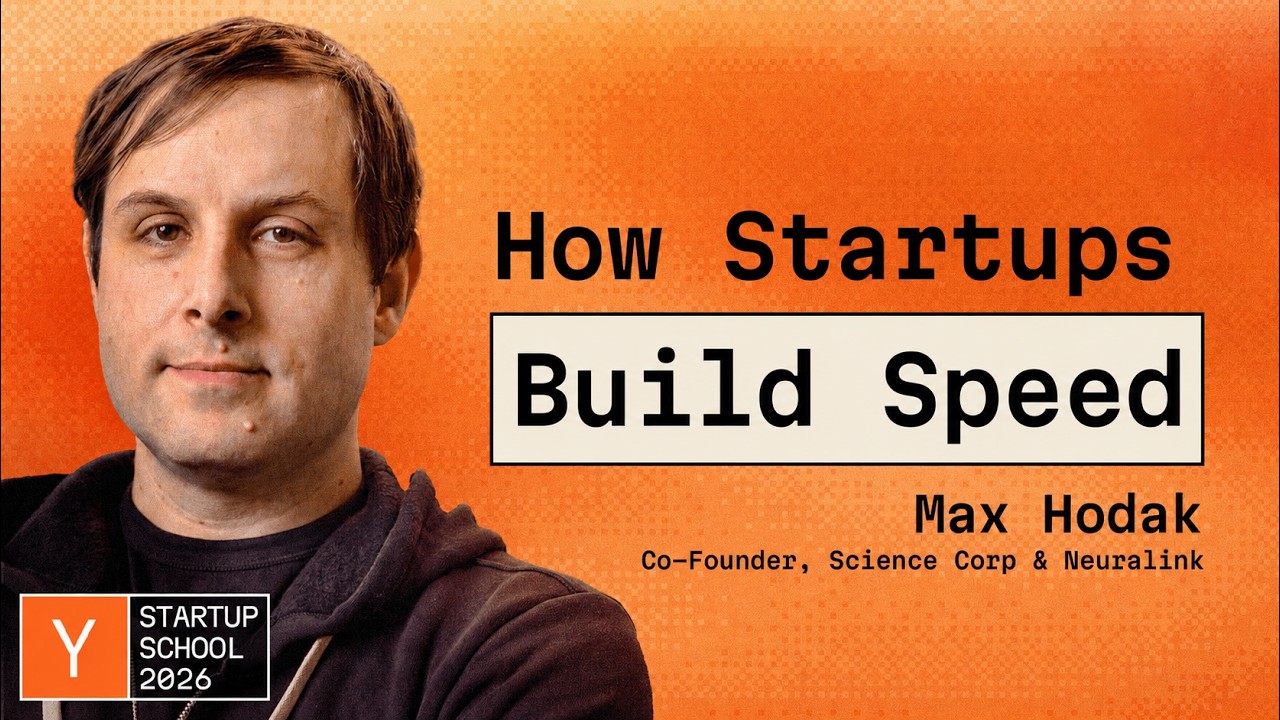
Max Hodak speaking on stage at Y Combinator Startup School
YC
Visual TL;DR
Deep Tech StartupsCore
building complex brain-computer interfaces and retinal prostheses for vision restoration
From the article 2 mentionsMax Hodak, co-founder and CEO of Science, recently shared critical insights on the often-overlooked infrastructure that underpins a startup's success, particularly in deep tech.
Speed is KeyContext
rapid execution crucial for success in competitive, high-stakes deep tech ventures
From the article 3 mentionsAnother universal experience Hodak identified as a key separator of success and failure is hiring.
Infrastructure Determines SpeedDriver
operational systems, purchasing, recruiting, and budgeting underpin startup velocity
From the article 2 mentionsHodak stressed that while building internal infrastructure is a significant undertaking, especially early on, it's a critical investment that pays dividends in speed and scalability.
Procurement ProblemDriver
moving beyond credit cards for efficient, scalable purchasing of critical supplies
From the article 2 mentionsA significant portion of Hodak's talk focused on the procurement process.
Hiring HurdleDriver
recruiting top talent requires nuanced strategies beyond simple network connections
From the article 3 mentionsHe emphasized that while initial hiring often comes from a founder's network, scaling requires a more systematic approach.
Internal SoftwareEffect
building custom tools for speed and scale, not just relying on off-the-shelf solutions
From the article 3 mentionsHodak advocated for building internal software platforms rather than solely relying on off-the-shelf solutions.
EigenreviewsEffect
continuous feedback loops for team performance and organizational learning
Startup SuccessOutcome
robust operational systems lead to faster execution and higher probability of achieving goals
From the article 7 mentionsUltimately, Hodak's central thesis is that "speed is determined by infrastructure." The ability to iterate quickly, learn from mistakes, and adapt is paramount for startup success.
Contents(7)

Max Hodak, co-founder and CEO of Science, recently shared critical insights on the often-overlooked infrastructure that underpins a startup's success, particularly in deep tech. Speaking at Startup School, Hodak emphasized that while brilliant technology is essential, it's the underlying operational systems, purchasing, recruiting, budgeting, and more, that truly determine a company's fate.

From Brain-Computer Interfaces to Vision Restoration

Hodak began by outlining his background, which spans nearly two decades in brain-computer interfaces and his company Science's flagship product: a retinal prosthesis designed to restore vision. This device, which involves a chip implanted under the retina and special glasses with a laser projector, has undergone major clinical trials and garnered significant media attention. However, Hodak quickly pivoted from discussing his company's product to the core subject of his talk: the critical role of infrastructure in startup execution.

The full discussion can be found on YC's YouTube channel.

Max Hodak: What Really Kills Deep Tech Startups? - YC
Max Hodak: What Really Kills Deep Tech Startups?, from YC

Amateurs Talk Strategy, Professionals Talk Logistics

Quoting Omar Bradley, Hodak stressed the adage, "Amateurs talk strategy. Professionals talk logistics." He argued that while founders often focus on high-level strategy, the day-to-day operational details, or logistics, are what truly separate successful startups from those that falter. Hodak noted that for deep tech companies, which often deal with physical products and complex manufacturing, the need for robust infrastructure is paramount.

The Procurement Problem: Beyond Credit Cards

A significant portion of Hodak's talk focused on the procurement process. He highlighted the common misconception that software-only startups don't need to "buy things." However, for any company dealing with the physical world, purchasing thousands of items is a continuous necessity. Hodak illustrated the challenges: founders can easily manage initial purchases with credit cards, but as the team grows, employees need efficient ways to acquire necessary tools. Relying on founders to approve every purchase quickly becomes a bottleneck, leading to inefficiencies and potential delays. Hodak emphasized the need for a structured procurement system and budgeting, stating, "Spending review has to come earlier. You have to have some concept of budgeting."

Building Internal Software for Speed and Scale

Hodak advocated for building internal software platforms rather than solely relying on off-the-shelf solutions. He cited examples like Y Combinator, Facebook, and SpaceX, whose internal tools have been instrumental in their growth and efficiency. Science, for instance, developed a platform called "Helix" that integrates nearly every company function, from purchasing to manufacturing. This allows for detailed tracking and correlation of data, providing crucial insights into costs and operational efficiency. Hodak stressed that while building internal infrastructure is a significant undertaking, especially early on, it's a critical investment that pays dividends in speed and scalability.

The Hiring Hurdle: From Networks to Nuance

Another universal experience Hodak identified as a key separator of success and failure is hiring. He emphasized that while initial hiring often comes from a founder's network, scaling requires a more systematic approach. Hodak detailed Science's four-step hiring process: initial application, phone screen, technical evaluation (homework), and final interview. A unique aspect of their process is company-wide voting on initial applications, designed to distribute judgment and avoid bottlenecks. He also highlighted the importance of evaluating candidates on judgment, horsepower, and agency, the ability to cause the world to look as you wish it were.

The Power of 'Eigenreviews' for Continuous Feedback

Hodak also presented his approach to performance reviews, which he calls "Eigenreviews." This system involves employees periodically answering a single question: "Knowing how it turned out, would you vote again today for their hire?" By aggregating and weighting these responses using a method similar to Google's PageRank algorithm, Hodak argues that companies can gain continuous, unbiased feedback on employee performance, moving away from the disruptive and often ineffective annual review cycle.

Infrastructure Dictates Iteration Speed

Ultimately, Hodak's central thesis is that "speed is determined by infrastructure." The ability to iterate quickly, learn from mistakes, and adapt is paramount for startup success. He concluded by urging founders to invest heavily in building the right foundational systems, as this is as crucial as understanding the core technology itself. Getting these systems right from the beginning makes everything else easier and prevents companies from being forced into coarser levers and harder decisions later on.

© 2026 StartupHub.ai. All rights reserved. You may not republish this article in full without a license. Search engines and AI research tools may crawl and summarize for reference. Bulk reproduction or model training requires a license. See our terms.
Daniel Singer

Written by

Daniel Singer

Editor, StartupHub.ai

Daniel Singer is the editor of StartupHub.ai, a technology expert and thought leader on AI and its applications across sectors, from fintech and healthcare to developer tooling and consumer software. He writes and tests the tools covered here thoroughly and regularly, and built StartupHub.ai to give founders, operators and buyers a clearer read on what they are actually being sold.