


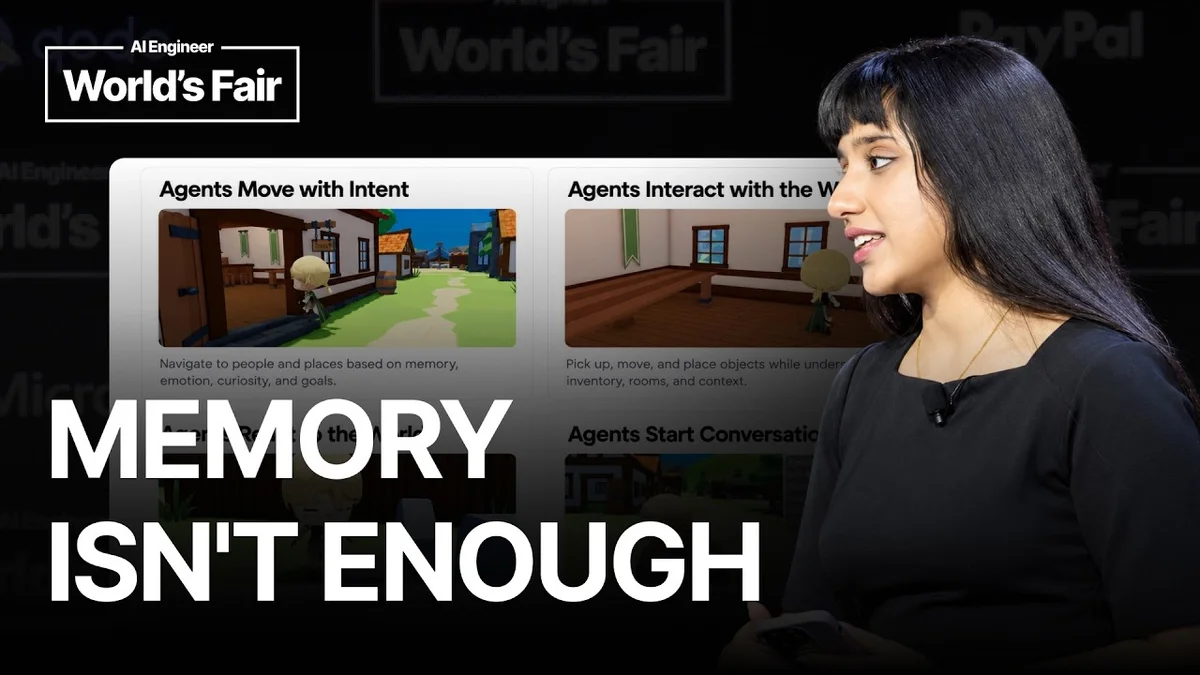
Erina Karati, former engineer at Microsoft and Supercell, brought a village that forgot to AI Engineer and used it to argue that long-horizon agents need controlled experiments, not better prompts.
A mango rumor broke it.
Her team built Project Paradox in Supercell's AI Innovation Lab in Helsinki, where a 10-week sprint turned a Mafia-style social deduction game into a reusable multi-agent framework. The lab itself ran as a pilot with 16 people given 10 weeks to build AI games from scratch, and the public repository notes the build window as April 2025 to June 2025 by Karati and Arunachalam Manikandan.
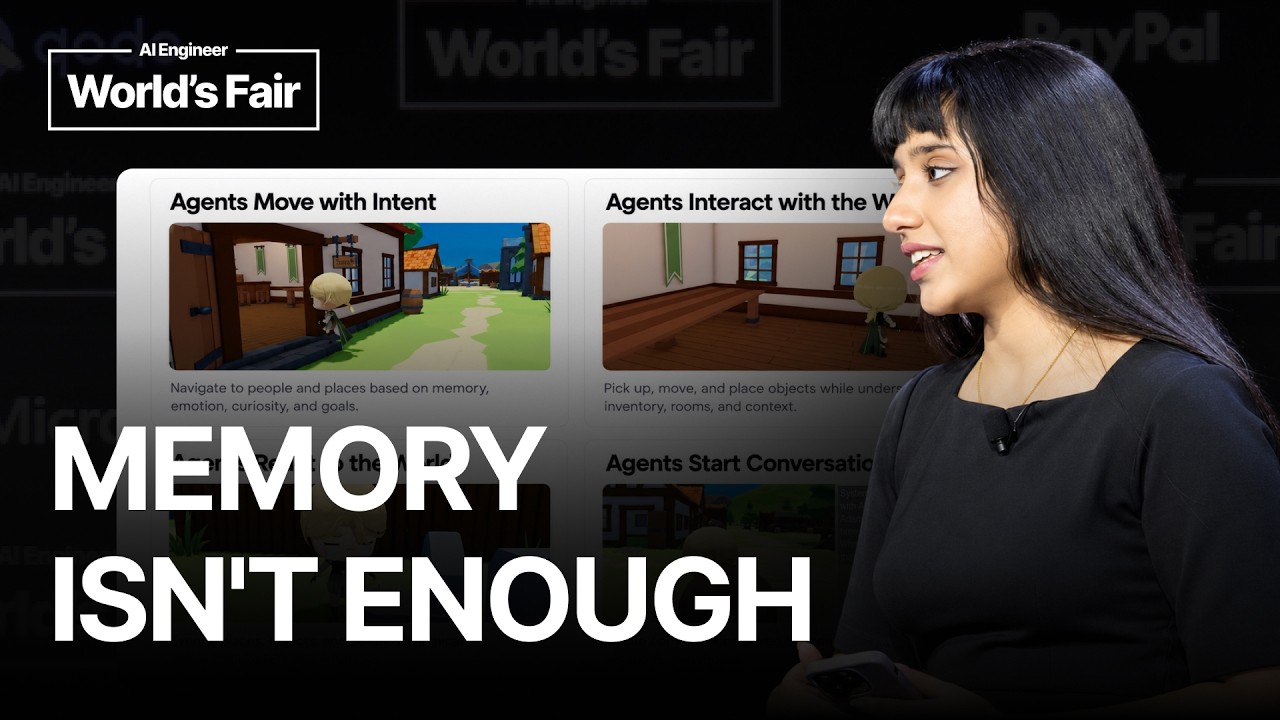
The architecture was intentionally stateful. Each agent carries a personality string that seeds every LLM call, plus an emotion vector of joy, sadness, fear, anger and disgust that shifts with events, a belief score for every other character that updates with each memory and decays when relationships go quiet, and a three-tier memory with seven items in RAM, a permanent cache for memories scoring 8 or above, and a per-character FAISS semantic store for everything else. Agents can move with intent, pick up and drop objects, react to events, and store conversations that change their beliefs and goals.
For short runs it held. Ask Blossom to picnic and she plans the steps, grabs a pastry, walks to the spot, and answers in context. Over longer horizons the social consistency thinned. In Karati's demo an agent spreads a rumor about a mango sale, a second agent retells it, and after intervening events the player asks about mangoes and gets an answer that has lost source, hedged uncertainty, or the fact it was once a rumor stated as truth.