

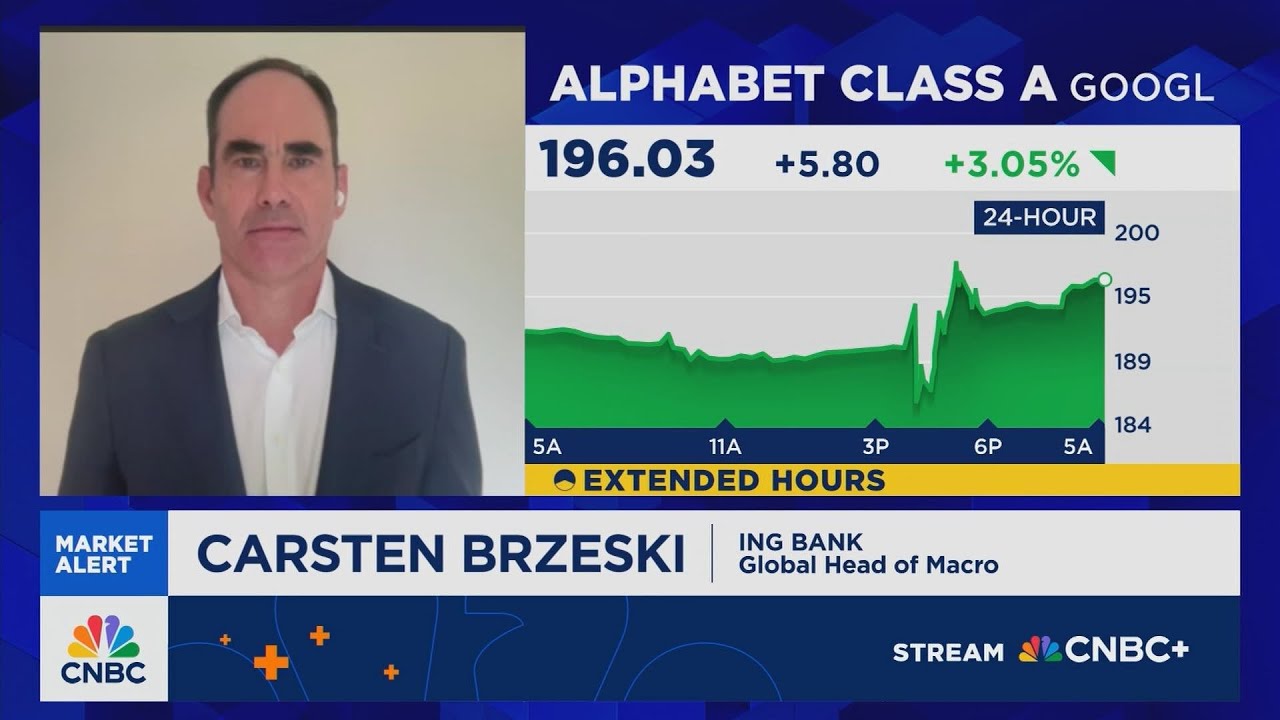
"AI remains the big story not only on on stock markets, but really also for for macro and and economic growth in the years ahead," declared Carsten Brzeski, ING Bank's Global Head of Macro. This sentiment underscored a recent CNBC interview where Brzeski spoke with Frank Holland about the prevailing forces shaping global markets, from the tailwinds of big tech earnings and AI adoption to the persistent headwinds of trade uncertainty and political pressure on central banks.
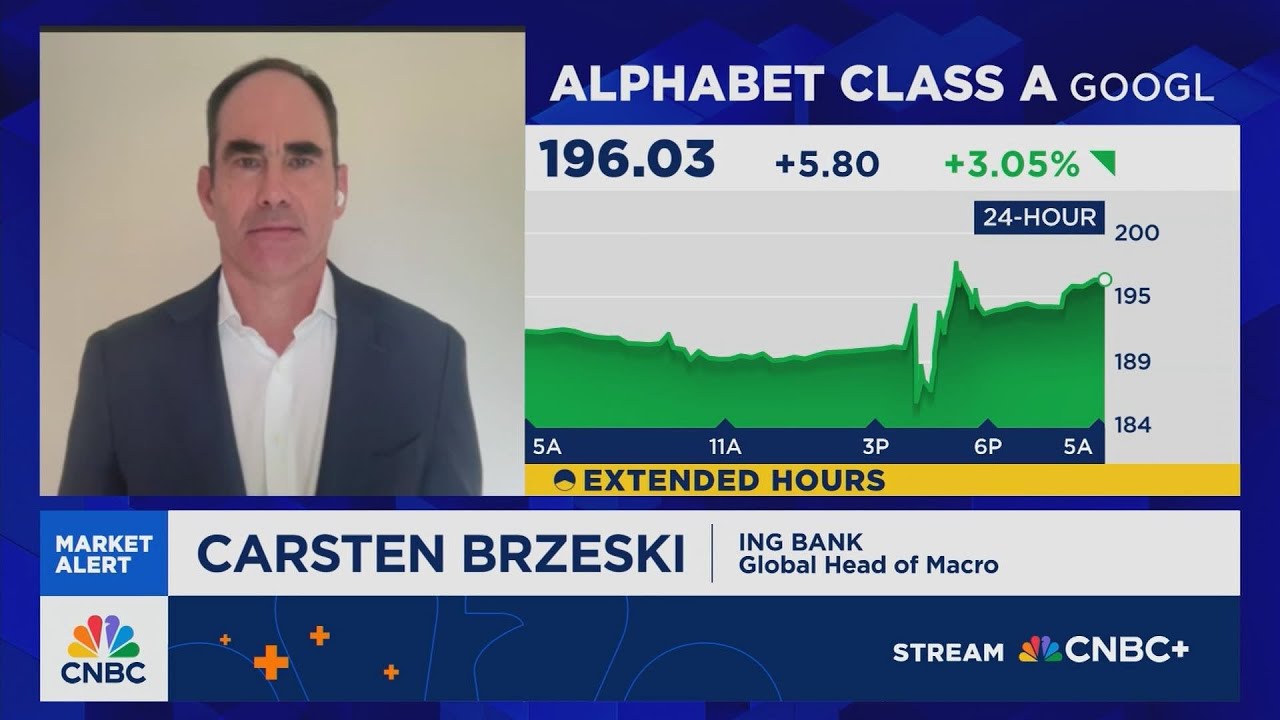
The discussion opened with Alphabet's robust earnings, driven by cloud growth and the increasing integration of its Gemini AI product. Brzeski affirmed that these results represent a significant tailwind for the tech sector, highlighting AI's transformative potential beyond just market valuations, extending into broader economic expansion. This technological surge, he suggests, is a fundamental driver that investors should not overlook.
However, the conversation quickly pivoted to the precarious landscape of international trade, particularly the proposed EU-US trade deal. Brzeski urged caution against optimistic headlines, noting that the vast discrepancy between the EU's desired 15% tariff rate and the US's 50% offer creates significant market uncertainty. "15 to 50 is still a big concern because this is a huge range of possibilities, and I think it also shows us that the uncertainty will remain in the market until August 1st." This wide range of potential outcomes indicates that a definitive agreement remains distant, leaving markets in a state of flux.
The lingering tariff uncertainty carries tangible risks for the US economy. Brzeski warned that it "still brings the risk that we could see much higher inflation going forward in the US and hence also higher interest rates." This potential for increased inflation and subsequent monetary tightening presents a clear challenge to market stability. Furthermore, he observed an asymmetric reaction from markets concerning trade developments: "Markets are currently asymmetric when it comes to trade... they do not take into account any downside risks anymore... so they only take into account potential upside risks." This implies a dangerous complacency, where negative trade news is often shrugged off, while any hint of positive movement triggers an upward swing, creating a fragile market dynamic.
Adding another layer of complexity, Brzeski addressed the political pressure on the Federal Reserve, noting the unprecedented instance of a US President visiting the Fed. While he doubted an imminent change in Fed leadership, he asserted that "the story that the US President could try to get rid of the Fed chairman will stay in markets." This ongoing political interference, regardless of immediate action, contributes to a climate of unpredictability, further complicating the outlook for investors navigating an already intricate global economic environment.