

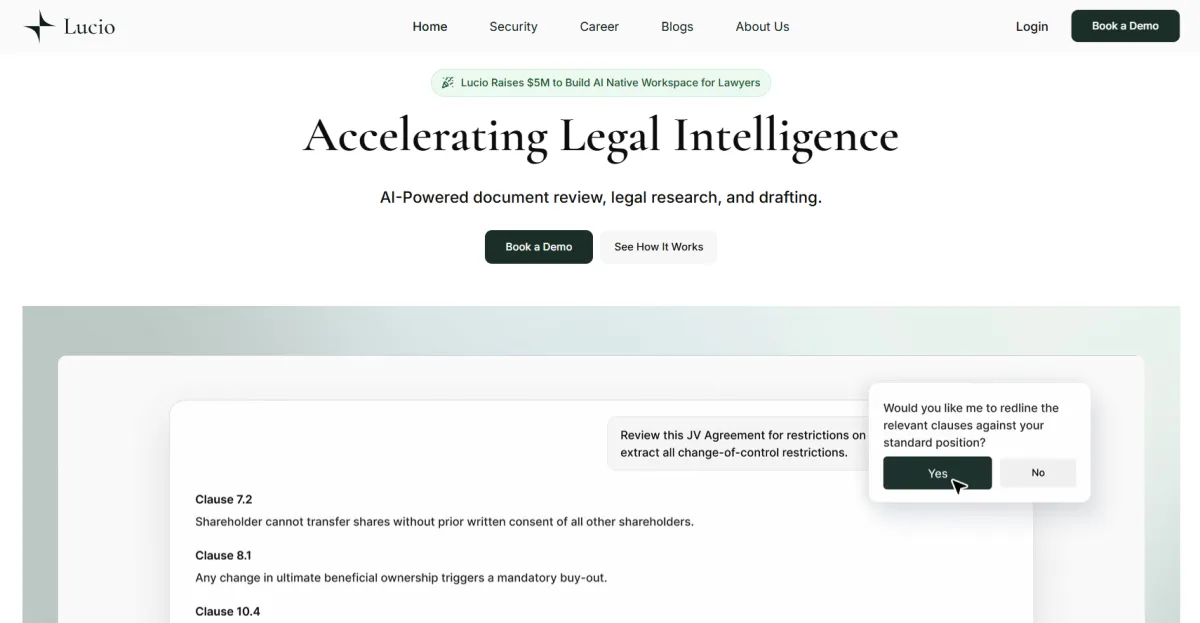
“Most legal tech doesn't fail in demos, it fails at desks.” That’s the core thesis from Vasu Aggarwal, co-founder of legal AI startup Lucio, and it’s the problem his company just raised $5 million to solve. The funding, announced today but closed earlier this year, was led by DeVC and prominent angel investors Ashish Kacholia and Lashit Sanghvi.
While the legal AI space is white-hot with generative AI tools promising to revolutionize the industry, Lucio is taking a decidedly less flashy, more integrated approach. The company is betting that the key to winning over a notoriously tech-skeptical profession isn't building a better chatbot, but creating an "AI-native workspace" that melts into the background of a lawyer's existing workflow.
Beyond the Demo
It’s a familiar story for many law firms: a shiny new piece of software gets a great demo, a partner signs a five-figure check, and six months later, usage dashboards are a ghost town. Lawyers, driven by the billable hour and ingrained habits, often revert to their old methods if a tool introduces even the slightest friction.
Lucio claims its "adoption-first design" is the antidote. Instead of forcing lawyers to switch contexts and log into a separate platform, the company aims to embed its AI for drafting, document review, and legal research directly into the interfaces they already use. According to the company, this approach is working, with over 3000 lawyers across 200 organizations already using the platform, saving an average of 30 hours per month.
The new capital is earmarked for doubling down on this strategy. The first goal is to push Lucio’s AI into every possible legal interface. The second is to deepen its personalization capabilities, creating tailored experiences for different legal jurisdictions and practice areas, a crucial feature for an industry where nuance is everything.