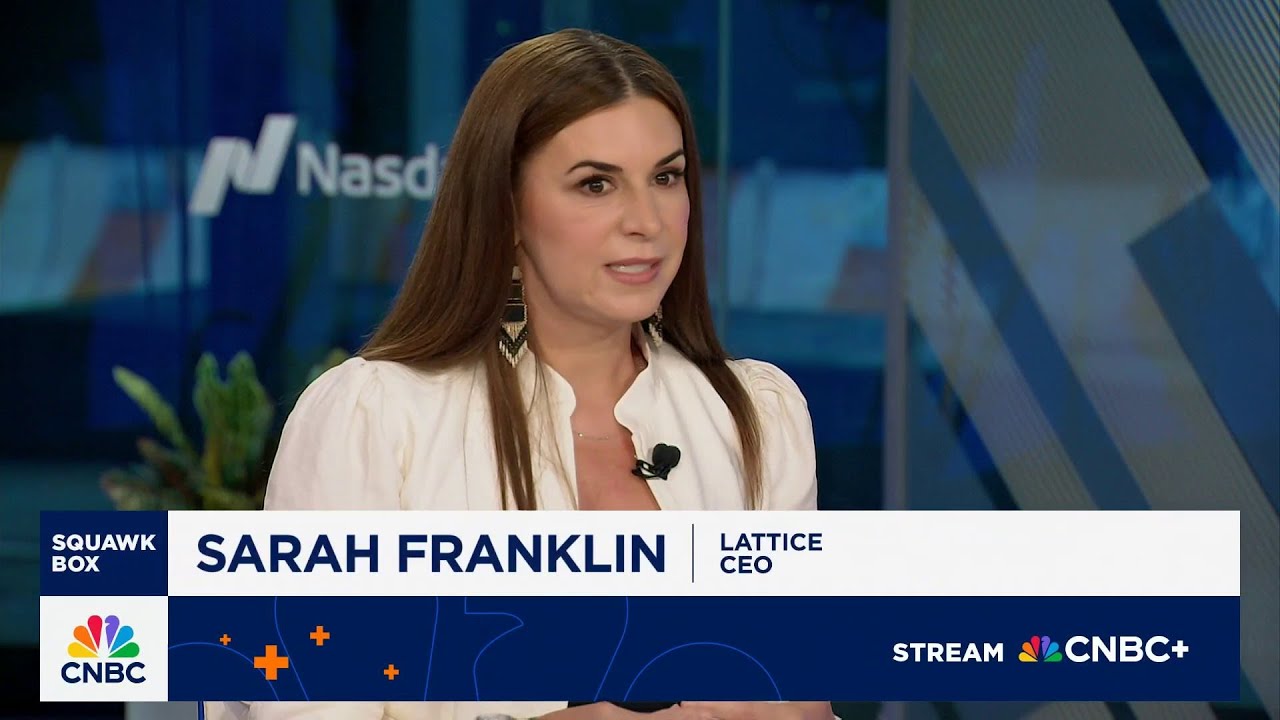
The pervasive narrative surrounding artificial intelligence often fixates on job displacement, painting a picture of an impending robotic takeover. Yet, as Sarah Franklin, CEO of Lattice, articulated on CNBC's Squawk Box, the future of AI in the workplace hinges not on replacing humans, but on amplifying their potential. Franklin spoke with Becky Quick and Joe Kernen about how businesses must pivot to a "people-first" approach, a principle core to Lattice’s human resources and AI platform, to navigate the evolving landscape of work.
Her perspective directly addresses the anxieties articulated by figures like OpenAI CEO Sam Altman, who acknowledges that "there will be very hard parts like whole classes of jobs going away." Franklin, whose company helps over 5,000 businesses manage their human capital, insists that the fear, uncertainty, and doubt currently swirling around AI’s impact on employment must be met with a proactive strategy that champions human success. "Businesses, they need to put people first because if you only prioritize the AI, you're going to end up with robots talking to robots," she warned, emphasizing the critical need for human connection and trust, particularly with customers.
Lattice's approach is designed to "scale the human element." This means leveraging AI to provide personalized coaching and assistance that was previously unattainable for every employee due to budget or resource constraints. Imagine a personalized career coach, tailored to an individual’s learning style and professional goals, available to every team member. Franklin highlights that this isn't about automating the manager out of a job, but rather empowering managers to be more effective and employees to grow.
This is an incredible opportunity.