


The advent of AI agents marks a profound shift in how developers interact with their environments, promising unprecedented levels of automation and efficiency. At the forefront of this transformation is Klein, an open-source coding agent designed to seamlessly integrate into and even take over the entire developer workflow. This vision was recently discussed by Klein's lead developer and a co-founder of the project, who provided a concise yet impactful overview of the product and its broader implications for the future of agentic systems.
Klein’s core proposition is to serve as a singular point of contact for developers seeking to automate complex tasks. "Klein's an open-source coding agent," explained the lead developer, detailing its current state as a VS Code extension, with plans for expansion to JetBrains, Neovim, and CLI. He highlighted its ability to "take over your terminal, your editor, your browser, connect to all sorts of MCP services and essentially take over your entire developer workflow." This capability positions Klein not merely as an assistant, but as an autonomous executor that can navigate diverse digital environments to complete assignments. He further noted it "becomes this point of contact for you to get your entire job done essentially."
This comprehensive takeover capability signifies a critical leap in developer productivity. Instead of developers manually juggling various tools and interfaces, Klein acts as an intelligent orchestrator, streamlining operations and reducing cognitive load. For founders and VCs, this translates into accelerated development cycles, reduced operational overhead, and a pathway to rapidly prototype and deploy solutions. The immediate utility in coding environments is clear, but the underlying architecture suggests a far broader potential.
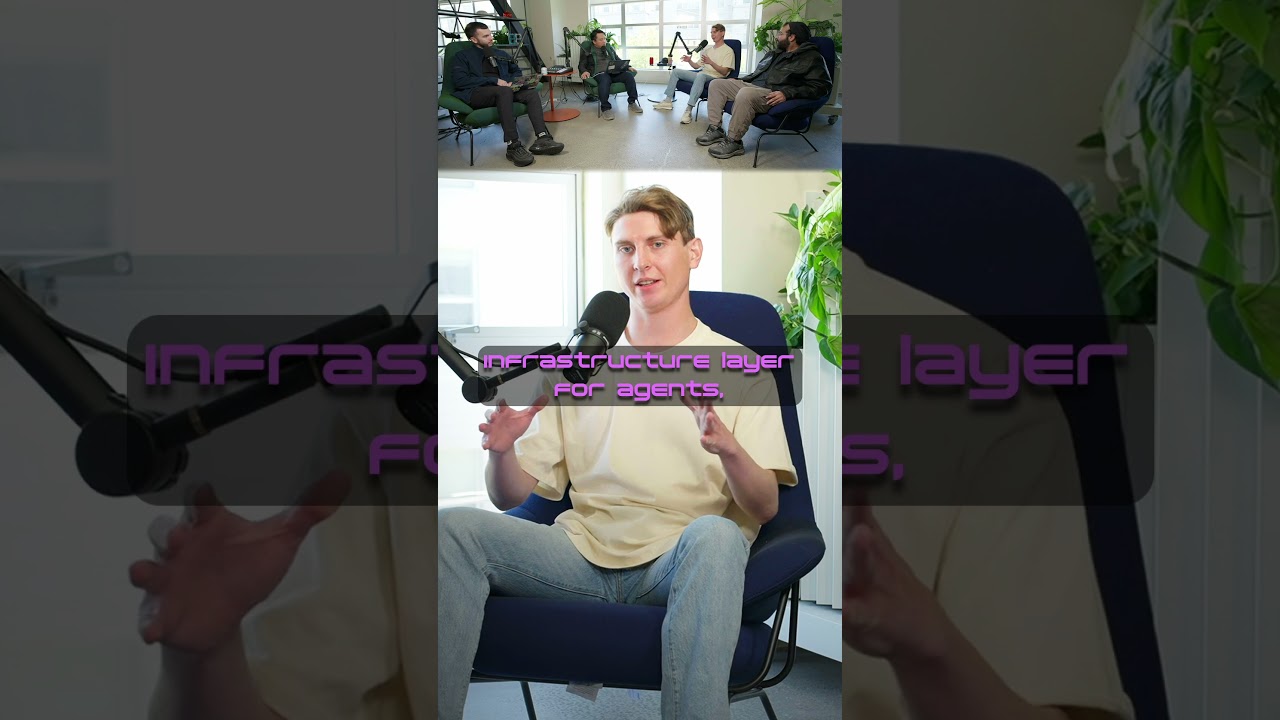
A co-founder articulated a more expansive vision, stating, "Klein is the infrastructure layer for agents, for all open-source agents, people building on top of this agentic infrastructure." This insight is paramount for those tracking the evolution of AI. Klein is not just an application; it is being built as a foundational platform upon which a myriad of specialized AI agents can be constructed. This modularity is key to fostering an ecosystem of interoperable, purpose-built agents.
The project’s commitment to modularity extends beyond coding. "We're trying to make it more modularized so that you can build any agent on top of it... you're going to be able to build fully agentic systems for anything, not just coding," the co-founder emphasized. This indicates an ambition to create a universal framework for agent development, democratizing the creation of sophisticated AI systems across various domains. Such a framework could drastically lower the barrier to entry for building complex autonomous systems, opening new avenues for innovation in diverse industries, from finance to defense. The forthcoming CLI and SDK will empower developers to leverage this infrastructure, enabling the rapid deployment of custom agentic solutions tailored to specific enterprise needs.