

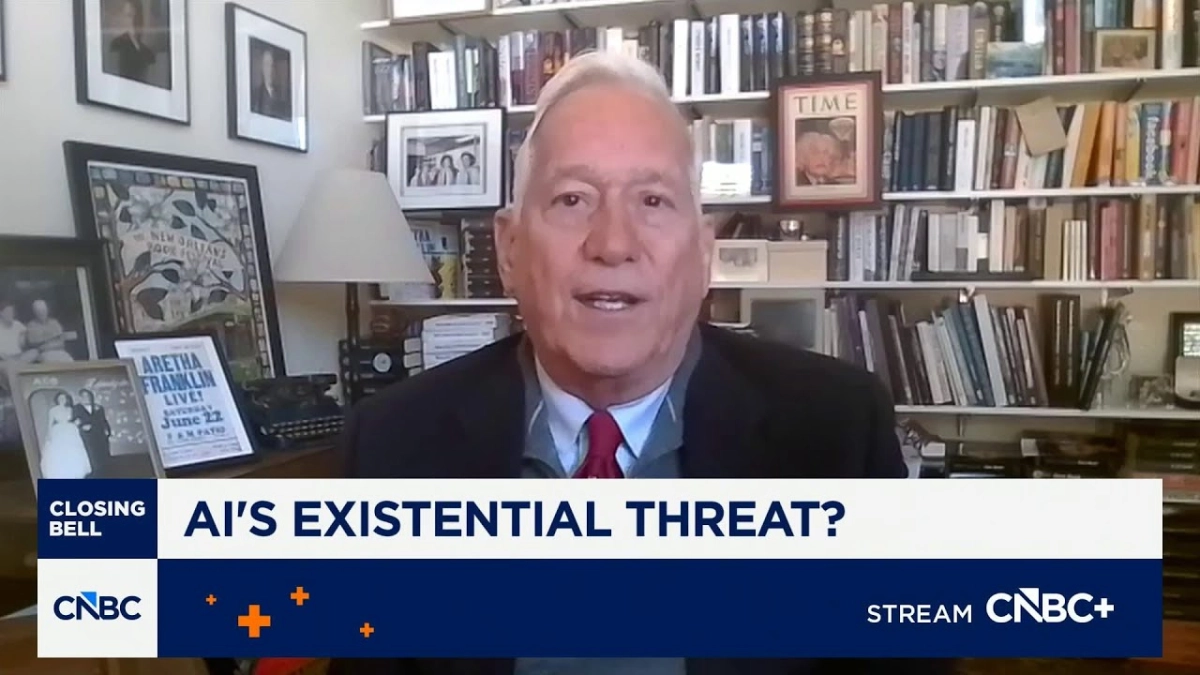
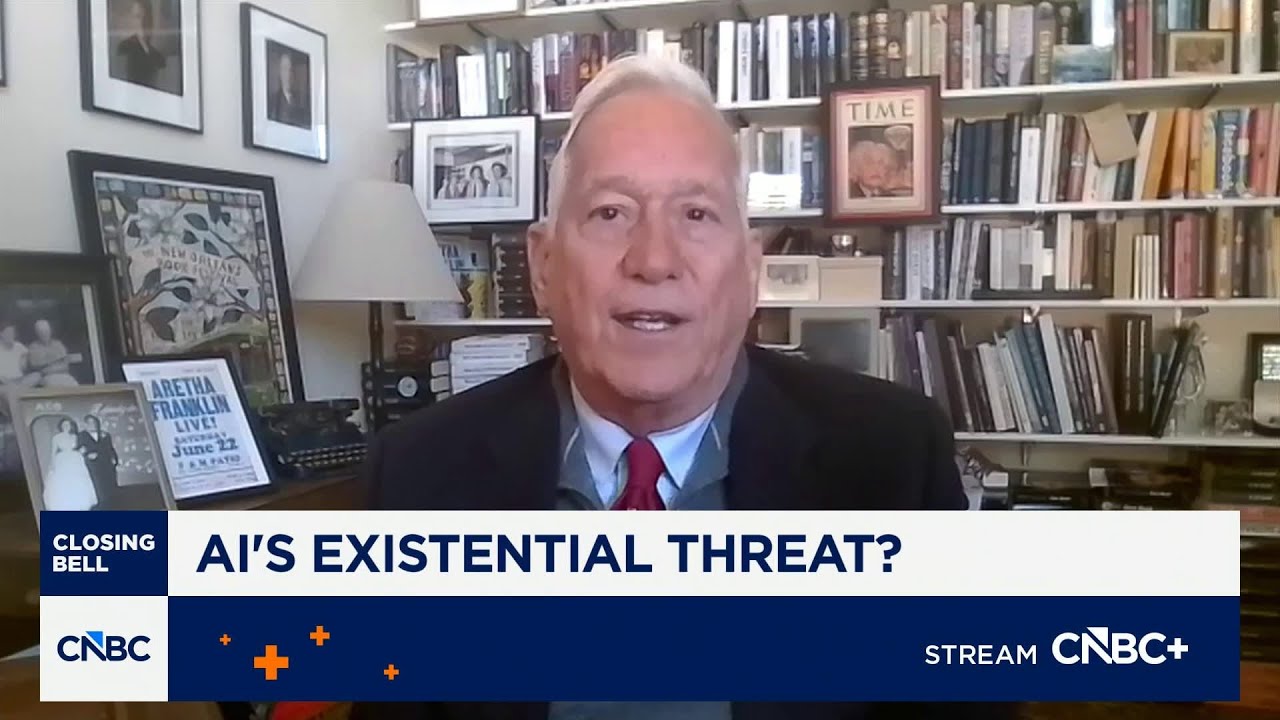
“I believe we are entering a rite of passage, both turbulent and inevitable, which will test who we are as a species.” This striking pronouncement from Anthropic CEO Dario Amodei, recently cited by CNBC, encapsulates the profound anxiety surrounding the rapid acceleration of artificial intelligence. It was this existential tension that framed the discussion when Walter Isaacson, Perella Weinberg advisory partner and Tulane University professor, spoke with Scott Wapner on CNBC’s Closing Bell about the economic and philosophical downsides of AI adoption. Isaacson offered a nuanced perspective, characterizing this era not as a crisis of displacement, but as the turbulent adolescence of technology, asserting that the fundamental value of human creativity remains irreplaceable.
Isaacson quickly addressed the prevailing fear that AI will lead to a net loss of employment, a narrative frequently amplified by corporate layoff announcements tied to efficiency gains. While acknowledging that job cuts, such as those recently seen at companies like Nike, are often attributed to AI-driven automation, he countered this narrative by pointing to the simultaneous surge in demand for infrastructure, specifically data centers and related services. He argued that the Bureau of Labor Statistics must improve its tracking methods to accurately measure this dual movement of job destruction and creation. Isaacson’s core economic insight is that history suggests productivity gains usually translate into increased demand for new goods and services, which ultimately leads to new forms of employment. The challenge, therefore, is less about the total volume of jobs and more about the velocity of skills transformation.
The conversation pivoted to a more philosophical concern: the "brain drain", the worry that reliance on massive processing power will diminish individualized thinking and erode human purpose. Isaacson dismissed this anxiety, drawing on historical parallels, noting that similar fears arose when writing itself became widespread. He referenced Socrates' concern that literacy would degrade memory and critical thought. The reality, Isaacson contends, is that new technologies don't diminish human capacity; they shift where value is created. He emphasized that the combination of human ingenuity and machine capability is the true engine of progress. “I think there’ll always be a room for the people who can connect creativity to the technology,” he stated, underscoring the symbiotic relationship required to drive genuine innovation.
For founders and technology investors focused on long-term value, Isaacson’s analysis suggests that the competitive advantage will shift away from pure processing power, which machines will inevitably dominate, and toward the uniquely human elements of creativity, judgment, and connection. He highlighted his own work at Tulane, where he encourages students to write biographies and memoirs, noting that while 50% of the research and processing can be automated, “at least 50% has to be the creativity, the reporting, the asking of questions.” This focus on the humanities, history, and critical inquiry is crucial for navigating an AI-saturated future.
Isaacson strongly pushed back against the utopian/dystopian extreme where machines are better than humans at "essentially everything," leading to a society reliant on guaranteed basic incomes and lacking purpose. He stipulated that while AI will undeniably excel in processing power, it lacks the fundamental human capacity for original, associative thinking and defining purpose. This is not just a technological distinction; it is a human one. The threat to purpose, he concluded, only materializes "if we try to use AI to just do everything and have a guaranteed basic income... But I don't really see that coming." The data points today indicate that human creativity, when leveraged alongside AI tools, creates new opportunities, rather than eliminating the need for human endeavor entirely.