

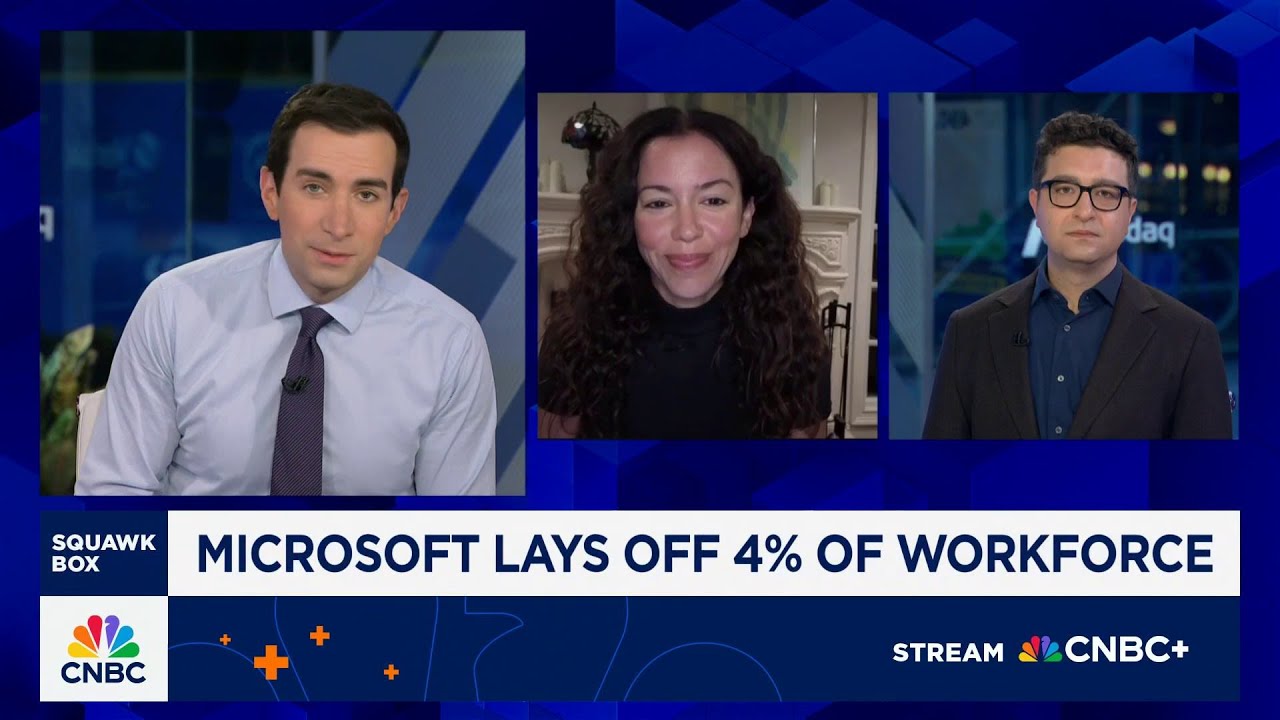
The narrative that Artificial Intelligence is directly displacing human labor, leading to widespread tech layoffs, is largely premature and overblown. While major tech companies like Microsoft are indeed undergoing workforce reductions, a deeper analysis reveals these shifts are more akin to strategic reorganizations around emerging technologies rather than direct AI-driven job replacement.
In a recent CNBC Squawk Box segment, CNBC’s Technology Correspondent Steve Kovach and Silicon Valley-based journalist Michal Lev-Ram offered critical commentary on the evolving relationship between AI and the labor market, particularly in the wake of Microsoft’s recent 4% workforce reduction. They questioned whether AI was truly the underlying cause of these layoffs or merely a convenient, albeit misleading, explanation.
It also stands to reason the tech giant is losing the battle as OpenAI is reportedly talking with other suppliers of 'charitably' affordable cloud processing.
Steve Kovach highlighted the disconnect between bold claims and tangible outcomes, referencing Salesforce CEO Marc Benioff’s assertion that "50% of our work right now is being done by artificial intelligence." Kovach countered, "If that was true, we'd be hearing about massive layoffs at Salesforce... but we're hearing it, increasingly the Journal did a story on this yesterday, guys, they said, you know, saying the quiet part out loud." He noted that Microsoft’s layoffs cited "efficiencies" and targeted "middle managers," not explicit AI replacement. "AI can't replace that," he asserted, suggesting the current iteration of AI is not yet capable of handling the nuanced, complex tasks performed by many human roles.
Michal Lev-Ram largely concurred, stating, "I don't believe that these are job losses due to AI, that AI is taking over jobs... I do think it's the result of the company reorganizing itself around AI." She drew parallels to Microsoft's 2014 transition to mobile and cloud, which also saw significant job cuts as the company realigned its focus. The current cuts, she explained, are "across the board," affecting various divisions like Xbox and gaming studios, indicating a broader strategic pivot rather than a direct consequence of AI automation.