

The reverberations of the artificial intelligence boom have left investors keenly searching for the next transformative technology. This prevailing sentiment, a fear of missing out on the kind of exponential growth seen with AI stalwarts like Nvidia, is now firmly directing capital toward the nascent field of quantum computing. It's a landscape where early, speculative bets are being placed on potential rather than proven revenue.
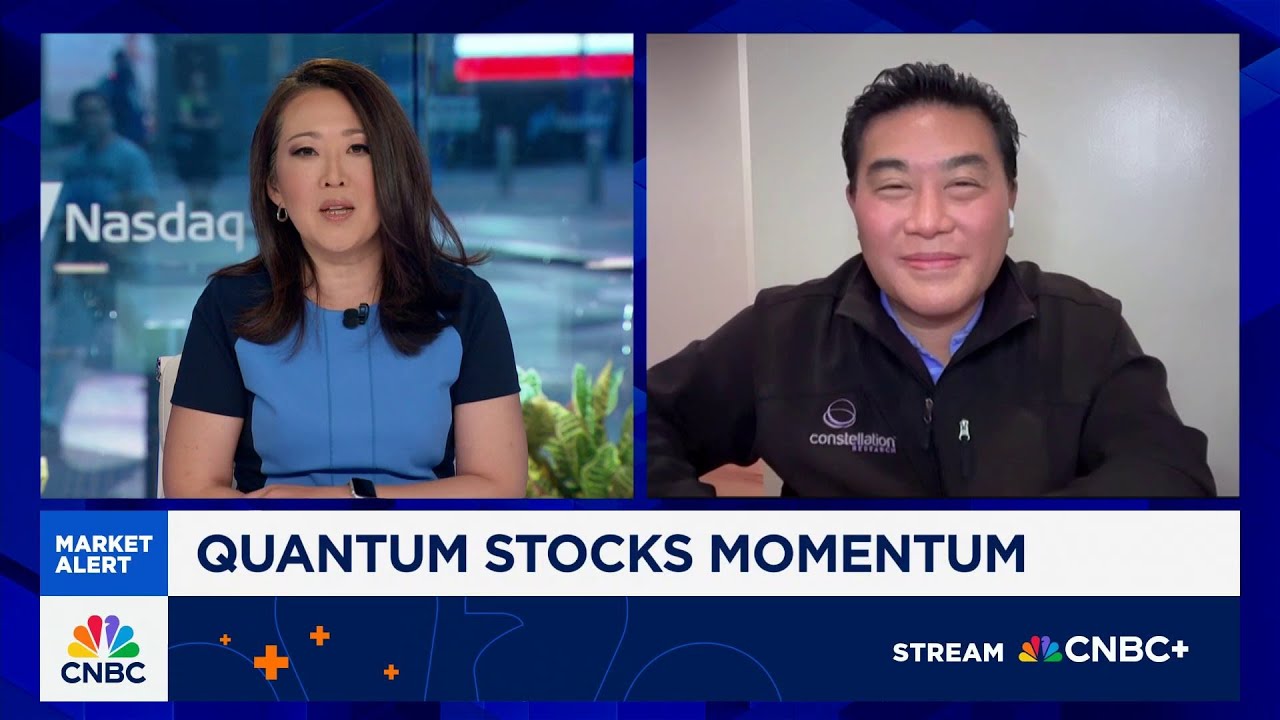
Ray Wang, Constellation Research founder and chairman, recently spoke with the hosts of CNBC's Squawk Box, offering his insights into this burgeoning market. He addressed the significant momentum in quantum stocks, the sector's long-term potential, and whether current valuations reflect the technology's early stage.
Wang characterized the current quantum market as "spring training season in baseball," emphasizing that "we haven't gotten to the first inning." Despite this nascent stage, the excitement is palpable, driven by the profound applications quantum computing promises. Imagine the ability to conduct drug discovery in years instead of decades, or to achieve quantum-level security that could break complex codes in mere seconds. These are not distant dreams but the very applications that companies like D-Wave, IonQ, Quantum Computing Inc., and Rigetti are actively pursuing, each with distinct approaches to hardware and service delivery.
These companies, though still in their infancy with relatively modest revenues, are commanding substantial market capitalizations. D-Wave, for instance, reported $15 million in first-quarter revenue but boasts a $5 billion market capitalization. This disconnect underscores the speculative nature of current investments.
The market’s willingness to afford such high valuations is largely influenced by the recent AI trajectory. Investors, having witnessed the explosive growth of companies integral to the AI revolution, are wary of being left behind in what they perceive as the next wave. Wang articulated this clearly: "The investors are saying it's jump in early or miss the wave in quantum like you missed the wave in AI. And I think that's the FOMO that's in the marketplace." He noted that technological cycles are accelerating, compressing what might have been a two-decade progression into a mere seven years.