

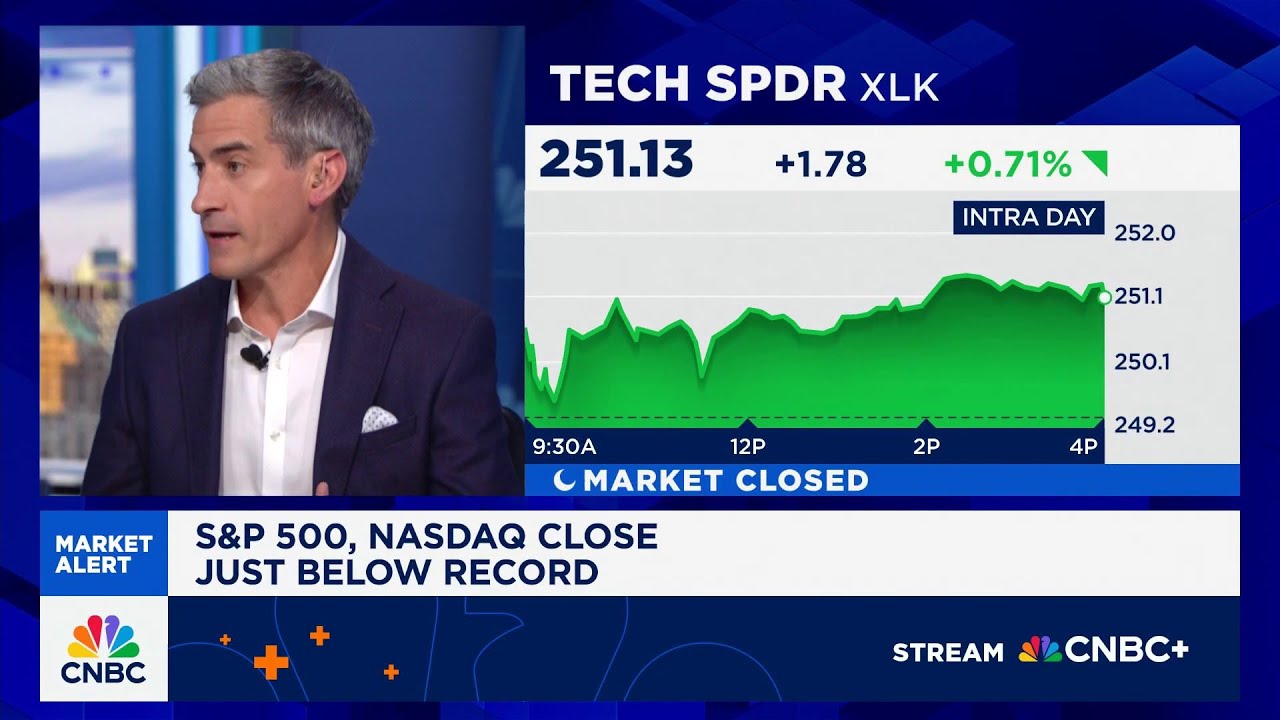
Artificial intelligence, not trade wars, is the undeniable driving force of the current bull market, asserts Truist Wealth co-CIO Keith Lerner. Lerner, alongside Hightower Advisors Chief Investment Strategist Stephanie Link, recently spoke with CNBC’s Sara Eisen on "Closing Bell" to dissect the day's market action and offer their forward-looking outlook, highlighting a confluence of macroeconomic tailwinds and a burgeoning technological revolution.
Link characterized the current market environment as "chipping away at the wall of worry," citing improvements across several fronts: progress on tariffs, a subdued geopolitical landscape, and declining inflation. She noted that Federal Reserve Chair Powell's recent remarks sounded "a little bit more dovish," suggesting a potential pause in rate hikes. This narrative is further bolstered by a robust economic outlook, with the Atlanta Fed’s GDPNow tracker indicating a healthy 3.4% growth for the second quarter, averaging around 2% for the first half of the year. Such economic resilience, coupled with a weaker dollar, is expected to translate into stronger corporate earnings, exceeding prior expectations.
Keith Lerner underscored that while market valuations may temper the ascent, the overarching direction remains upward. He emphatically stated, "The big T is technology, not tariffs," emphasizing that the market's focus has decisively shifted.
The bullish sentiment extends beyond traditional tech, permeating sectors that serve as foundational infrastructure for AI. Link highlighted the surprising strength of the industrials sector, which is up 10% year-to-date, attributing this performance to the demands of AI infrastructure, including data centers, power generation, and grid upgrades. Lerner echoed this, noting that industrials represent an "indirect AI play" through areas like cooling solutions for data centers.
Beyond technology and its foundational partners, both strategists identified opportunities in other sectors. Stephanie Link expressed a strong preference for financials, believing "the deregulation story is underestimated." She anticipates positive shifts in capital requirements, reduced IPO costs, and increased M&A activity, leading to strong bank earnings and highlighting the sector's attractive valuations relative to the S&P 500. Lerner reinforced this optimism, observing that major financial institutions like JPMorgan and Goldman Sachs are breaking out, a pattern not typically seen before significant economic slowdowns. The current market, therefore, appears to be returning its focus to the core economic and technological drivers that underpin long-term growth.