


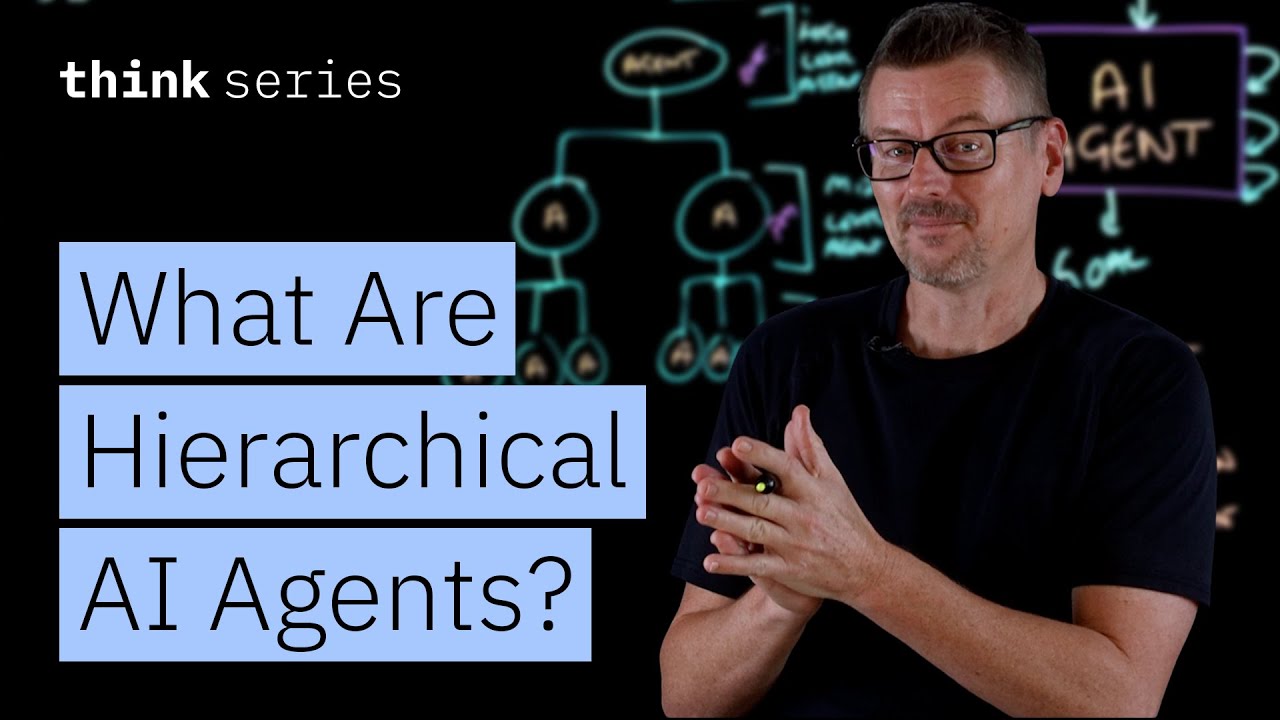
In a recent insightful discussion, Martin Keen, a Master Inventor at IBM, elaborated on the inherent challenges of building AI agents capable of handling complex, long-horizon tasks. Keen highlighted that while a single, monolithic AI agent might seem straightforward, it often falters when faced with multi-step objectives. This is primarily due to issues like 'context dilution,' where the essential goal gets lost amidst a growing chain of intermediate steps, and 'tool saturation,' where the agent can become overwhelmed by the sheer number of tools or functions it has access to, leading to suboptimal or incorrect choices.
Understanding the Problem with Single-Agent Architectures
Keen explained that a typical AI agent, when presented with a complex task, is expected to perform both the planning and execution phases. However, as the task complexity increases, the agent's ability to maintain focus on the original goal diminishes. This is exacerbated by the sheer volume of information and potential actions it must process. Keen identified several key failure modes for such monolithic agents:
- Context Dilution: As the agent progresses through a task, the initial prompt or goal can become less influential as more intermediate steps and information are processed.
- Tool Saturation: With access to a wide array of tools, the agent may struggle to select the most appropriate one for a given sub-task, leading to inefficient or incorrect actions.
- Lost in the Middle: Even if the initial prompt is clear, the agent can lose track of the overarching objective as it navigates through numerous intermediate steps.
These limitations often result in the agent failing to achieve the desired outcome, sometimes in predictable ways.
The full discussion can be found on IBM's YouTube channel.
Introducing Hierarchical AI Agents
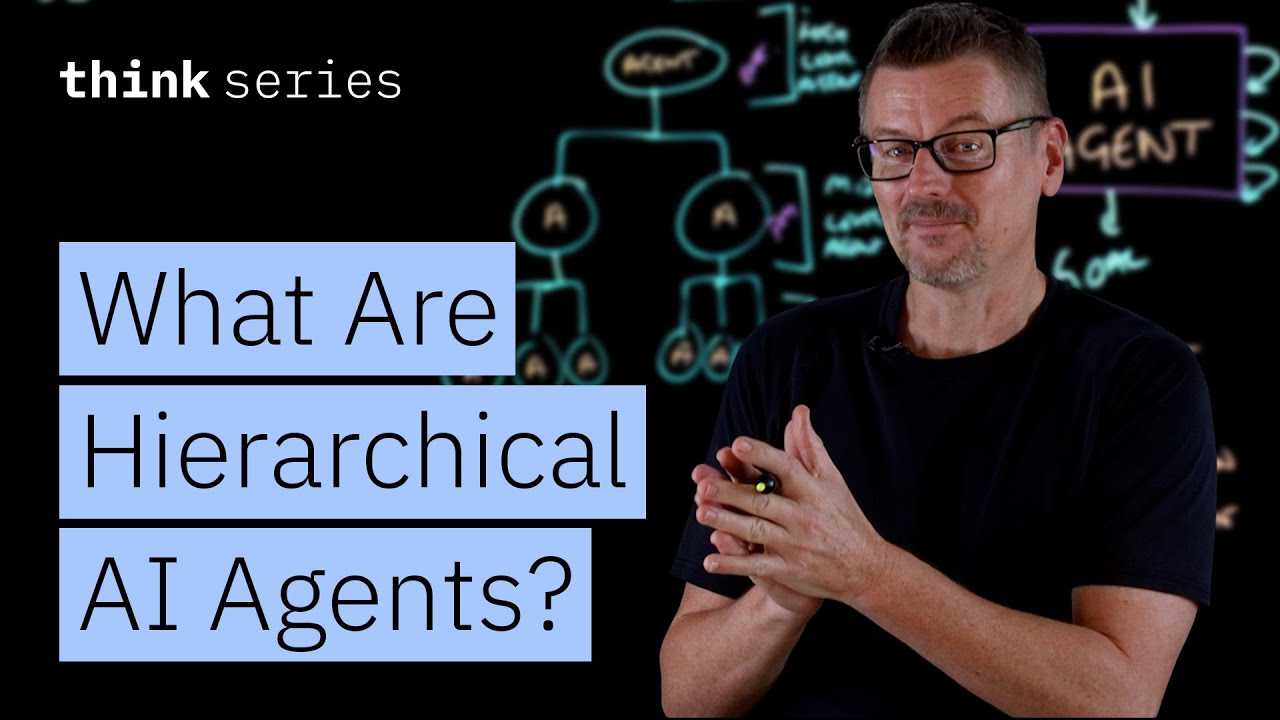
To address these shortcomings, Keen proposed a hierarchical approach to AI agent design. This architecture breaks down the complex task into layers of agents, each with specific responsibilities. At the top sits a 'high-level agent,' akin to a project manager, responsible for strategizing and decomposing the overall goal into smaller, manageable sub-tasks. These sub-tasks are then delegated to 'mid-level agents.'
The mid-level agents, in turn, break down their assigned sub-tasks further and delegate them to 'low-level agents.' These low-level agents are the workhorses, specializing in executing very specific, granular tasks using particular tools. Keen illustrated this with a diagram showing a top-level agent, followed by a layer of mid-level agents, and then a broader base of low-level agents.
Keen noted that this structure is analogous to how human teams are organized, where a manager sets the overall direction, team leads manage specific project phases, and individual contributors execute defined tasks.
Advantages of Hierarchical AI Agent Design
Keen outlined several significant advantages of adopting a hierarchical structure for AI agents:
- Contextual Packets: High-level agents can pass focused, relevant context to mid-level agents, and mid-level agents can pass even more refined context to low-level agents. This ensures that each agent has the necessary information without being overwhelmed.
- Tool Specialization: Low-level agents can be trained or fine-tuned to excel at using specific tools, reducing the problem of tool saturation for individual agents.
- Model Flexibility: Different models or architectures can be employed at each level of the hierarchy, allowing for optimization based on the specific requirements of planning versus execution.
- Modularity: The modular nature of the hierarchy allows for easier testing, debugging, and updating of individual agent components without disrupting the entire system.
- Parallelism: Multiple low-level agents can work on different sub-tasks concurrently, speeding up overall task completion.
- Recursive Feedback Loop: The hierarchical structure enables a robust feedback mechanism. Low-level agents report their results back to the mid-level agents, who then aggregate and report to the high-level agent, allowing for course correction and iterative refinement of the plan.
Addressing Limitations
While beneficial, Keen acknowledged that hierarchical AI agents are not without their challenges. One significant concern is orchestration overhead, which refers to the complexity of managing the communication and workflow between different agents. This includes ensuring smooth handoffs of tasks and results, handling errors, and coordinating parallel activities.
Another potential issue is the 'telephone game' effect, where information can become distorted or lost as it passes through multiple layers of agents. If task decomposition is not performed effectively, or if the communication protocols are not precise, the low-level agents might end up working on tasks that are slightly different from the original intent, leading to suboptimal outcomes.
Keen emphasized that the success of this hierarchical approach hinges on well-defined task decomposition and robust communication protocols between the agents at different levels.


