

IBM's Dan Wiegand on AI and Mainframe Augmentation

IBM's Dan Wiegand discusses how AI, including RAG and agents, is transforming daily productivity and enhancing mainframe operations.

4 min read
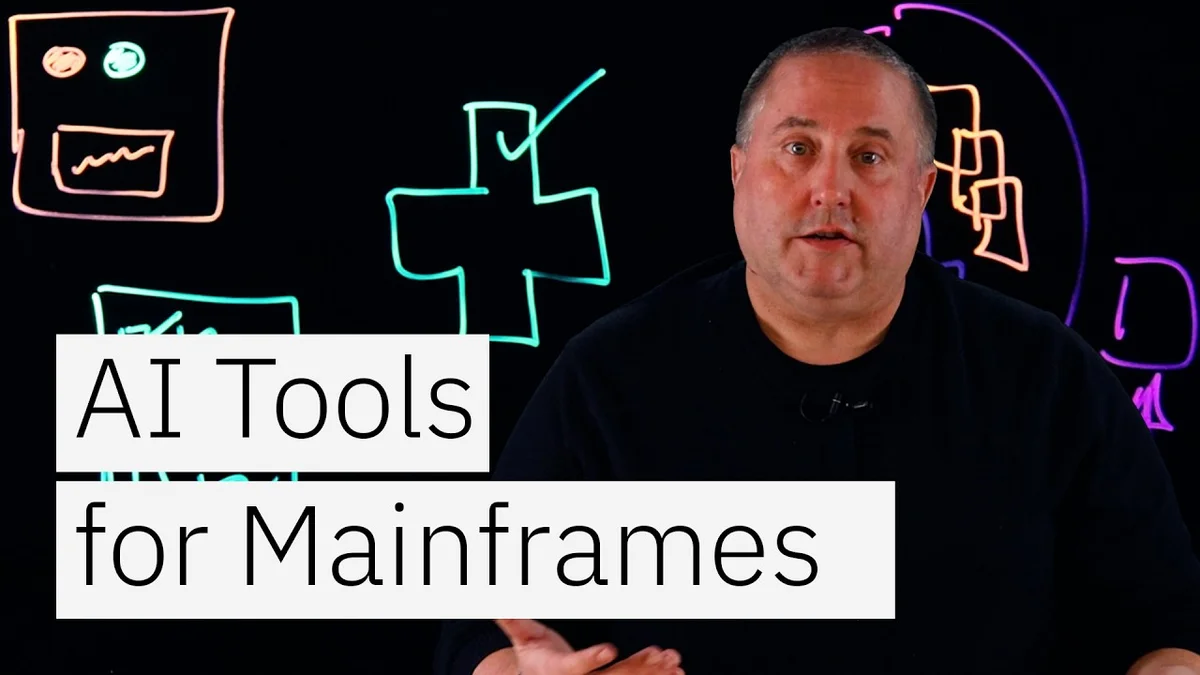
Dan Wiegand, Principal Product Manager at IBM, speaking against a black background.
Image credit: IBM Think Series· IBM

In a recent discussion, Dan Wiegand, Principal Product Manager at IBM, highlighted the pervasive nature of Artificial Intelligence (AI) in our daily lives. He emphasized that AI is no longer a niche technology but a fundamental tool that influences how we work and interact with the world, whether consciously or unconsciously.

Dan Wiegand's Role at IBM

Dan Wiegand, as a Principal Product Manager at IBM, is at the forefront of developing and integrating advanced technologies, particularly within the realm of enterprise computing. His work often focuses on bridging legacy systems with modern AI capabilities, ensuring that established infrastructure can benefit from the latest advancements.

AI's Impact on Productivity

Wiegand illustrated how AI is already being used to enhance productivity, citing personal examples like using AI to plan vacations or draft presentations. He stressed that AI's core function is to make individuals more productive by providing starting points and streamlining complex tasks. "AI has really one thing in common: trying to make us more productive," Wiegand stated.

Related startups

The full discussion can be found on IBM's YouTube channel.
How AI, RAG, and Agents Transform Mainframe Operations - IBM
How AI, RAG, and Agents Transform Mainframe Operations — from IBM

The Critical Role of Mainframes

He then pivoted to the significance of mainframe systems in modern business operations. Wiegand asserted that mainframes are not relics of the past but are central to many critical functions. "Mainframe is absolutely mission critical to what we do in our everyday lives," he explained. The challenge lies in making these powerful systems more accessible and efficient through AI integration.

Bridging Legacy Systems with AI

Wiegand detailed how IBM is working to integrate AI with mainframes to overcome operational challenges. He noted that clients often face difficulties in running operations for platforms like mainframes, requiring them to do more with less. "We want to be able to treat the mainframe as it is any other part of our infrastructure," he said.

Retrieval Augmented Generation (RAG)

A key concept discussed was Retrieval Augmented Generation (RAG). Wiegand explained that while Large Language Models (LLMs) possess vast knowledge, their responses may not always be precise or tailored to specific contexts. RAG addresses this by allowing LLMs to retrieve and ground their answers in relevant, up-to-date information. "What RAG does is help ground the large language model and maybe more relevant or up-to-date information," Wiegand elaborated. This ensures that the AI-generated output is accurate and contextually appropriate for the mainframe environment.

Leveraging Agents for Automation

Furthermore, Wiegand touched upon the use of AI agents. He described how clients can leverage these agents to interact with various system resources, including cloud services and mainframe data. These agents can automate tasks, such as opening a support ticket or checking system status, by processing information and executing actions. "We can integrate a lot of different things to automate a lot of the tasks that we might have to do manually," he noted. This automation is crucial for improving efficiency and reducing the burden on human operators.

Enhancing Mainframe Operations with AI

Wiegand highlighted specific use cases where AI can directly benefit mainframe operations. He mentioned scenarios where clients encounter issues with their existing software and seek help from support teams. By using AI tools, clients can get more accurate and relevant information, improving their problem-solving capabilities. He also pointed out that LLMs, while powerful, sometimes provide answers that are not precisely aligned with the specific needs of mainframe operations. RAG, he explained, helps bridge this gap by providing contextually relevant data.

Additionally, Wiegand discussed how agents can be used to automate tasks that were previously manual. For instance, an agent could automatically open a ticket or retrieve status updates from core monitors. This not only saves time but also ensures that the information gathered is accurate and reliable. "We can go out and find different ways that we can automate a lot of the tasks that we do," Wiegand stated. This integration of AI aims to make mainframe operations more efficient and productive.

The Future of AI in Enterprise

Wiegand concluded by emphasizing the synergistic relationship between AI and mainframe technology. He suggested that by combining AI, RAG, and agents, organizations can significantly enhance their operational capabilities. The goal is to make AI a pervasive tool that assists in daily tasks, from personal endeavors to complex enterprise operations, ultimately leading to increased productivity and better outcomes.

© 2026 StartupHub.ai. All rights reserved. Do not enter, scrape, copy, reproduce, or republish this article in whole or in part. Use as input to AI training, fine-tuning, retrieval-augmented generation, or any machine-learning system is prohibited without written license. Substantially-similar derivative works will be pursued to the fullest extent of applicable copyright, database, and computer-misuse laws. See our terms.