

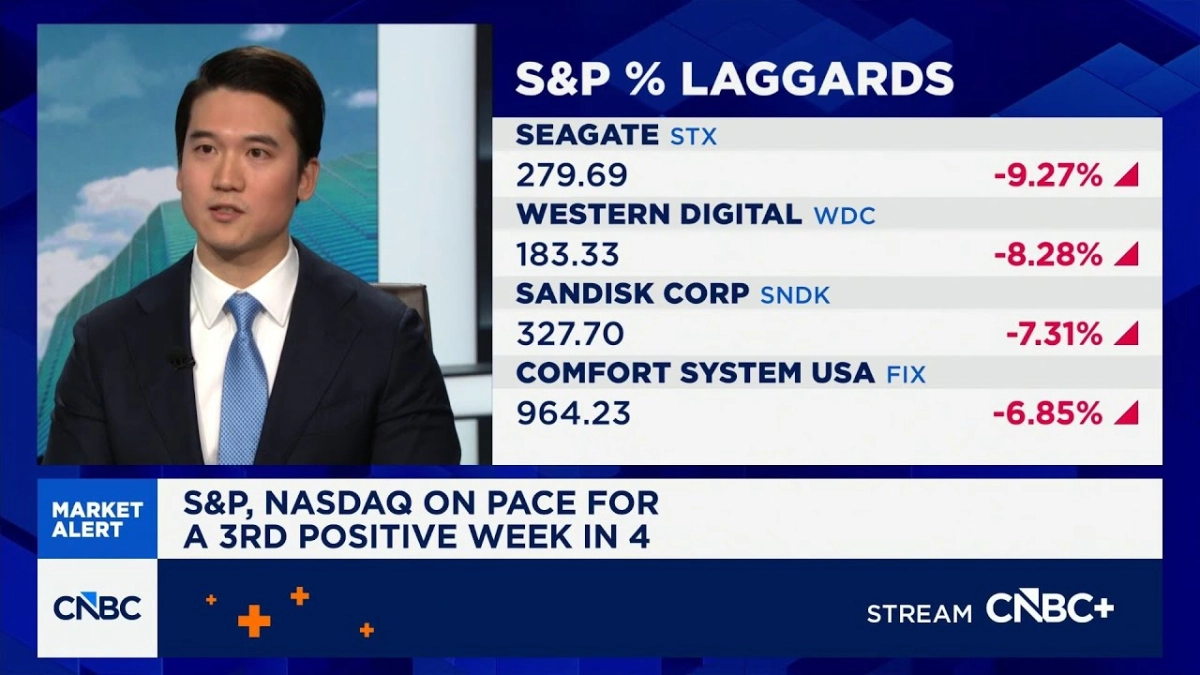
AI CAPEX: A Bull Case Amid Earnings Deceleration
"I think AI capex is going to continue," stated Ohsung Kwon, Chief Equity Strategist at Wells Fargo, during his discussion with the CNBC Power Lunch team about the market outlook ahead of the earnings season. Kwon spoke with the interviewers about the expected slowdown in earnings growth, the persistent strength in capital expenditures, particularly in Artificial Intelligence, and the broader economic transition.
The central tension Kwon identified was the market’s current optimism juxtaposed against softening forward guidance. He acknowledged the recent rally but maintained a cautious stance on the near term, suggesting that some underlying weakness might be overlooked. His primary concern revolves around the deceleration expected in the fourth quarter earnings cycle. He noted, "Everyone knows that earnings are going to decelerate this earnings season." This anticipated slowdown contrasts sharply with the robust figures seen recently, which he quantified: "And that’s still good. I mean, 8% year-over-year, that’s not bad, right?"
Despite the cooling earnings outlook, Kwon highlighted a significant structural tailwind that he believes will persist: Artificial Intelligence capital expenditure. This spending, largely driven by hyperscalers building out infrastructure, appears resilient to the broader economic moderation. Kwon asserts that the market has been slow to price in the continued necessity of this investment, stating, "I think it’s a little too early to call a peak in AI capex." Furthermore, he pointed out that the market reaction to this trend has been muted: "I think some of the weakness that we might be on the cost of potential reflation cycle and potential demand recovery going forward, I think some of the weakness might get overlooked, but the outlook has to hold."
A key insight from Kwon concerns the cyclical nature of inventory management following the pandemic-era supply chain distortions. He referenced commentary suggesting that inventory levels, which were historically high for years, are finally normalizing. This normalization is critical for the industrial and materials sectors. He observed that companies are "sort of waiting and seeing approach from the companies before they start restocking on what happens to tariffs ruling potentially tomorrow." This suggests a cautious approach to inventory build-up until macroeconomic uncertainties, such as trade policy, resolve.
Kwon’s analysis also touched on the current market composition, noting a clear divergence between sectors. While the broader indices showed mixed results, with the Nasdaq Composite lagging, specific areas demonstrated strength. He pointed to the S&P sector leaders, which included Energy, Staples, Discretionary, and Materials, contrasting this with the laggards in Technology and Health Care. This sector rotation implies that investors are finding value away from the high-flying growth names that dominated previous cycles.
The persistence of AI capex spending, even as earnings growth moderates, forms a crucial anchor for his positive long-term view on the technology sector’s foundational spending. He believes the market has been too quick to discount future capital deployment, noting that "capex is going to continue." This spending, driven by the fundamental requirements of AI deployment, is seen as a structural demand that transcends typical business cycle fluctuations. For founders and VCs operating in the infrastructure layer of AI, this suggests a durable revenue stream, irrespective of short-term consumer demand softness.
The discussion concluded with an implicit challenge to the market consensus regarding the sustainability of technology stock valuations, particularly those tied to the AI boom. While acknowledging the recent slowdown in inventory restocking, Kwon sees the AI build-out as an enduring theme. The fact that "hyperscalers are going to do" this spending implies a commitment that will underpin hardware and infrastructure providers for the foreseeable future.



