



In a recent episode of "The A16z Show," neuroscientist Andrew Huberman, Ph.D., and a16z partner Daisy Wolf delved into the burgeoning intersection of AI, neuroscience, and personalized health. The discussion spanned the growing interest in peptides for therapeutic purposes, the role of AI in advancing our understanding of human biology, and the increasing trend of individuals taking a proactive approach to their own health and longevity.
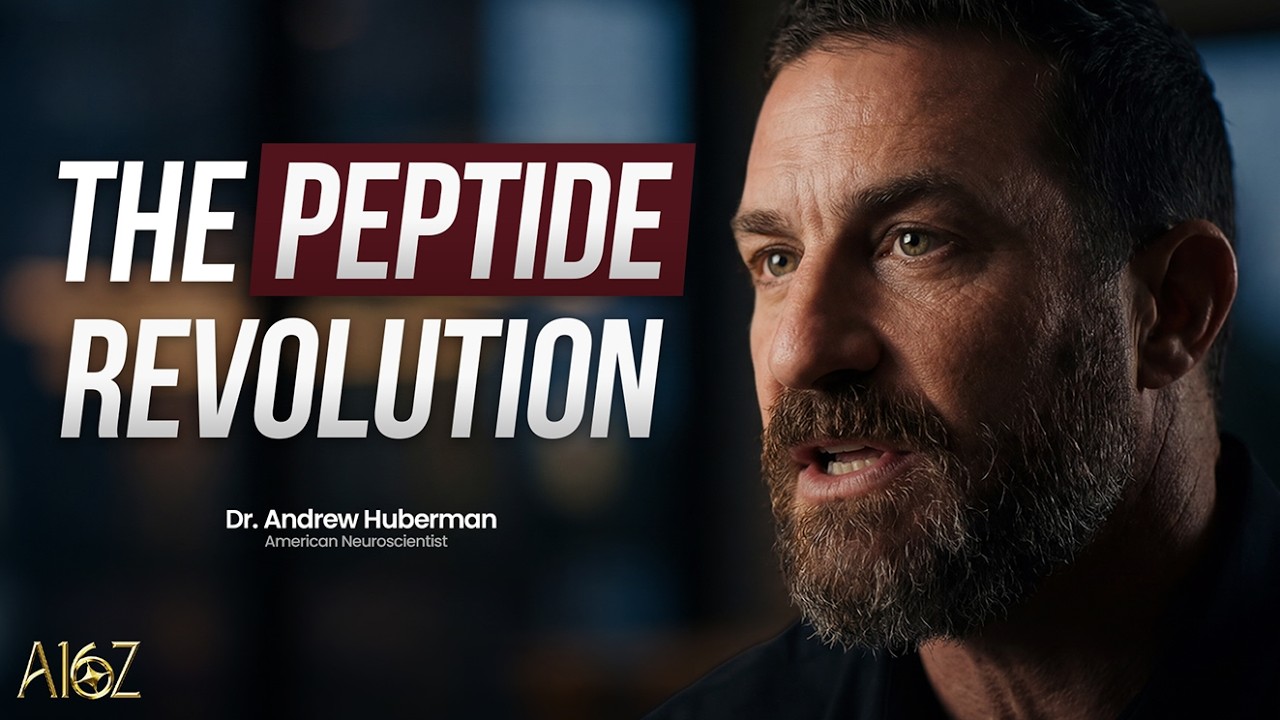
Andrew Huberman, Ph.D.: A Pioneer in Neuroscience Communication
Andrew Huberman is a renowned neuroscientist and professor of neurobiology at Stanford University School of Medicine. He is widely recognized for his ability to translate complex scientific concepts into accessible language, particularly through his popular podcast, "The Huberman Lab." Huberman's research focuses on neural circuits that underlie states such as fear, anxiety, and reward, and how these circuits can be modulated through tools like light, sound, and pharmacological agents. His work has significant implications for understanding and treating conditions ranging from anxiety and depression to addiction and sleep disorders. His presence on the podcast brings a deep scientific perspective on the biological mechanisms underlying health and performance.
Daisy Wolf: Driving Innovation in Health and Technology
Daisy Wolf, a partner at Andreessen Horowitz (a16z), focuses on investments in the healthcare and biotechnology sectors. Her work involves identifying and supporting innovative startups that are leveraging technology, including AI, to transform healthcare delivery, drug discovery, and personalized medicine. Wolf brings an investor's perspective, looking at the market trends, scalability, and potential impact of new technologies in the health and longevity space. Her insights highlight the business and investment landscape surrounding these rapidly evolving fields.
The Rise of Peptides and Their Therapeutic Potential
The conversation touched upon the growing popularity of peptides, particularly in the context of health optimization and recovery. Huberman highlighted the peptide BPC-157, noting its potential for tissue repair and its mechanism of action, which seems to involve promoting healing by increasing growth factors and reducing inflammation. He also mentioned other peptides like semaglutide and Tirzepatide, commonly known as GLP-1 agonists, which have gained significant traction for their effects on weight loss, appetite regulation, and even potential benefits for cardiovascular health and neuroprotection. Huberman emphasized that while research is promising, much of the human data is still emerging, and the long-term effects and optimal usage protocols are areas of ongoing investigation.
AI's Transformative Role in Health and Longevity
Both Huberman and Wolf underscored the significant impact AI is poised to have on health and longevity. Wolf pointed out that the investment landscape reflects this, with a substantial amount of capital flowing into AI-driven health startups. The ability of AI to analyze vast datasets, identify patterns, and personalize interventions is seen as a key driver. Huberman elaborated on how AI can aid in understanding complex biological systems, such as the human brain and its intricate neural circuits. He suggested that AI could accelerate the discovery of new therapeutic targets and personalized treatment plans, potentially revolutionizing how we approach disease prevention and management.