

Antonio Neri, CEO of Hewlett Packard Enterprise (HPE), recently discussed the company's strong performance, driven by the booming demand for AI hardware. In an interview with Bloomberg Technology, Neri emphasized that the surge in AI adoption has created a significant imbalance between the supply and demand for critical components, particularly memory.
The full discussion can be found on Bloomberg Technology's YouTube channel.
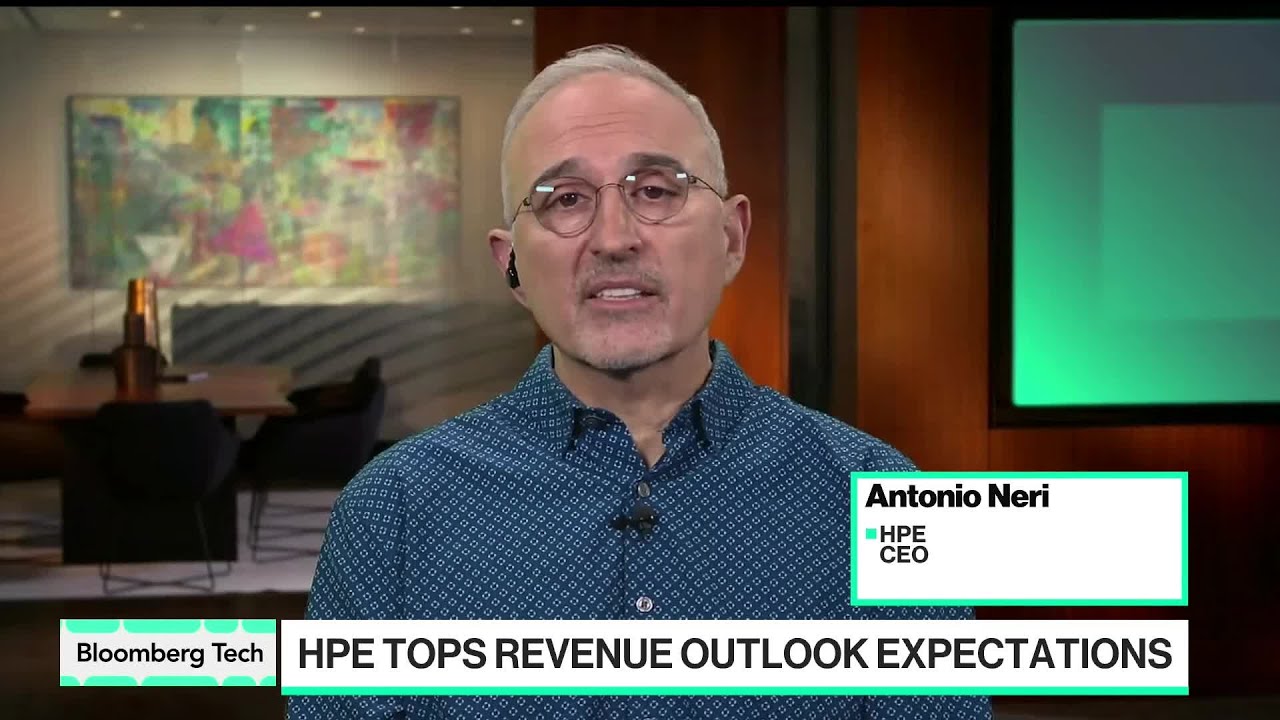
Antonio Neri's Role and HPE's AI Focus
Antonio Neri, as the CEO of HPE, leads one of the world's largest technology companies, specializing in computing, storage, networking, and software solutions. His tenure has been marked by a strategic pivot towards edge computing and the growing importance of artificial intelligence. HPE is a key player in providing the infrastructure that powers AI workloads, making Neri's insights particularly valuable in understanding the current technological landscape.
AI Demand Outstrips Supply
Neri highlighted the immense demand for AI hardware, stating, "We saw tremendous demand throughout the quarter." He elaborated that the momentum in AI continues, particularly in the build-out of data centers. However, the most significant challenge is the mismatch between supply and demand for essential components. Neri noted that "the demand in AI versus the supply... there is a huge mismatch." This constraint affects not only the availability of new AI models but also the ability to equip data centers with the necessary infrastructure.
Key Components Under Pressure
The CEO specifically pointed to memory components as being particularly affected. He mentioned, "We are recognizing in Q1 that the demand for AI is coming from the enterprise, and that's why we are seeing tremendous momentum in AI, and that's why we are seeing double-digit year-over-year growth in the order intake." He further elaborated on the specific components facing these challenges: "We are seeing tremendous demand in the data center, but what I'm really pleased is the momentum we see in the enterprise... and that's why we recognize in Q1 that the demand for AI is coming from the enterprise."
Neri detailed the specific memory technologies that are in high demand: "It's all around the AI systems, where you need to connect these data centers to other data centers through the internet, and that's why we have the data center interconnect." He further clarified the specific memory types: "You need to have the high bandwidth memory, the GPUs, and the SSDs." The company's focus has been on ensuring the availability of these components, stating, "We saw tremendous demand throughout the quarter... And that's why we are seeing double-digit year-over-year growth in the order intake."
HPE's Strategy Amidst Supply Constraints
In response to these supply challenges, Neri outlined HPE's proactive strategy. He stated, "For us, our focus has been both the sovereign space and the inference in the enterprise space." He further explained the company's approach: "We saw tremendous momentum in networking... and that's why we recognize in Q1 that the demand for AI is coming from the enterprise."
Neri elaborated on the specific steps HPE is taking: "Number one is securing as much supply as we can. Number two, we have to be agile in our posture when it comes to pricing." He acknowledged the difficulty in meeting all demand, adding, "We do not have enough supply that we will like to have." The company is also working to manage the transition between memory generations. Neri stated, "We have taken three very unique steps. Number one, securing as much supply as we can. Number two, we have to be agile in our posture when it comes to pricing." He further elaborated on the strategic advantage: "And that's why we have been able to guide the market that we are going to grow the revenue by approximately 30% in the AI infrastructure."
The 'Huge' Mismatch in Memory
Neri directly addressed the scale of the supply-demand imbalance, stating, "I will say for us, that has been the core tenant of the Juniper acquisition that the next inflection point in terms of disruptive growth will come from the networking connectivity layer." He further emphasized the severity of the issue, noting, "And that's why we have been able to guide the market that we are going to grow the revenue by approximately 30% in the AI infrastructure."
He quantified the impact: "In our portfolio, we saw tremendous momentum in networking, and that's why we are seeing double-digit year-over-year growth in the order intake." Neri also highlighted the financial implications: "We saw tremendous demand in the data center... and that's why we recognize in Q1 that the demand for AI is coming from the enterprise." He further elaborated on the backlog: "The AI system backlog is over 5 billion dollars at this point in time."
Regarding the specific memory components, Neri stated, "It's all around the AI systems, where you need to connect these data centers to other data centers through the internet, and that's why we have the data center interconnect." He continued, "You need to have the high bandwidth memory, the GPUs, and the SSDs." He acknowledged the difficulty in fulfilling all orders: "We do not have enough supply that we would like to have."
Navigating Geopolitical and Supply Chain Factors
When asked about the impact of geopolitical events, such as the conflict in the Middle East, on the supply of chips and the broader tech market, Neri responded, "Not on the supply side." He elaborated on HPE's geographical focus and its implications for operations: "We have businesses in the region, obviously, in the UAE, Qatar, Bahrain, Saudi Arabia, Israel, right? And obviously, our priority is the safety of our employees."
Neri further explained the company's strategy in managing these complexities: "We have to be transparent with our customers and partners. We have to be very disciplined, and we have to be very focused on how we manage the supply chain." He highlighted the continuous effort to adapt: "We are looking to swap components, drive different configurations, but the reality is that all of them are significantly constrained."
Regarding the ability to secure more supply, Neri stated, "We have taken three very unique steps. Number one, securing as much supply as we can. Number two, we have to be agile in our posture when it comes to pricing." He also noted the importance of customer relationships: "We have to be transparent with our customers and partners. We have to be very disciplined, and we have to be very focused on how we manage the supply chain."
Neri concluded by emphasizing the company's ongoing efforts to address the supply constraints, stating, "We are looking to swap components, drive different configurations, but the reality is that all of them are significantly constrained." He added, "We have to be transparent with our customers and partners. We have to be very disciplined, and we have to be very focused on how we manage the supply chain."


