

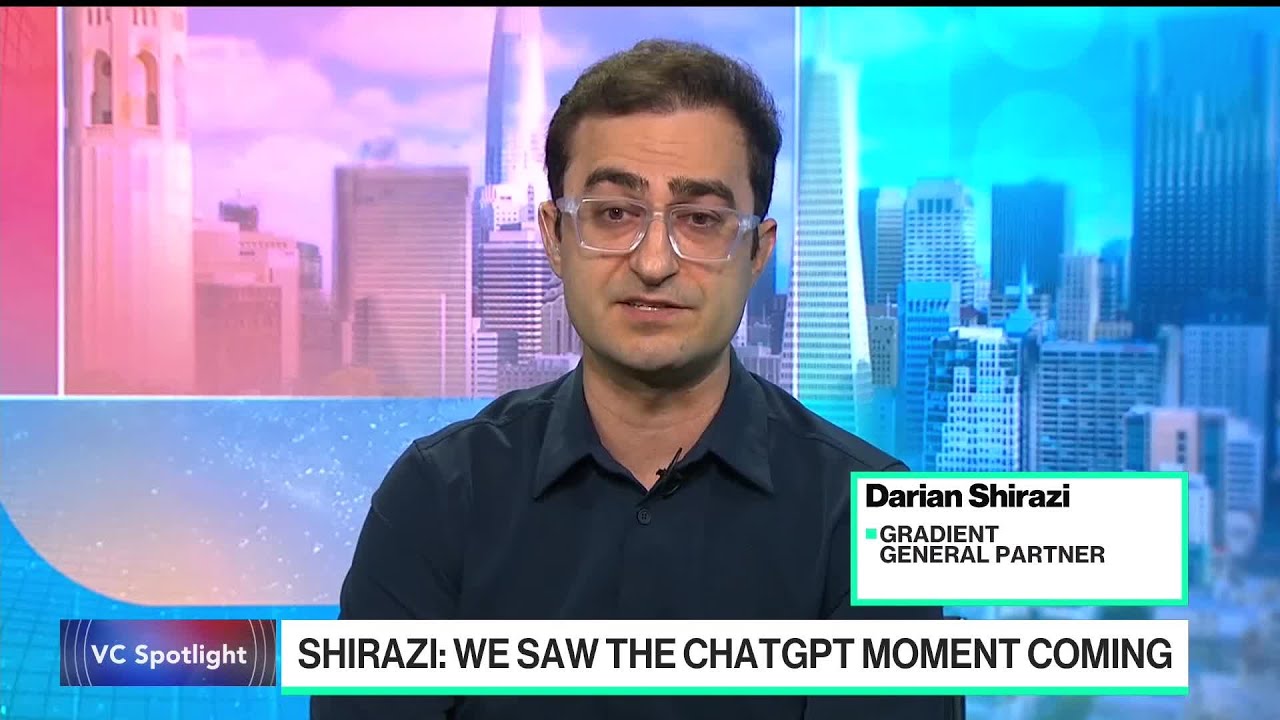
Gradient Ventures, Google's dedicated venture capital fund for artificial intelligence startups, has announced the closing of its fifth seed fund, amassing $220 million. This latest capital infusion underscores the firm's continued commitment to identifying and nurturing early-stage companies at the forefront of AI innovation.
The full discussion can be found on Bloomberg Technology's YouTube channel.
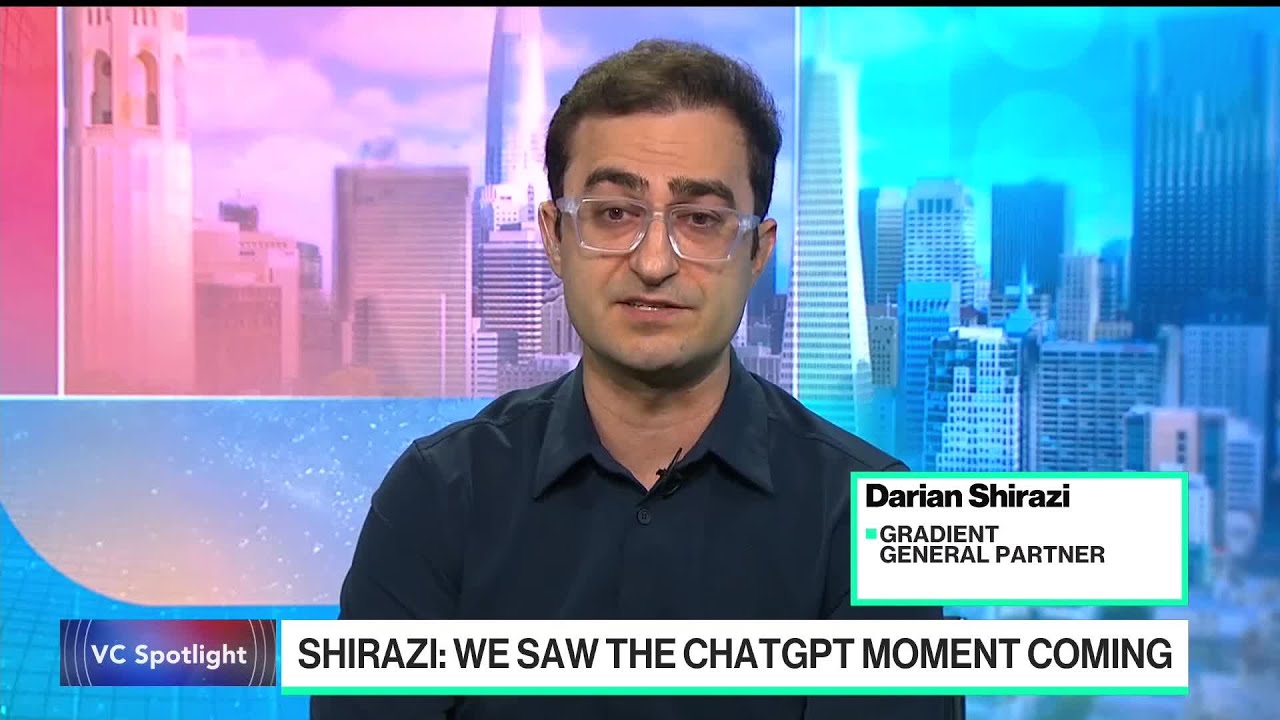
The announcement was made by Darian Shirazi, General Partner at Gradient Ventures, during an appearance on Bloomberg Technology's "VC Spotlight" segment. Shirazi highlighted the firm's long-standing focus on AI, dating back to 2017, and its strategy of partnering with founders from inception, often when they are operating out of apartments and have yet to build substantial businesses.
Guest Context: Darian Shirazi
Darian Shirazi is a General Partner at Gradient Ventures. His background includes working at Google before transitioning into venture capital. Shirazi's expertise lies in identifying and supporting early-stage AI companies, with a particular emphasis on the infrastructure and application layers of the AI ecosystem. His involvement signifies Gradient's strategic approach to investing in the fundamental building blocks and practical uses of artificial intelligence.
Fundraising Strategy and AI Market Trends
Shirazi elaborated on the firm's investment thesis, stating, "We've been investing in AIs since the very beginning, and our focus has really been partnering with founders at the earliest stages when founders are really starting out with a brand new idea. And we've backed hundreds of companies and we've been fortunate enough to partner with these companies from the very beginning, some of which were in an apartment or are founders that have never even been in business before."
He further explained Gradient's role: "Our focus is on helping them scale up and really find the next round of funding and to really partner with these founders all the way through IPO or in some cases, acquisitions."
Addressing Valuations and the AI "Bubble"
When questioned about the current market conditions and the perception of a "bubble" in AI, Shirazi acknowledged the sentiment but differentiated Gradient's approach. "We saw the ChatGPT moment coming," he stated. "I think over the course of the last 10 years that we've been investing in AIs, we've seen the number of companies in AI that come through our doors and pitch us has really accelerated."
Shirazi noted a significant increase in deal flow, with the firm previously seeing about 100 AI companies per year, a number that has now escalated to approximately 2,000 annually. He added, "We're seeing a lot of new AI technology and AI capability companies. We think that the transformer paper, which came out a month before Gradient launched, was really going to be the epoch moment for AI. And you know my partner Zach and I, we saw that the ability for people to use these models as sort of an intelligent buddy or an intelligent co-pilot was really going to be the future of the internet and the future of technology."
Addressing the valuation concerns, Shirazi commented, "When it comes to a lot of these other companies that are raising a billion dollars here or there, it seems as though those are companies that we don't fund. We really want to be focusing on AI infrastructure companies and AI application companies. Those seed rounds tend to be very well-priced and tend to be ones that we can invest in and lead with an average $3 million check size and own 10 to 15 percent of those companies."
He contrasted this with the broader market, stating, "We don't see valuation issues in the areas that we want to focus in when it comes to AI. We're focusing on the areas where there is a bubble, where valuations are incredibly high, like the foundational model companies, the ones that are chasing the next open AI contenders or the ones that are raising $20 billion or $30 billion valuations. Those are companies that we don't fund."
Gradient's Investment Focus and Successes
Shirazi further elaborated on Gradient's specific investment criteria, highlighting their preference for companies that are not necessarily focused on building the next large foundational model, but rather on leveraging existing models for specific applications.
"What we really want to be focusing on are AI infrastructure companies and AI application companies," Shirazi reiterated. "Those seed rounds tend to be very well-priced and tend to be ones that we can invest in and lead with an average $3 million check size and own 10 to 15 percent of those companies."
The firm's portfolio includes companies like Lambda, Oura, Rad AI, and Murai, as well as ASI and Gigs. Shirazi emphasized that their strategy has evolved to include a broader range of AI-focused ventures.
Regarding the fundraising environment, Shirazi acknowledged the challenges, particularly in the current climate where institutional LP networks might be more cautious. "It was challenging to raise a fund of this size in this climate," he admitted. "We were fortunate enough to be able to get it done in about nine months. But you know, before that, for our prior four funds, Google was the single LP, and they've been an incredible partner. I don't think we could have launched a seed-finding in 2017 without the help of Google."
He concluded by emphasizing Gradient's long-term vision and their commitment to nurturing innovative AI startups, even amidst market fluctuations. "Now we have a collection of not just Google, but many other incredible institutions, including companies like Mercato and other insurance companies, and a number of other insurance companies and foundations, and so now we have the flexibility to sort of scale up our LP base and have that flexibility."
