


The advent of autonomous AI agents marks a significant inflection point in artificial intelligence, moving beyond predictable software to dynamic, self-learning systems. In a recent IBM 'Think Series' presentation, Meenakshi Kodati, an Advisory AI Engineer, meticulously outlined the critical best practices for monitoring, governing, and optimizing these increasingly sophisticated autonomous AI systems. Her insights underscored the profound shift required in AI development and deployment.
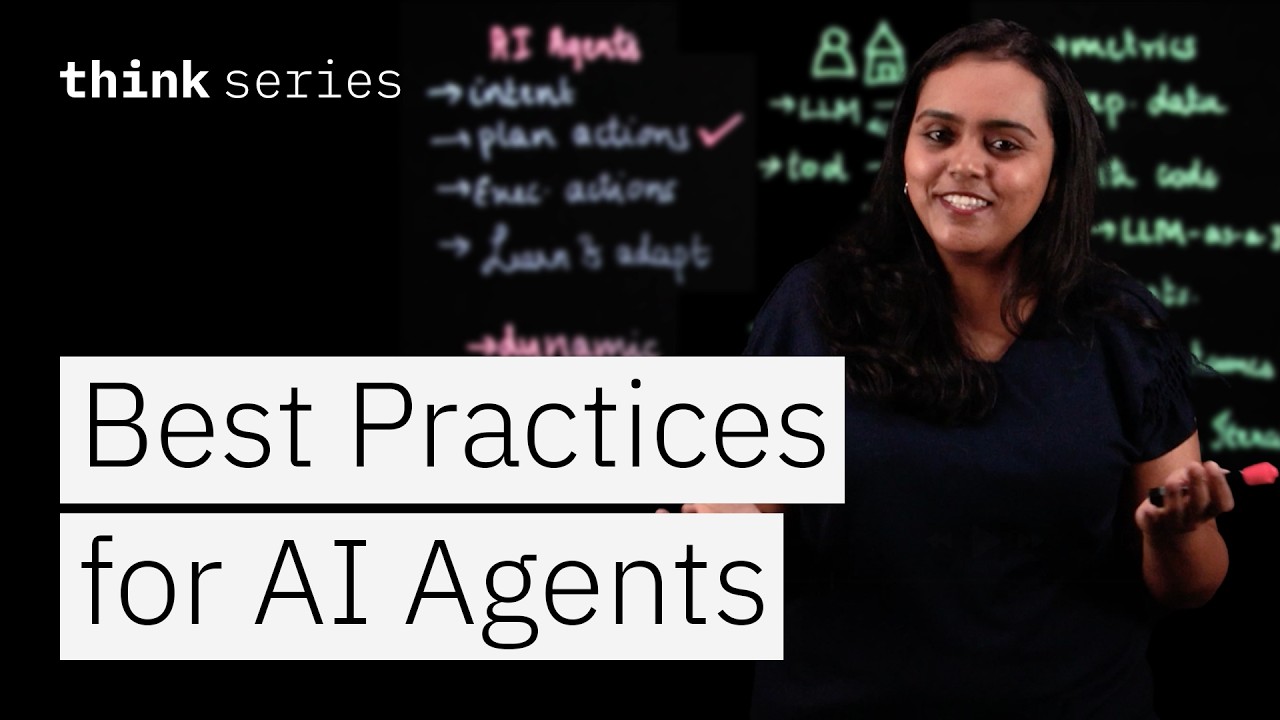
Kodati highlighted that unlike traditional, deterministic software applications, AI agents possess the capacity to understand intent, plan actions, execute them, and crucially, "learn and adapt as they go." This inherent dynamism and non-deterministic nature, as she emphasized, makes their evaluation exceptionally important. She illustrated this complexity with the example of an AI agent designed to assist customers in finding a dream home, detailing how it interacts with customers, leverages tools like search databases and calendars, and even handles financial calculations. This intricate web of interactions inherently creates numerous points where deviations or errors can occur.
The sheer volume of potential pathways an AI agent can take necessitates a robust evaluation framework. Kodati stressed the importance of defining clear metrics from the outset. These metrics span performance indicators such as accuracy, latency, and error rates, alongside crucial regulatory compliance measures like bias, explainability, source attribution, and toxicity scores. Furthermore, a focus on adversarial robustness is paramount to ensure the agent behaves predictably even when faced with malicious or deceptive inputs.
Preparing comprehensive datasets is the next vital step, involving the simulation of diverse real-world scenarios to thoroughly test the agent's behavior. This stage also requires capturing ground truth data against which the agent's outputs can be compared. Subsequently, developers must write code to facilitate this comparison, often leveraging advanced techniques like "LLM-as-a-judge," where a large language model is employed to assess the quality and appropriateness of the agent’s responses.
Once the code is in place, rigorous testing across all simulated scenarios becomes critical. This includes validating tool integrations to ensure a seamless customer experience. The final phase involves a thorough assessment of outcomes, allowing developers to identify areas for optimization. This entire process is inherently iterative, acknowledging that it is impossible to anticipate every single scenario an agent might encounter in production. Continuous monitoring of agents in live environments and funneling that data back into development cycles are essential to build more robust and continually improving AI agents.