

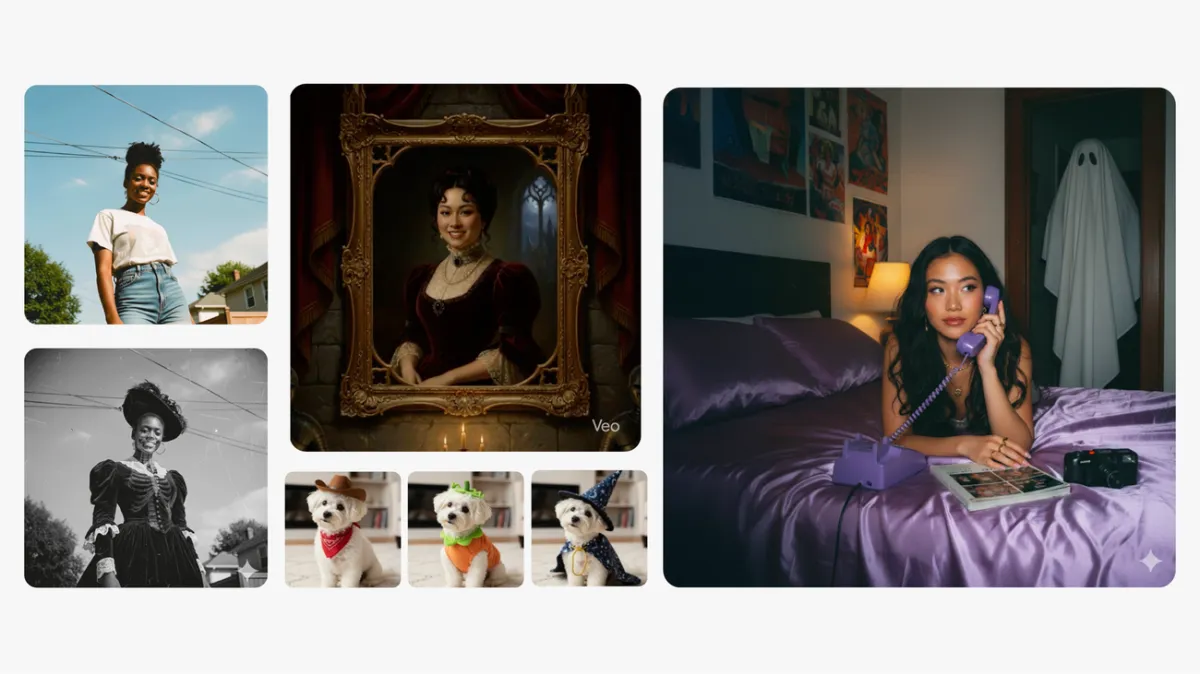
Google is leveraging its advanced AI capabilities to transform seasonal content creation, making it easier for users to generate festive and spooky AI images. This strategic move integrates powerful generative AI models directly into consumer-facing tools, democratizing access to sophisticated creative features. The focus on Halloween-themed visuals highlights the versatility and accessibility of these new offerings, signaling a broader push into everyday AI-powered creativity.
Central to this push is Nano Banana, Google's latest image generation model, enabling users to craft everything from ghostly portraits to personalized scary movie posters. According to the announcement, users can transform selfies into spectral Victorian figures or turn pets into wizard cartoon characters with simple, descriptive prompts. This model's ability to maintain existing pose and framing, while applying complex stylistic changes, demonstrates a significant leap in control and fidelity for consumer-grade AI. Complementing this, Google Photos introduces a new Halloween Remix option, allowing existing images to be restyled into Claymation, Pixel Art, or Ukiyo-e, further expanding creative possibilities with minimal effort.
Beyond static images, Google is also enhancing dynamic content creation and practical utility. Mixboard, an AI experiment from Google Labs, assists in visualizing intricate costume ideas, providing a sandbox for creative exploration. Veo 3.1, the state-of-the-art video generation model, can produce short scary movies or festive animations from text prompts or existing images, offering richer audio and narrative control. The Gemini Canvas tool even simplifies practical tasks, generating precise pumpkin carving templates directly from user photos, showcasing AI's diverse application beyond pure aesthetics.
The Broader Impact of Accessible AI Creativity
This suite of releases signals Google's aggressive stance in the generative AI arms race, aiming to make its ecosystem indispensable for everyday creativity. By embedding advanced models like Nano Banana and Veo into user-friendly interfaces, Google is not just offering features; it's shaping how individuals interact with and perceive AI. The emphasis on 'spooky AI images' serves as a compelling, relatable entry point, showcasing AI's potential for personal expression and entertainment. This strategy could significantly accelerate mainstream adoption of generative AI, pushing competitors to offer equally intuitive and integrated solutions across their platforms.
Google's approach positions it directly against other major players in the generative AI space, particularly those focusing on image and video generation. The integration of these tools across Google Photos, Gemini, and Google Labs indicates a cohesive strategy to leverage its vast user base and existing product ecosystem. This move is less about a single holiday and more about establishing Google as the default platform for accessible, powerful AI-driven creative tools. The ease of use and diverse applications suggest a future where AI assists in nearly every aspect of digital content creation, from personal projects to professional endeavors.