

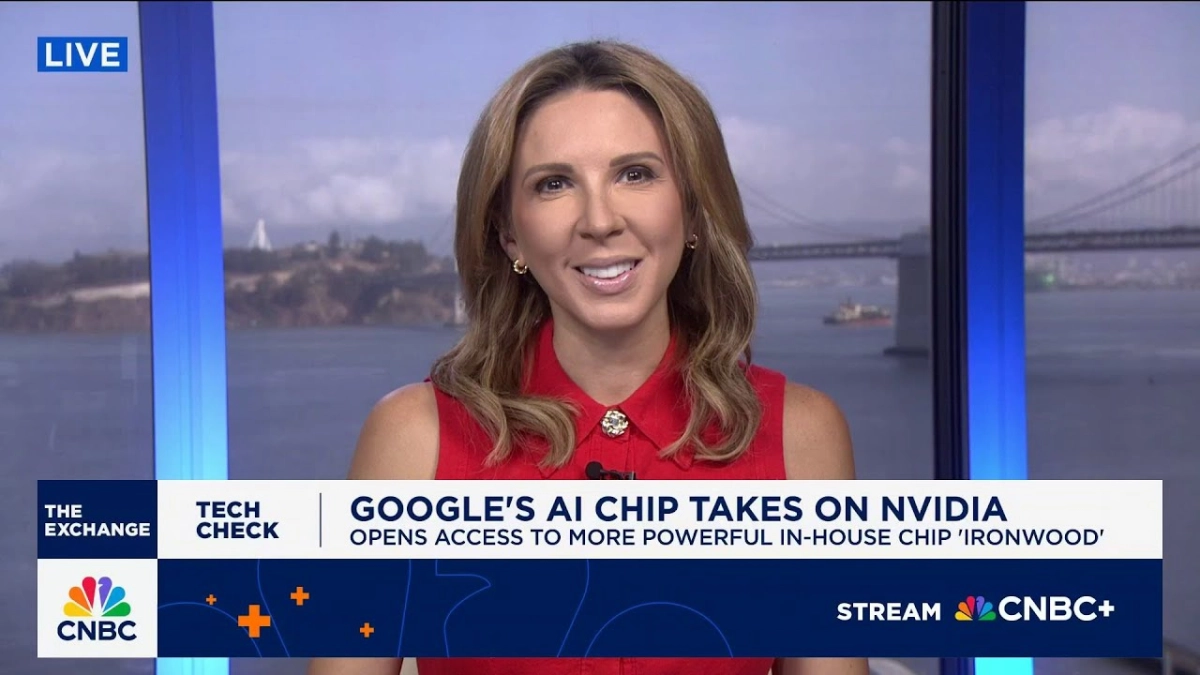
Google’s decision to open access to its most powerful AI chip, Ironwood, marks a pivotal moment in the escalating arms race for artificial intelligence supremacy. This strategic move, highlighted by CNBC's MacKenzie Sigalos in a discussion with Dom Chu, underscores Google's decade-long investment in proprietary hardware, challenging the established dominance of Nvidia and intensifying competition among cloud providers like Amazon and Microsoft. The underlying narrative is one where custom silicon is rapidly becoming the non-negotiable foundation for scalable and cost-efficient AI innovation, fundamentally altering the competitive landscape for founders, VCs, and tech insiders.
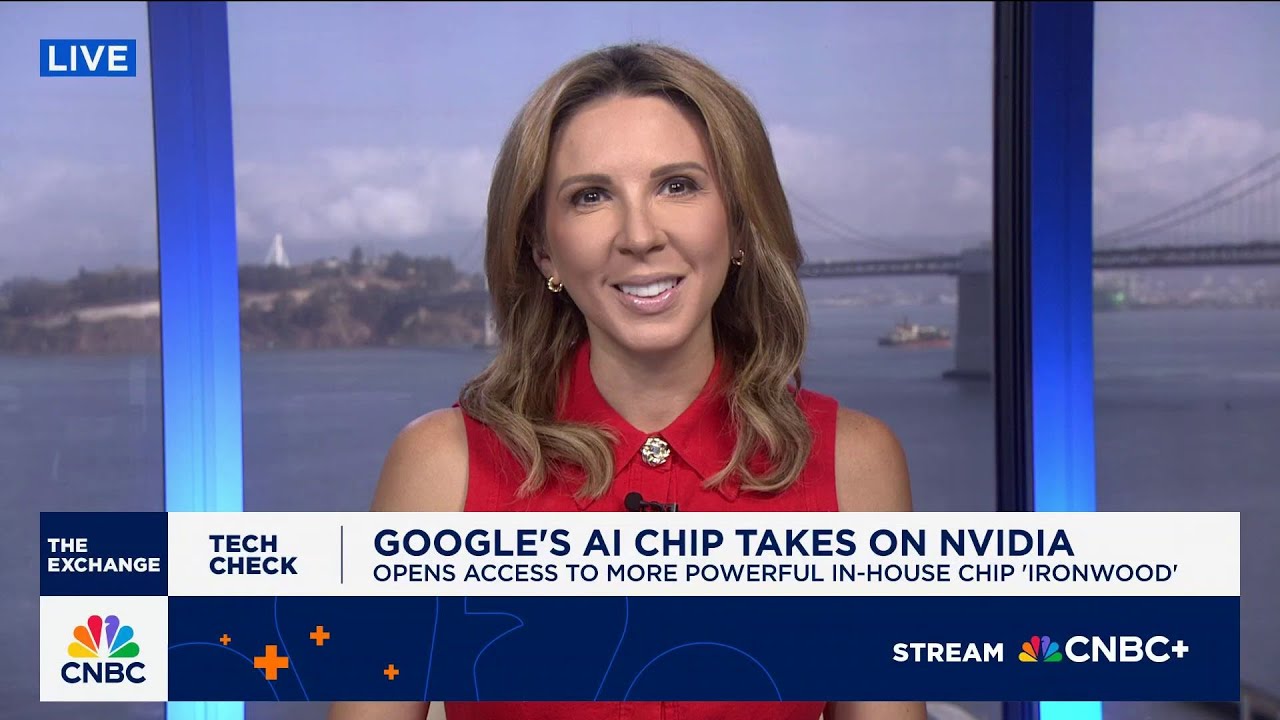
The discussion, featured on CNBC's "The Exchange," centered on Google's announcement regarding its latest in-house AI chip, codenamed "Ironwood." MacKenzie Sigalos reported that this chip, introduced in April and now available for mass sale, is designed to power sophisticated thinking and inferential AI models, representing the most powerful and energy-efficient chip Google has ever built. This development is not merely about incremental technological improvement; it is a calculated play by Alphabet to solidify its position in the cloud computing sector and gain a significant edge in the burgeoning AI market.
A core insight emerging from this announcement is Google's strategic vertical integration. By developing its own Tensor Processing Units (TPUs), Google aims to reduce its reliance on external chip manufacturers, primarily Nvidia, and optimize its hardware specifically for its demanding AI workloads. This approach allows Google to achieve superior performance and energy efficiency for its own AI models, such as Gemini, and those of its partners, including Anthropic, which plans to deploy up to one million Ironwood chips to run its Claude model. This self-sufficiency translates directly into cost advantages and a greater degree of control over its AI infrastructure, enabling Google to underbid competitors for major cloud contracts.
Google's CEO, Sundar Pichai, explicitly credits these custom chips for driving substantial growth in the company's cloud business, stating, "It is one of the key drivers of our growth over the past year, and I think on a going-forward basis, I think we continue to see very strong demand, and we are investing to meet that." This commitment is evident in Google's capital expenditure, which is projected to hit $93 billion this year, with further increases anticipated in 2026, much of it directed towards chip development and deployment. This massive investment signals Google’s belief that owning the hardware layer is crucial for long-term AI leadership.
The AI chip arms race is thus moving decisively towards custom silicon. While Nvidia’s GPUs have been the de facto standard for AI training and inference, hyperscalers are increasingly recognizing the imperative to design their own specialized processors. Amazon and Microsoft also possess in-house AI chips, and even OpenAI is reportedly investing billions with Broadcom to design its own. However, analysts like Stacy Rasgon of Bernstein note that Google stands out as the only hyperscaler genuinely deploying custom AI chips at a massive scale, suggesting that rivals are "still years and billions behind." This scale of deployment gives Google a unique advantage in fine-tuning its hardware-software co-design, leading to unparalleled performance-per-watt metrics.