


"In AI, the leaderboard, it changes fast, and narratives that can swing harder than the fundamentals. Just look at Google, it went from broken to beloved in a matter of months, not even because the business changed that dramatically." This incisive observation from CNBC's TechCheck Anchor Deirdre Bosa on "The Exchange" succinctly captured the volatile sentiment driving the artificial intelligence sector, particularly as Google appears to consolidate significant AI momentum following the release of Gemini 3. Bosa, along with her CNBC colleagues Christina Partsenavelos and Julia Boorstin, delved into the shifting AI landscape, examining Google's strategic plays in custom silicon and AI models, and its implications for the broader hyperscaler competition.
Google's recent surge in market perception and valuation stems not from a sudden business metamorphosis, but from a narrative shift fueled by execution. The company's persistent investment in its AI ecosystem, particularly its Tensor Processing Units (TPUs) and the advanced Gemini 3 model, has begun to pay dividends. This in-house silicon strategy, coupled with a vast data ecosystem, enables Google to deploy AI at an unparalleled "Google scale," providing a distinct advantage in the race for AI supremacy. The report highlighted how Meta Platforms is even in talks to utilize Google’s AI chips in its data centers, signaling a significant external validation of Google's custom silicon prowess.
However, the notion that Google’s TPUs are poised to outright "overtake Nvidia across the enterprise" is a premature conclusion. Bosa astutely pointed out a critical distinction: "TPUs, you have to remember this, they lock you into Google stack, so they only run inside of Google Cloud." This vendor lock-in presents a substantial hurdle for many enterprises that prioritize optionality, seeking the flexibility to deploy their AI workloads across various providers, including Nvidia, AMD, or other emerging solutions. The enterprise market demands versatility, and proprietary chips, while efficient within their native ecosystem, may not offer the broad appeal required to dominate the wider landscape. There is, in essence, room for multiple players in the hardware layer, each serving different segments and strategic needs.
The true battleground, therefore, may not be a direct confrontation between Google and Nvidia, but rather an intensified rivalry among the major hyperscalers themselves. "The real fight isn't Google versus Nvidia," Bosa posited, "it may actually be Google versus the other hyperscalers, Amazon and Microsoft." Google's custom chips and advanced AI models are not just about challenging chip manufacturers; they are about fortifying Google Cloud's competitive stance against its primary cloud rivals. By offering optimized, cost-effective AI infrastructure, Google aims to attract and retain enterprise customers within its cloud environment, leveraging its end-to-end AI capabilities. This strategic alignment of hardware and cloud services is designed to create a sticky ecosystem that differentiates Google from its competitors.
Related Reading
- Gemini's Ascent: Google's Existential Challenge to OpenAI
- Coding Agents with Taste: The Next Frontier in AI Development
- The Shifting Sands of AI Supremacy: ChatGPT's Lightning Bolt Meets Gemini's Insane Leap
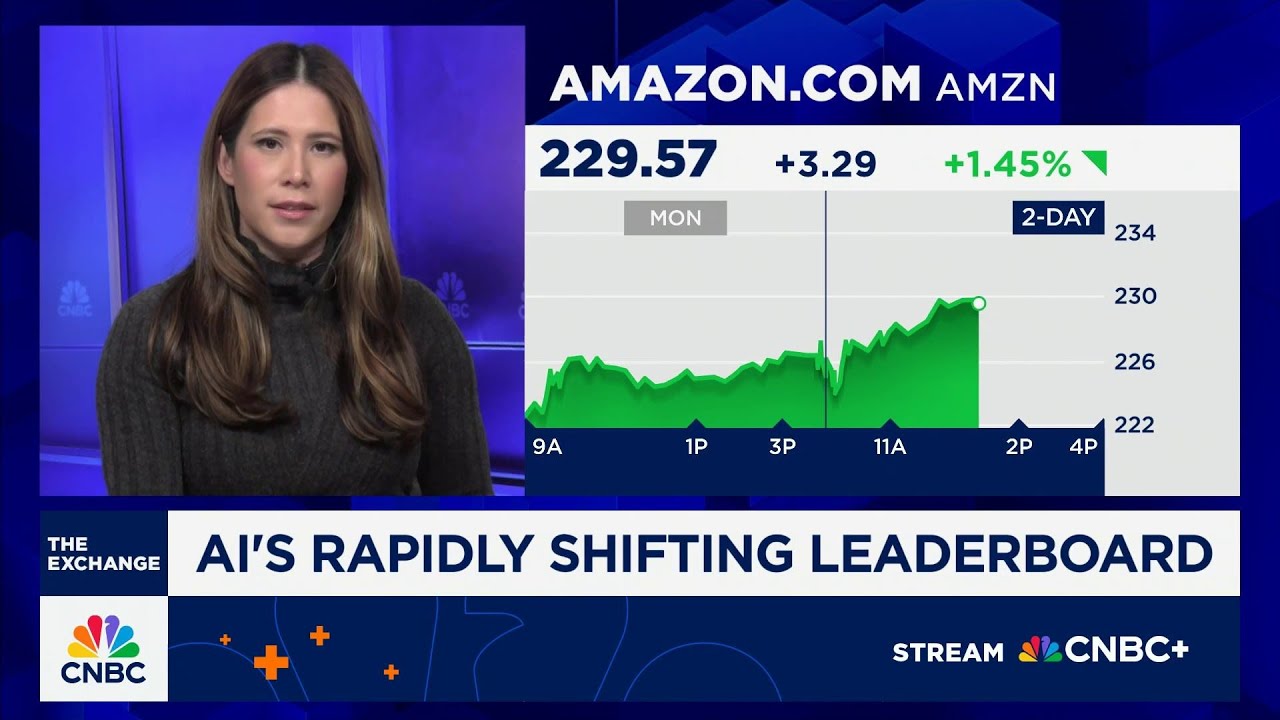
This competitive dynamic brings Amazon into sharper focus. Despite being the largest cloud computing player and a hyperscaler in its own right, Amazon's AI momentum, particularly regarding its custom chips like Trainium, has not mirrored Google's recent ascendance. While Amazon has been actively developing its own AI chips and has secured deals with prominent AI developers like Anthropic, the market sentiment around its offerings appears subdued. Bosa starkly noted, "It's not a very well-kept secret that there's disappointment not just on Wall Street but in tech circles with that chip [Amazon's Trainium]. It certainly does not have the momentum that Google does." This implies a gap not just in technical execution, but critically, in the public and industry perception of Amazon's AI leadership.
