

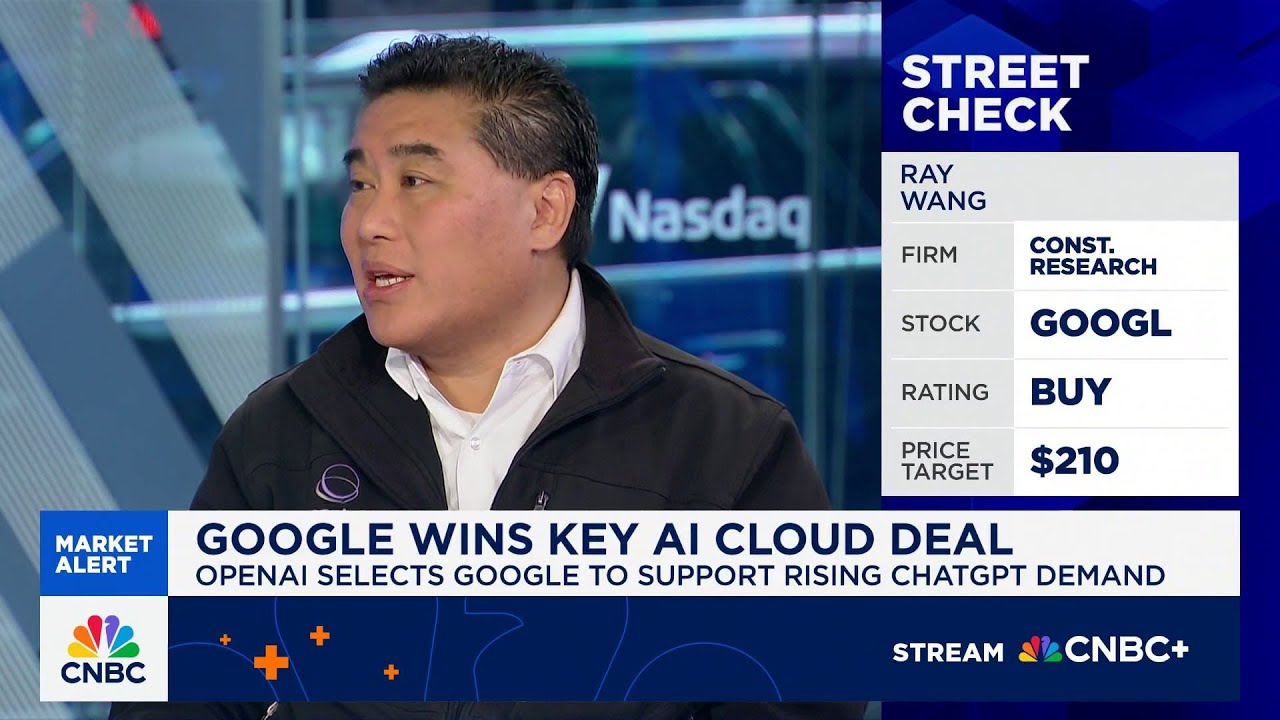
Constellation Research founder and chairman Ray Wang delivered a striking assessment of Google’s standing in the artificial intelligence domain during a recent CNBC ‘Squawk Box’ interview. While previewing the earnings reports of the “Magnificent Seven” tech giants, Wang asserted that Google’s AI capabilities are, in fact, ahead of public and investor perception, positioning them as a potential leader in the fiercely competitive AI race.
Wang, speaking with the CNBC anchors, dissected the diverse profiles within the Magnificent Seven, noting that companies like Google, which are heavily AI-enabled, present a different investment thesis compared to those burdened by geopolitical concerns, such as China risk. For Google, the central questions revolved around AI’s potential impact on its lucrative search and advertising business, and the continued growth trajectory of Google Cloud Services.
Wang's analysis reveals a strong conviction in Google’s underlying AI technology. He stated unequivocally, “We actually think they might be in the lead in terms of their AI capability.” This direct challenge to the widespread narrative of Google playing catch-up in AI is rooted in feedback from the developer community. Wang highlighted that Google’s advanced models like VEO3 and Gemini are actively being deployed. He explained, “The technology behind what’s going on from VEO3, from Gemini, it’s actually being used by developers. It’s actually being used on the coding side, it’s actually being used to build products.” He cited an example of a client using Google Gemini to outperform a competitor with a fraction of the team size, underscoring the practical, efficiency-driving power of Google’s AI. The prevailing market perception that Google is behind in AI, alongside antitrust concerns, contributes to an “overhang” on its stock, according to Wang, making it a compelling entry point for investors.
Turning to Tesla, Wang observed that the company's stock is largely "trading on headlines," a distinctly different dynamic from traditional fundamentals. He expressed confidence in Tesla's long-term vision encompassing autonomous vehicles, robotics, and energy infrastructure, viewing it as a pioneer in American innovation. However, he also acknowledged the complexities of leadership under Elon Musk.
“Elon on one hand drives the vision, gets everyone out there. On the other hand, he creates a lot of chaos, a lot of turmoil for a lot of the executives that are there,” Wang noted, pointing to the high executive turnover at Tesla. While Musk is crucial for driving groundbreaking initiatives like Grok and Optimus, the company requires stable leadership capable of scaling operations, a task that differs from initial entrepreneurial zeal.