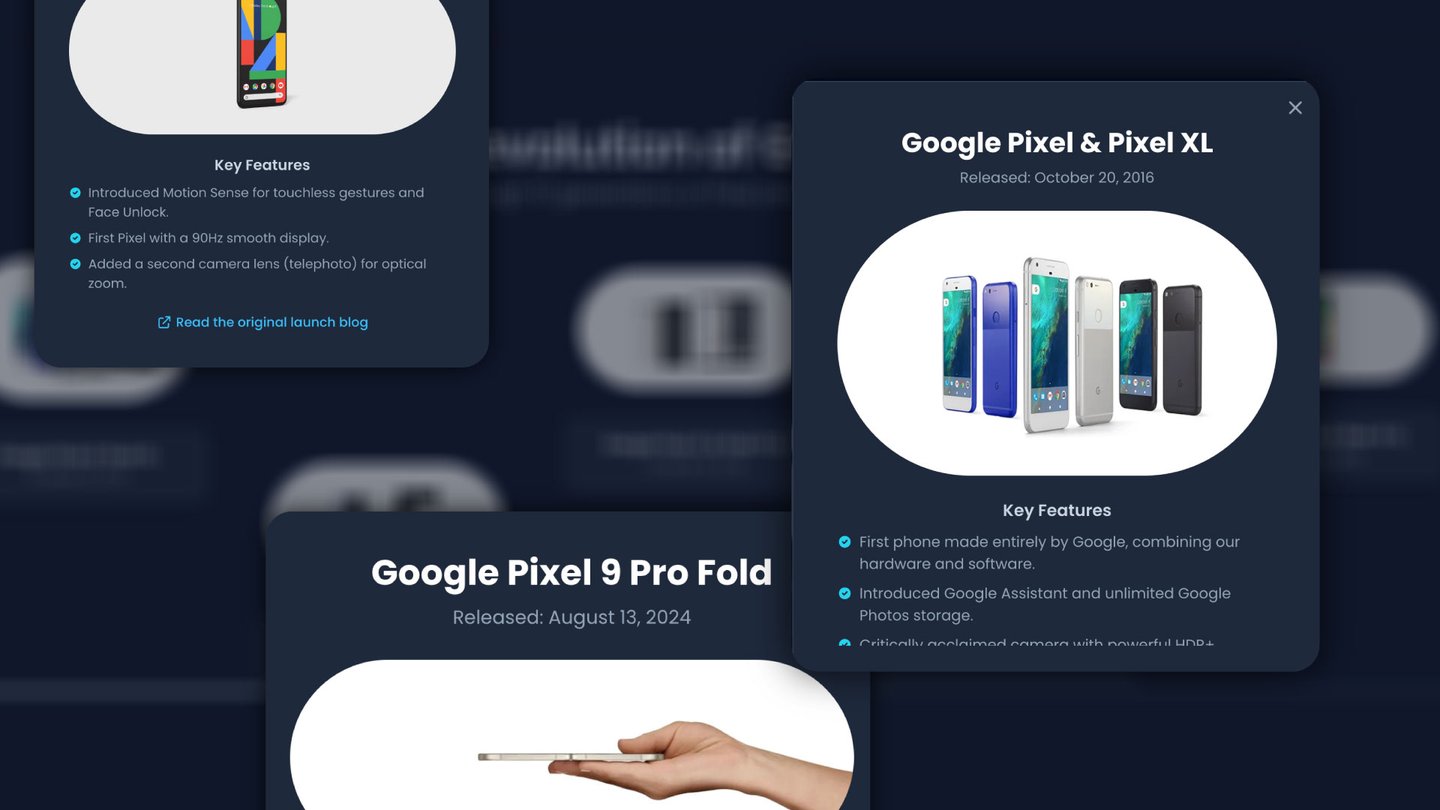
Google has launched an innovative web application designed to guide users through the complete history of its Pixel smartphone line. This new experience, notably crafted with the assistance of its Gemini AI model, marks a significant step in how companies can leverage advanced AI to create engaging, interactive content. In a recent announcement on its blog, Google highlighted the app as a demonstration of Gemini's capabilities beyond traditional conversational interfaces, showcasing its potential in dynamic content generation and user-driven exploration.
The "Journey through Pixel’s history" app isn't merely a static timeline. Instead, it aims to offer a rich, interactive narrative of the Pixel series, from its inception to the latest models. Users can delve into the evolution of Pixel's design philosophy, its camera innovations, the progression of its Tensor chips, and the software features that have defined the brand. The integration of Gemini suggests a more personalized and adaptive experience, potentially allowing users to ask specific questions about Pixel devices or explore particular aspects of their development in greater detail. This moves beyond a simple informational site, transforming it into a dynamic, AI-curated archive.
The core innovation here lies in the "Gemini-made" aspect. While the exact extent of Gemini's involvement isn't fully detailed, it likely plays a crucial role in several areas. This could include generating descriptive text for various Pixel models, creating interactive quizzes or challenges related to the brand's history, or even dynamically assembling content paths based on user interests. For instance, a user interested primarily in camera technology might be guided through a different sequence of information than someone focused on industrial design or software updates. This level of adaptive content delivery is a hallmark of advanced AI applications.
Gemini's Role in Interactive Storytelling
This initiative serves as a compelling real-world example of how large language models can be deployed to build sophisticated, user-facing applications. Rather than just being a backend tool for developers or a chatbot for customer service, Gemini is positioned as a co-creator in the development process itself. This showcases Google's commitment to integrating its AI capabilities across its product ecosystem, not just as a feature within a product, but as a foundational technology for building new experiences. It also provides a public demonstration of Gemini's versatility, moving from complex coding tasks and multimodal understanding to crafting engaging historical narratives.
For the tech industry, this app offers a glimpse into the future of digital content and brand storytelling. Companies can move beyond static web pages and into highly interactive, AI-powered experiences that adapt to individual user preferences. This could redefine how product launches are presented, how brand histories are preserved, and how educational content is consumed. The ability to dynamically generate and curate information based on a vast dataset, then present it in an engaging, accessible format, opens up new avenues for digital engagement.
Ultimately, Google's Gemini-made Pixel history app is more than just a nostalgic trip down memory lane for smartphone enthusiasts. It's a practical, public-facing testament to the evolving capabilities of generative AI. It underscores a future where AI models like Gemini are not just answering questions but actively participating in the creation of rich, interactive digital environments, pushing the boundaries of user experience and content delivery. This move solidifies Google's position at the forefront of AI application development, demonstrating a tangible use case for its advanced models in a consumer-friendly context.




