

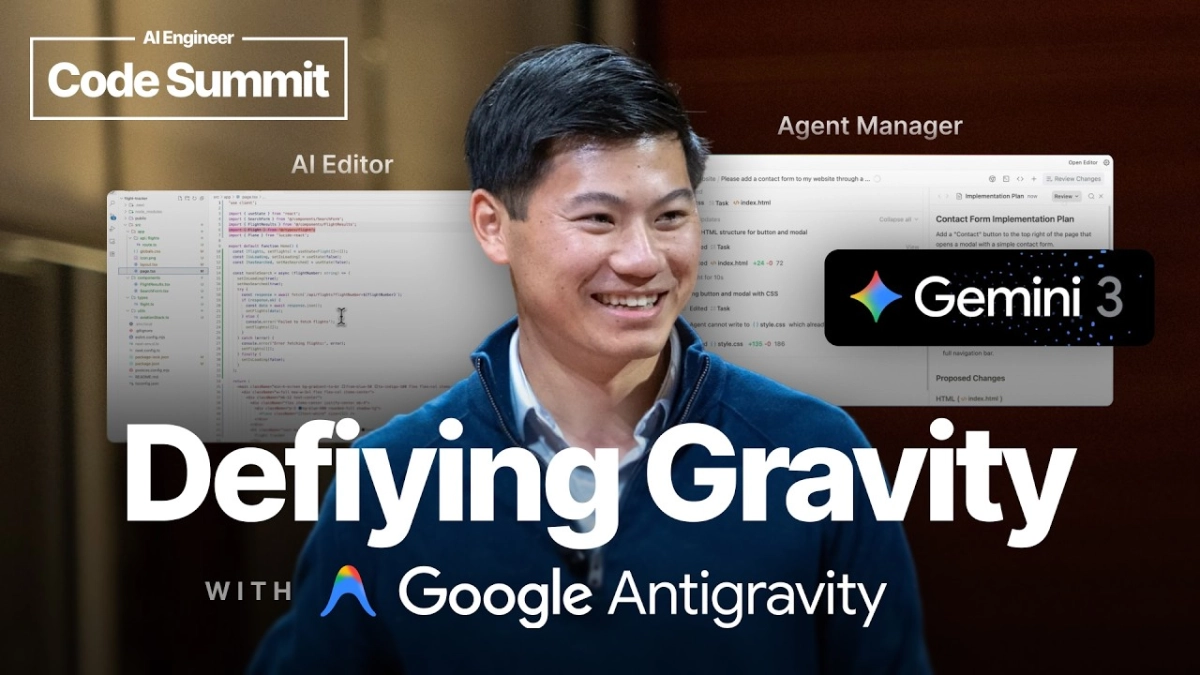
The age of the "agent-first" developer environment is here, promising a paradigm shift where AI agents work seamlessly across multiple interfaces, fundamentally altering how software is built. Kevin Hou, Head of Product Engineering at Google Antigravity, recently unveiled this novel AI development platform at the AI Engineer Code Summit, delving into the future of agentic Integrated Development Environments (IDEs) powered by Gemini 3. His presentation articulated not just a new tool, but a new philosophy for engineering with artificial intelligence.
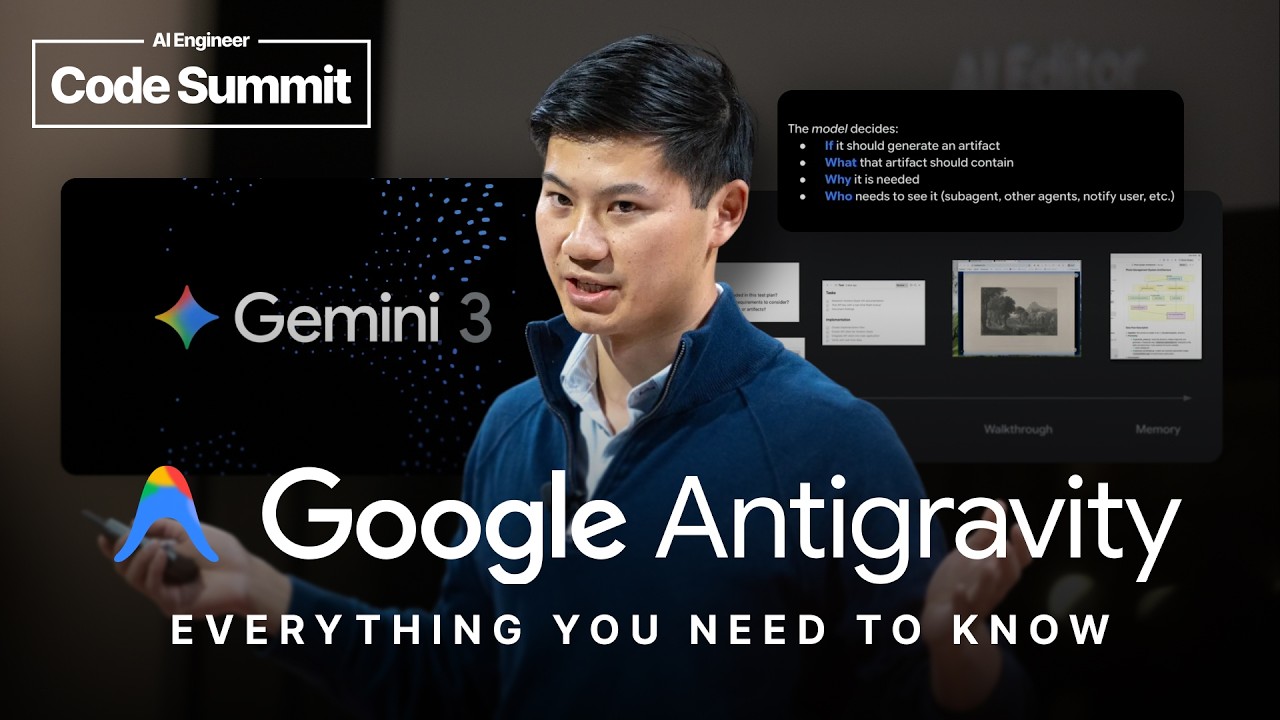
Google Antigravity, a pioneering IDE emerging from Google DeepMind, is built on three distinct surfaces: an AI Editor, an Agent Controlled Browser, and a central Agent Manager. This architecture is designed to be "unapologetically agent-first," a philosophy that positions AI agents as integral, proactive collaborators rather than mere code completion assistants. These agents operate beyond the confines of a single application, interacting across the various digital workspaces a developer typically inhabits.
The Agent Manager serves as the central hub of this new ecosystem. It provides a higher-level view of development tasks, pulling the developer one step back from the granularities of code to oversee the broader project. Unlike traditional environments, there is only one Agent Manager window, designed to orchestrate numerous agents simultaneously. An "inbox" feature highlights tasks requiring human attention, such as approving terminal commands, ensuring critical decisions remain under developer control. Furthermore, OS-level notifications proactively alert developers to agent activities, streamlining multi-threading across diverse tasks.
Complementing the Agent Manager is the AI Editor, which retains the familiar functionalities developers have come to expect, including "lightning-fast autocomplete." What sets it apart is an integrated agent sidebar, mirrored with the Agent Manager, allowing developers to seamlessly "Command-E or Control-E and hop instantly" between the editor and the manager. This rapid context switching is crucial for tasks where agents handle the bulk (80-100%) of the work, but human intervention is occasionally necessary for precision or complex logic.
Perhaps the most revolutionary component is the Agent Controlled Browser. This Chrome browser is entirely managed by the AI agent, granting it access to the full richness of the web, complete with authenticated sessions for services like Google Docs or GitHub. The agent can "click, and scroll, and run JavaScript, and do all the things that you would do to test your apps." This capability is not just about automation; it’s about verifiability. The system provides screen recordings of agent actions, ensuring transparency and allowing developers to review exactly how the AI performed a task.
The genesis of Antigravity is rooted in the remarkable advancements of Google's foundational models, particularly Gemini 3. Hou emphasized that "the product is only ever as good as the models that power it," highlighting a crucial insight for AI professionals. Gemini's significant improvements across four key areas laid the groundwork for Antigravity's ambitious design. These include enhanced "intelligence & reasoning" in Large Language Models (LLMs), more "advanced tool use" by agents, the ability to handle "longer running tasks (thinking)" in the background, and critically, "multi-modal" understanding.
Multimodal capabilities are a game-changer, allowing agents to process and generate not just text, but also images, videos, and screenshots. This is essential for developers, whose work inherently involves visual elements like UI mockups, logos, and architecture diagrams. Antigravity leverages this by enabling developers to generate website designs from text prompts and then iterate on these designs through visual comments, much like collaborative design tools. This multimodal interaction transforms traditionally text-heavy development into a more intuitive, visually-driven process.
The second core tenet of Antigravity is the "Age of Artifacts," a new interaction pattern centered around the Agent Manager. An artifact is defined as a "dynamic representation of information specific to you and your use case," generated by the agent to maintain focus, communicate clearly with the user or subagents, and serve as memory. These artifacts can take many forms: detailed plans, code changes, walkthroughs, architectural diagrams, or visual mockups. The model intelligently decides if, what, why, and who needs to see each artifact, providing a structured, verifiable record of the agent's thought process and actions. This moves beyond endless conversational logs, offering a more digestible and actionable history of development.
This dynamic artifact system allows for fluid human-agent collaboration. Developers can leave text-based comments on markdown artifacts or visual comments on multimodal outputs. The agent then naturally incorporates this feedback without disrupting its ongoing task execution. This continuous feedback loop facilitates iterative development and ensures human oversight at critical junctures.
Related Reading
- Apple's AI Blind Spot, Google's Strategic AI Rally
- How OpenAI Builds for 800 Million Weekly Users: Model Specialization and Fine-Tuning
Antigravity's long-term vision is powered by a "research and product flywheel." Google's strategy is to be its "biggest user," deploying Antigravity internally to its engineers and DeepMind researchers. This self-referential approach ensures that real-world usage continuously identifies gaps and opportunities for improvement in the underlying Gemini models. Whether it’s enhancing computer use capabilities, refining image generation, or improving instruction following, the daily experiences of Google's developers directly fuel the next generation of AI model advancements. This symbiotic relationship between Antigravity as a product and Gemini as the foundational AI creates a powerful engine for pushing the frontier of artificial general intelligence.
Google Antigravity represents a significant leap in AI-assisted software development, moving beyond simple code suggestions to a fully integrated, agent-first paradigm. By combining advanced AI capabilities with a dynamic, artifact-driven workflow and a robust internal feedback loop, Google DeepMind aims to redefine developer productivity and accelerate the journey towards more capable, autonomous AI agents.

