


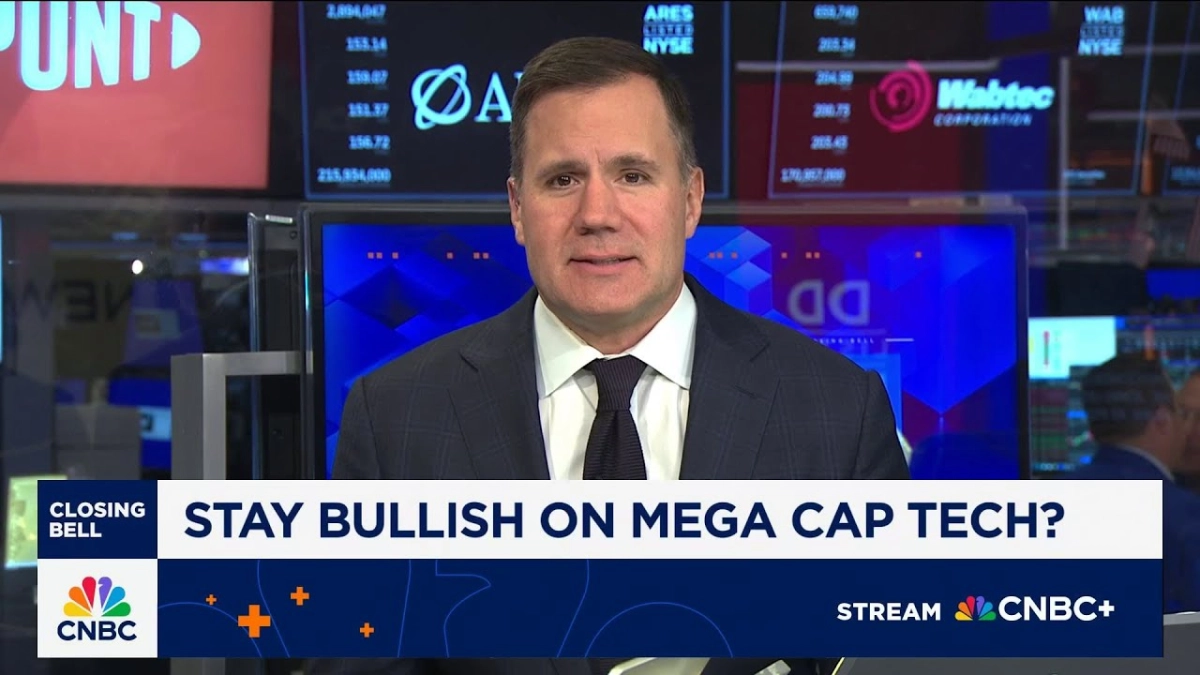
Goldman Sachs’ Tony Pasquariello offered a compelling counter-narrative to prevailing market anxieties surrounding the AI trade and market concentration during his appearance on CNBC’s “Closing Bell.” Speaking with Scott Wapner, Pasquariello, Goldman’s Global Head of Hedge Fund Coverage, dissected the current market structure, arguing against the notion that a top-heavy market is inherently precarious, particularly when it comes to the dominant mega-cap technology firms driving the AI revolution. His analysis underscored a fundamental belief in the sustained momentum of these market leaders, challenging conventional wisdom that often views concentration with skepticism.
Pasquariello readily acknowledged the market's current top-heavy nature, noting, "There's no doubt the market's top-heavy. There's no doubt it's concentrated." He pointed out that a mere ten companies now command an astonishing 25% of global equity market capitalization. This level of concentration often triggers historical alarms for market observers, recalling past bubbles and subsequent corrections. However, Pasquariello was quick to contextualize this phenomenon, asserting that simply lamenting a top-heavy market means one has "missed an incredible opportunity set for the past three at 15 years." His perspective suggests that historical parallels, while instructive, do not always dictate identical outcomes, especially when underlying economic and technological shifts are at play.
The crucial distinction, according to Pasquariello, lies in the fundamental drivers of this concentration. He emphasized that the extraordinary gains seen in the Nasdaq, which has been up 16 or 17 years since 2009, were not primarily a function of inflated valuations. Instead, he clarified, "only 10% of that is valuation. 90% was earnings growth or dividends." This is a critical insight for founders and VCs evaluating the longevity of current tech giants and the potential for new AI leaders. It suggests that the market's current leaders have genuinely earned their elevated positions through robust financial performance and real economic value creation, rather than speculative froth.
Pasquariello's conviction extends to the sustainability of this mega-cap momentum. He outlined four significant forces that make it imprudent to "shoot against" the current trend. Firstly, he cited the Federal Reserve's likely path, suggesting a high probability of rate cuts, potentially as early as December, which would further loosen financial conditions and support equity markets. Secondly, Goldman Sachs anticipates a cyclical upturn in the economy in 2026, providing a favorable macroeconomic backdrop. Thirdly, the massive capital expenditure (CapEx) currently being deployed, particularly in the AI infrastructure space, acts as a powerful tailwind. This investment cycle, he noted, has only picked up more speed recently. Finally, the consistent flow of funds from both retail and corporate investors into the market provides a steady demand floor.
Related Reading
- Goldman Sachs' Joseph Briggs: Gen AI could lift U.S. labor productivity 15% in 10 years
- Wall Street's AI Reckoning: Monetization Separates Hyperscaler Winners from Losers
These combined forces paint a picture of enduring strength for mega-cap tech. Pasquariello’s analysis implies that the current environment is not merely a transient surge but a structural shift underpinned by solid fundamentals and supportive external factors. He cautioned against attempting to "pick tops," a notoriously difficult endeavor for even seasoned investors.
Regarding concerns about market breadth and the performance of lower-quality stocks, Pasquariello viewed this as largely symptomatic of positioning. He acknowledged that when retail investors "sink their teeth into these," as seen in 2021, caution is warranted. However, he doesn't believe it fundamentally alters the broader narrative for the market leaders. He maintains that while such movements might create temporary rotations, they do not signal an impending collapse of the primary trend. The focus, he reiterated, should remain on the "freight train that is US mega-cap tech."

