

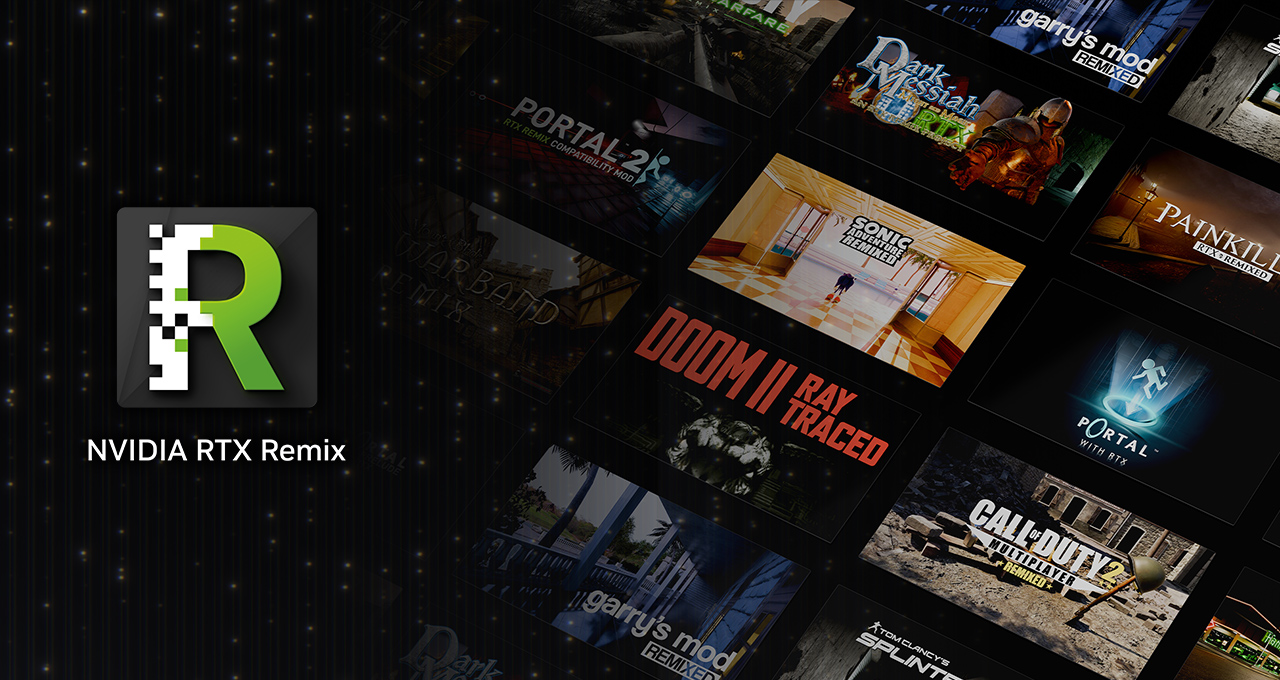
NVIDIA's RTX Remix platform, powered by generative AI tools, is fundamentally changing how modders reimagine classic games. From automating texture overhauls to accelerating complex workflows, these tools are enabling individuals and small teams to achieve studio-quality remasters in a fraction of the time, democratizing high-fidelity game preservation. Source: NVIDIA
The New Era of Fan-Made Remasters
Last week at Gamescom, NVIDIA showcased a seismic shift in video game modding, crowning winners in its $50,000 RTX Remix Mod Contest. The takeaway wasn't just about impressive graphical overhauls; it was a clear signal that generative AI game modding has arrived, empowering individual creators to achieve fidelity once reserved for entire development studios.
At the core of this revolution is NVIDIA RTX Remix, a platform designed to capture assets from beloved classics and rebuild them with modern lighting, geometry, and materials. But the real magic happens when Remix is paired with generative AI tools like PBRFusion and ComfyUI. These AI models aren't just upscaling textures; they're generating thousands of high-resolution physically based rendering (PBR) materials, automating the most repetitive and time-consuming tasks. This acceleration means ambitious remasters that once took years can now materialize in mere months, all running on NVIDIA RTX GPUs.
The numbers speak for themselves: 237 RTX Remix projects are currently in development, building on over 100 finished mods and 2 million downloads across titles like *Half-Life 2*, *Need for Speed: Underground*, and *Portal*. This isn't a niche experiment; it's a burgeoning movement.
Take Merry Pencil Studios’ *Painkiller RTX Remix*, the contest's big winner. The team rebuilt over 35 levels of the gothic shooter, leveraging AI-assisted workflows to batch-process thousands of low-resolution textures and generate PBR materials. PBRFusion, an AI model trained by the RTX Remix community, handled the heavy lifting, upscaling textures by 4x and creating essential normal, roughness, and height maps. This provided a consistent visual foundation, freeing artists to focus on handcrafted details. As Merry Pencil Studios stated, according to the announcement, “Generative AI has completely expanded what feels possible in modding. Beyond texture upscaling, we’re now seeing it generate 3D models, refine complex multi-material surfaces and assist with coding tasks.”