

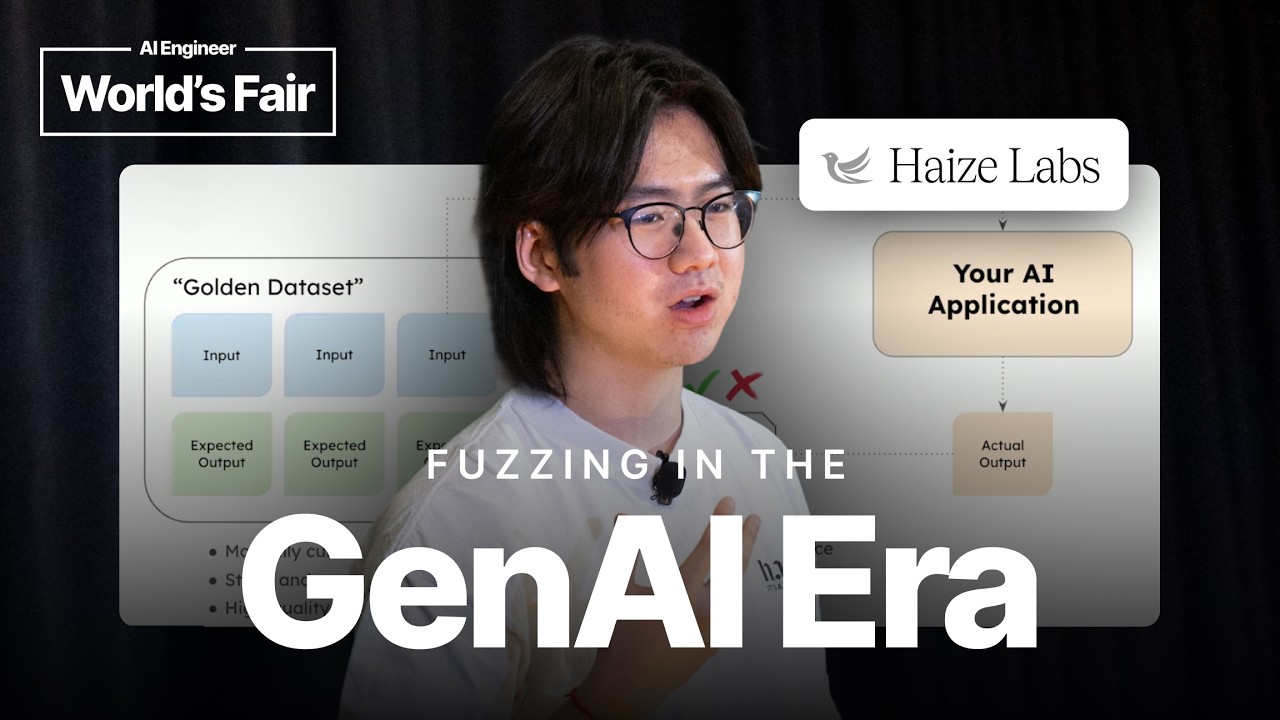
The allure of rapid AI prototyping often obscures the profound challenges of deploying reliable, production-grade generative AI applications. Leonard Tang, Founder & CEO of Haize Labs, articulately addressed this "last mile problem" at the AI Engineer World's Fair, dissecting why GenAI’s inherent brittleness demands a radical shift in how we approach evaluation and testing. His presentation introduced "Haizing," a novel methodology for rigorously validating AI systems before they ever reach the market.
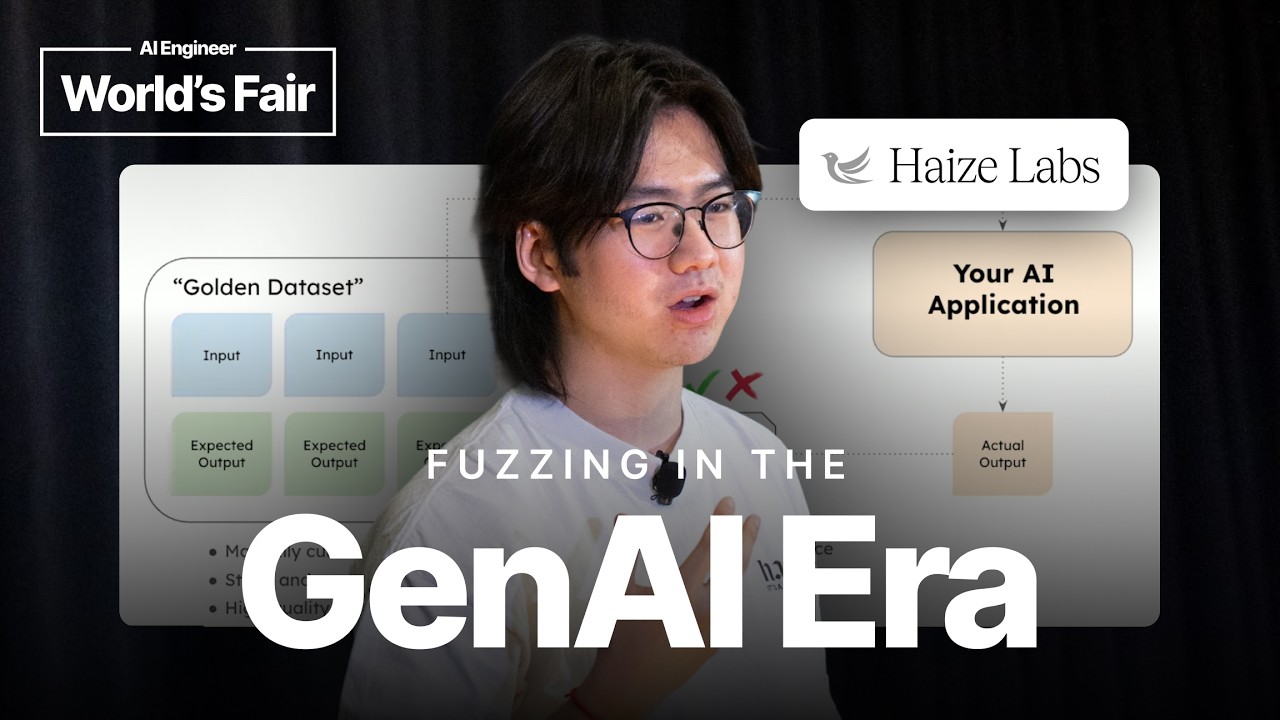
Tang posits that while it's "very, very hard" to transition an LLM application from a proof-of-concept to a robust, enterprise-ready solution, this difficulty stems not from non-determinism, but from brittleness. He illustrates this with examples of chatbots exhibiting "Lipschitz discontinuity," where "seemingly similar Input B" can lead to "Wildly Unexpected Output B." A trivial change in phrasing, a slight perturbation, can cause an AI to hallucinate discounts or provide dangerous advice, underscoring the critical need for a more comprehensive evaluation paradigm.
Traditional evaluation methods, relying on static "golden datasets," prove woefully inadequate in this GenAI era. "A static dataset tells an incomplete story about AI application reliability due to lack of coverage," Tang asserts. These datasets, manually curated and narrow, cannot possibly encompass the infinite permutations of user input or the subtle contextual shifts that trigger catastrophic failures. Furthermore, defining objective metrics for subjective human judgment remains an elusive, often brittle, task.
Haize Labs' solution, Haizing, directly confronts these limitations by simulating large-scale user interactions and automatically analyzing responses for anomalies. This iterative process, akin to fuzz testing in software, involves intelligent input generation paired with sophisticated output judging. Instead of relying on predefined test cases, Haizing dynamically explores the vast input space to proactively uncover vulnerabilities.
A core insight lies in Haize's approach to judging: moving "beyond LLM-as-a-Judge." Recognizing that even an LLM acting as a judge can be "brittle & sensitive" and prone to "hallucinations" or "syntactic biases," Haize developed "Verdict." This agent-based framework, utilizing stacked GPT-4o mini models, achieves superior expert QA judge accuracy at a fraction of the cost and latency of larger, less efficient models.